The White Tower of Safita
A Templar keep standing in a hill town east of Tartus. Its ground floor is a chapel still in use as a church, and the hall above was the military floor.
- Opening hours
- The chapel is a working church; visits are limited during services — confirm on site
- Entry
- Variable — confirm on site
- Duration
- 45 minutes
- Best time
- Spring and autumn; on a clear day the view from the roof runs a long way
- Period
- Crusader — 12th–13th century
- Address
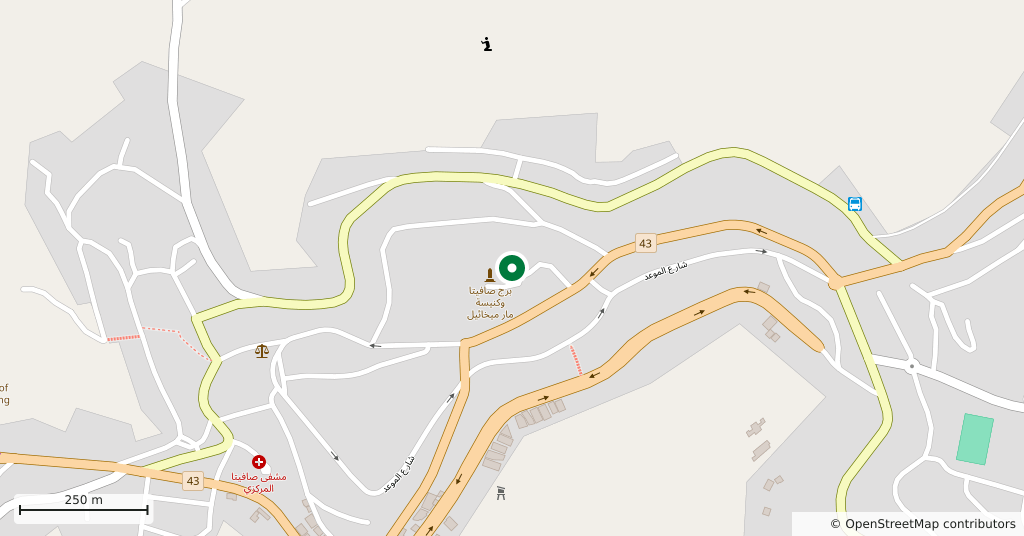
- Centre of Safita town, 40 km east of Tartus
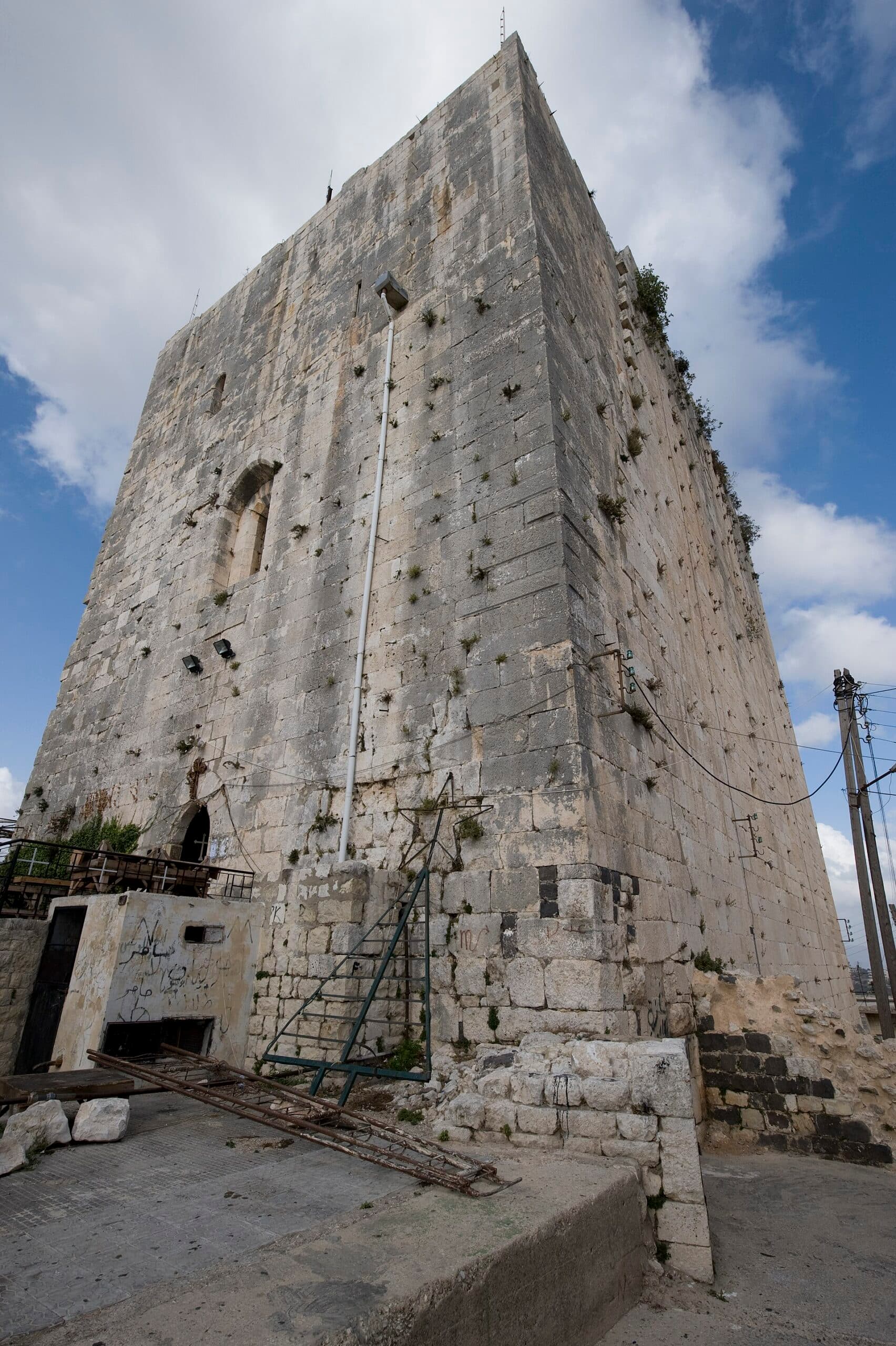
Up in the coastal hills, a single rectangular tower at the highest point of the town. The white limestone and its whitewash give it its name: the Crusaders called it Chastel Blanc. The tower was built as the keep of a castle; most of the rest of that castle has gone, the keep remained, and the town grew around it.
Getting there
About forty kilometres east of Tartus, an hour by car on a road that climbs into the hills. The way up to the tower from the town is on foot and the streets are steep.
How long it takes
Forty-five minutes: the chapel, the upper floor and the view from the roof.
What is there
On the ground floor is the Chapel of St Michael, and this is not a museum but a working church — visits are limited during services. The large hall above was the military floor, reached by a stone stair. The thickness of the wall can be measured in the window recesses, and that is where the tower reads most clearly as a defensive structure.
What most people miss
Go up to the roof and look east. The direction of Krak des Chevaliers opens up behind the hills; the two castles were placed within sight of each other, and only from here can you weigh the distance.
Tips
- The ground-floor chapel is a working church — do not enter during a service
- The streets of the town are steep; the tower is reached on foot
- Go up to the roof and look east: the line to Krak des Chevaliers opens there
- Half a day from Tartus; Amrit on the way back adds little
Transparency
- How this was chosen
- Written by hand; opening hours, entry fee and coordinates are kept as data. A field that is not known for certain is marked as variable rather than guessed.
- Facts checked
- August 2026
- Last updated
- September 15, 2026