Tell Brak
One of the earliest known cities anywhere: ancient Nagar. On a mound north-east of Hasakah the plan of a five-thousand-year-old city still reads on the ground.
- Opening hours
- Open ground, daylight hours; confirm on arrival
- Entry
- Variable — confirm at the entrance
- Duration
- 120 minutes
- Best time
- Early morning; there is no shade on the plain and the mound is an oven by afternoon
- Period
- Late Chalcolithic — Akkadian — Mitanni
- Address
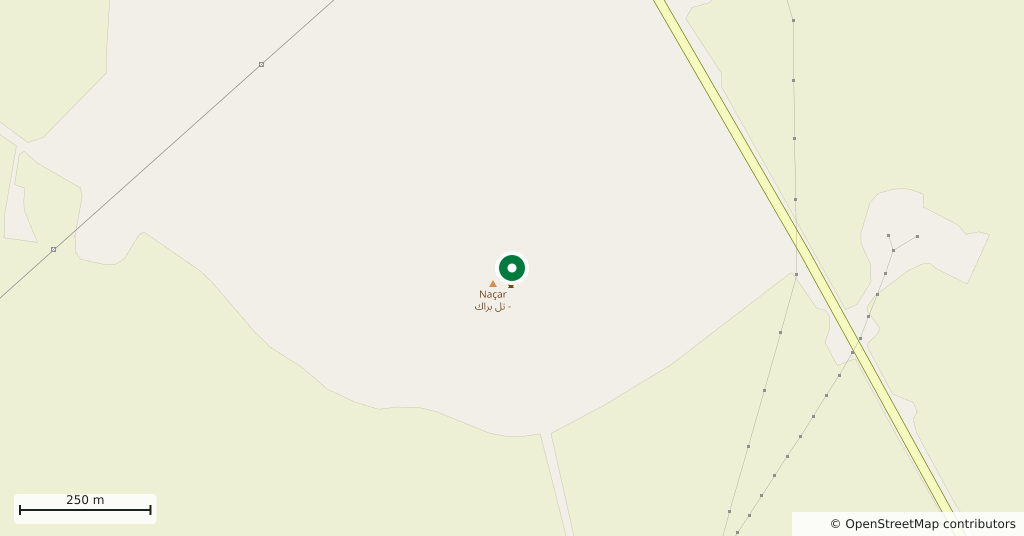
- Tell Brak village, Upper Khabur plain; 40 km north-east of Hasakah
This is one of the places where urban life began. Tell Brak is a great mound in the middle of the Upper Khabur plain. A small village in the seventh millennium BC, it had grown by the fourth into one of the largest settlements in northern Mesopotamia. It did so independently of Uruk in the south. The city’s first name is unknown. In the second half of the third millennium it was called Nagar, the seat of a kingdom that controlled the Khabur valley. Later it became Nawar and was absorbed by Akkad. It grew into one of the major cities of Mitanni, and Assyria destroyed it around 1300 BC.
Getting there
40 kilometres north-east of Hasakah by road, right beside the village of the same name. A little over half an hour by car; the road is paved and the mound is the only rise on the plain, so you see it long before you reach it. No public transport runs out here.
How long it takes
Two hours. The site is wide and the excavation areas are well apart from each other; that includes the climb up and down.
What to see
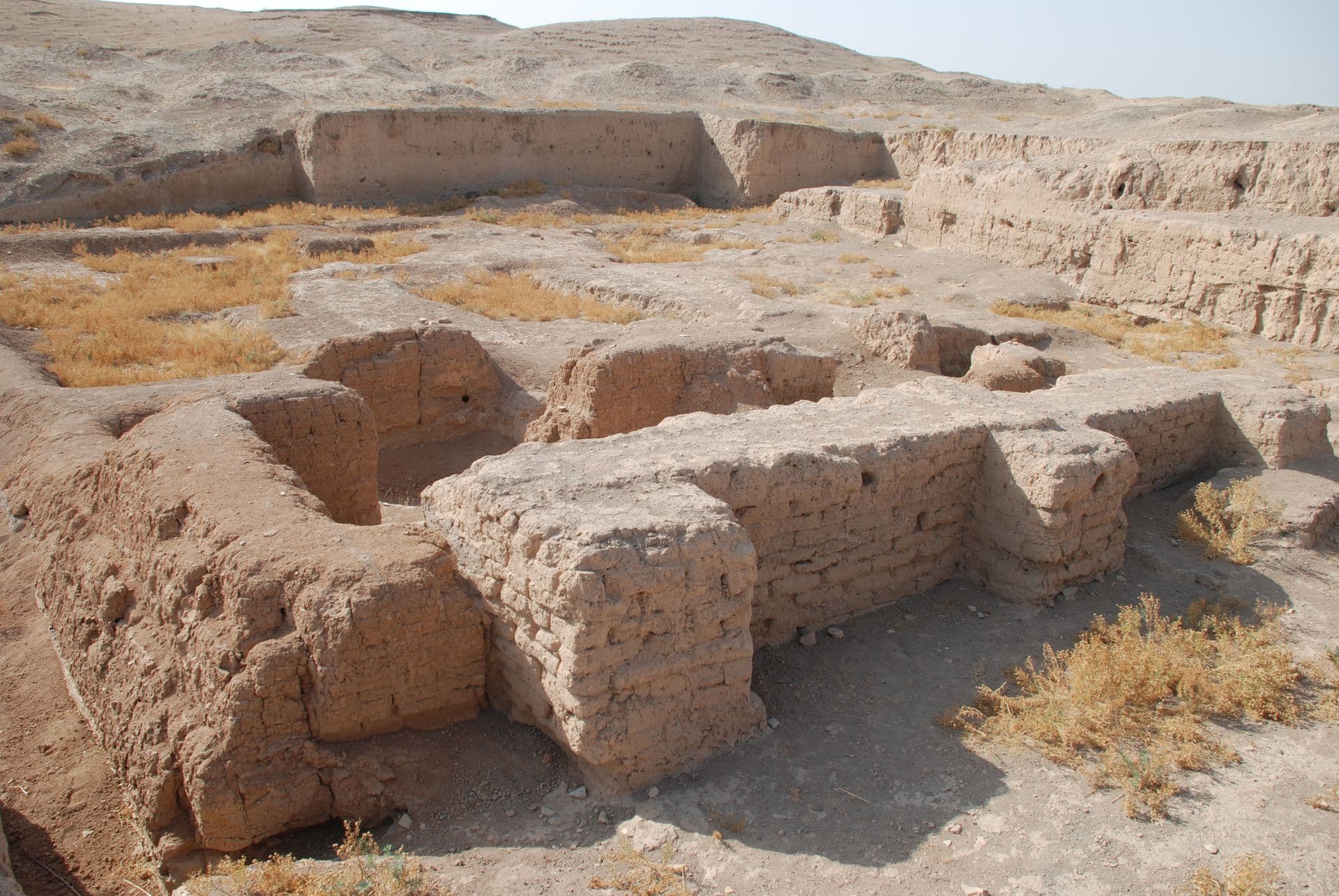
What you see is mud brick, not stone, and reading it takes a few minutes of adjustment. On the north-east slope the thick walls of the Naram-Sin building stand open: a plan room by room, with the unexcavated slope above it. Higher up, in area HH, are the rooms of the Mitanni palace, and from there the plain runs the full width of the view — the extent of the lower town only makes sense from above. The mound itself is a document too: more than twenty metres of occupation lie stacked on each other, and in the cut faces of the trenches those layers read as lines.
What not to miss
Ask where the Eye Temple stood. This fourth-millennium building takes its name from the thousands of small alabaster figures found inside it: flat bodies topped by two huge eyes. Nothing like them is known anywhere else in the Fertile Crescent. The figures themselves are not here — they are in London, in Aleppo and in the Deir ez-Zor Museum. The city’s chief goddess, Belet Nagar, was honoured across the whole Khabur region, which made Tell Brak a place of pilgrimage. A second detail: the city was famous for the kunga, a hybrid of a female donkey and a wild ass, the animal that drew royal carriages before the horse was domesticated. One kunga cost two kilos of silver, fifty times the price of a donkey, and the kings of Ebla bought them here regularly.
The site today
Excavation began with Max Mallowan in 1937 and stopped in the spring of 2011. The dig team’s camp was looted, its tools and stored pottery taken; the site changed hands several times during the war and reached its present state in early 2015. There is a guard on the mound but no regular visiting arrangement. Before you go, ask in Hasakah whether the site is open and what the road is like.
Tips
- Climb to the top of the mound: the reach of the lower town only reads from up there
- The walls are mud brick, not stone; do not step on the edges or handle them — the surface goes with every touch
- Most of the finds are elsewhere: the eye idols are in London and Aleppo, the tablets in the Deir ez-Zor Museum
- The trench edges have been undercut; stay on the marked path
- If Tell Beydar is in the same day, the return runs back through Hasakah — count the distance accordingly
Gallery
Transparency
- How this was chosen
- Written by hand; opening hours, entry fee and coordinates are kept as data. A field that is not known for certain is marked as variable rather than guessed.
- Facts checked
- September 2026
- Last updated
- September 15, 2026