Two days in Palmyra: from the spring to a desert palace
A second programme for anyone who has walked the colonnade: the spring that made the oasis, an army camp, the valley of tombs, and a palace on the steppe.
- Duration
- 16 hours
- Distance
- 245 km
- Difficulty
- Moderate
- Best season
- March–May, October–November
- stops
- 4
- City
- Palmyra
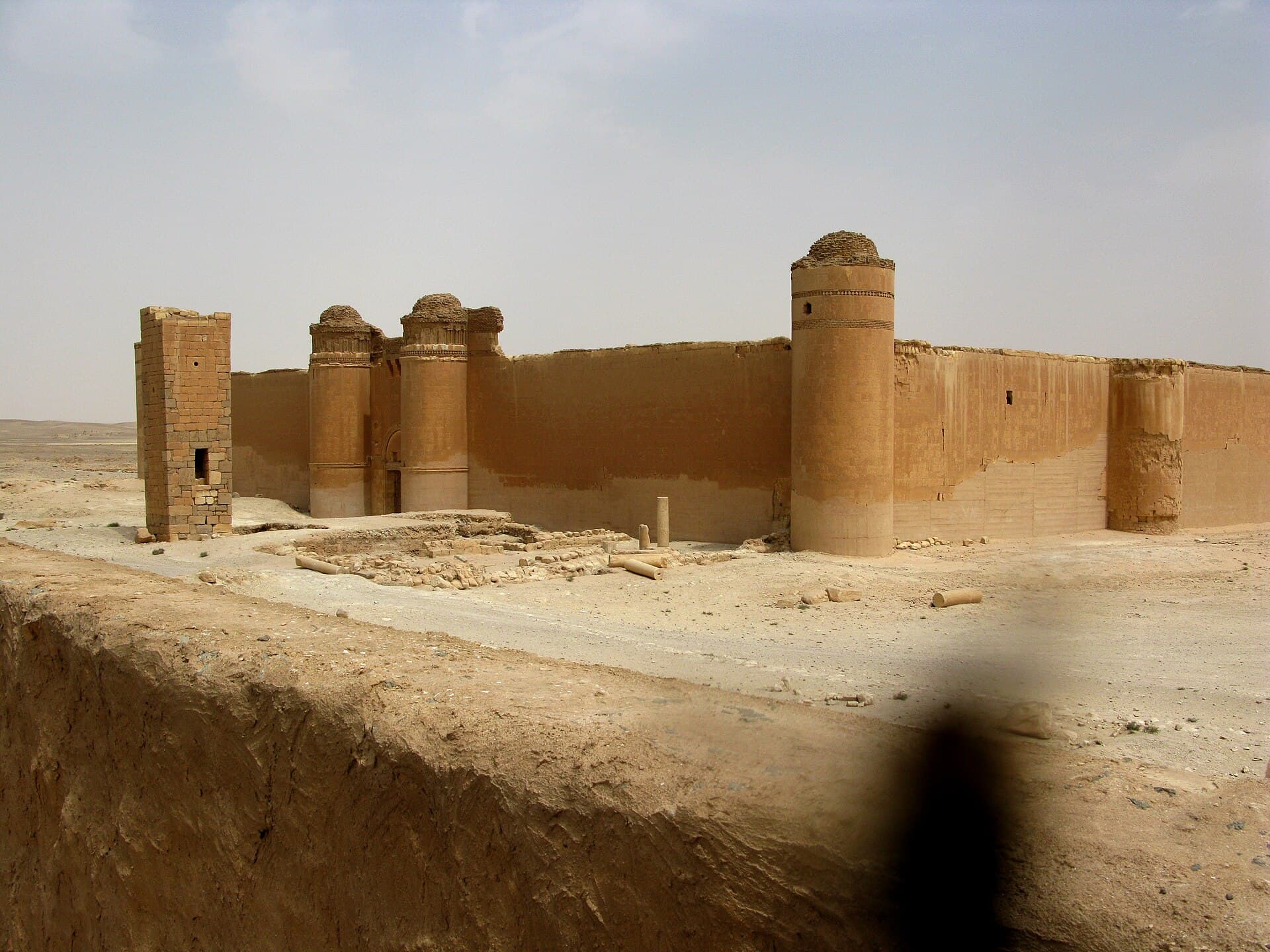
The familiar face of Palmyra fits into half a day: the Temple of Bel, the great colonnade, the theatre. This route picks up where that ends. The first day stays at the western end of the city — the spring, the camp of the Roman army, the inside of the valley of tombs. On the second day you leave the city altogether and drive out into the steppe: Qasr al-Hayr al-Sharqi, 115 kilometres to the northeast, 28 kilometres from the nearest town. The two days come to 245 kilometres and almost all of that belongs to the second.
The route
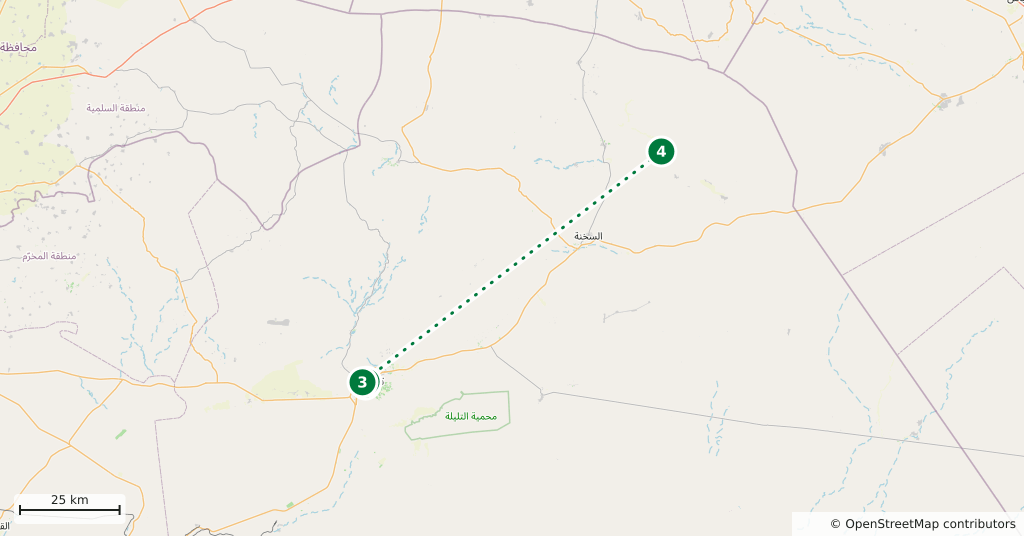
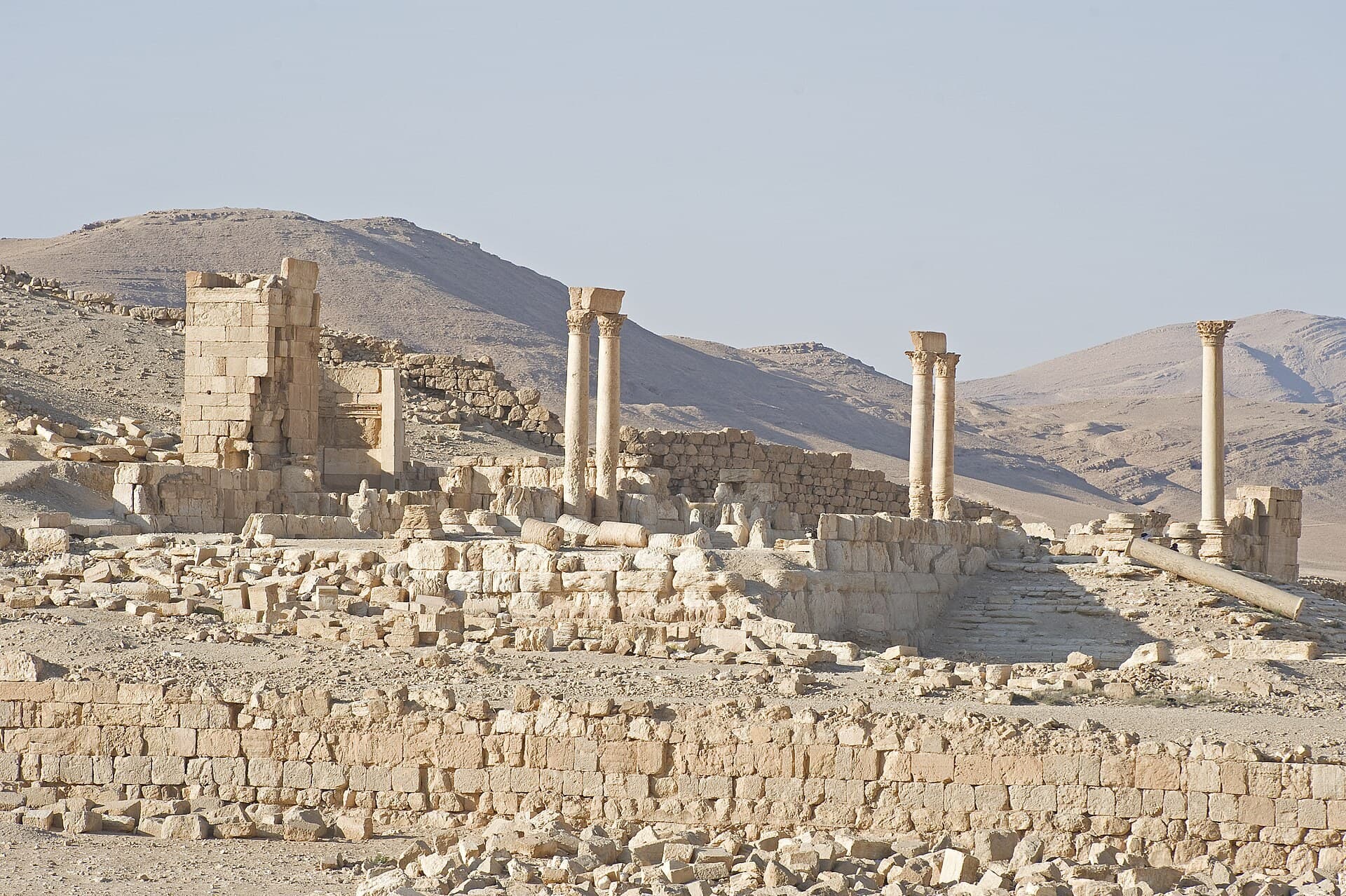
Day one needs no car. The Efqa spring lies on the western edge of modern Palmyra, on the Damascus road, within walking distance of the town centre. From there you enter the ruins; the Camp of Diocletian sits at the west end of the colonnade, has no separate gate, and the street runs straight to the Porta Praetoria. Go south from the camp and the Valley of the Tombs begins, with the Elahbel tower at the foot of the Umm al-Belqis hill. The three stand on one line and the walking between them comes to about five kilometres. On the second day you head northeast towards Sukhnah. The road crosses open steppe with no fuel and no water along it; go with a driver who knows the way and a full tank, and do not budget less than three hours each way.
Timing
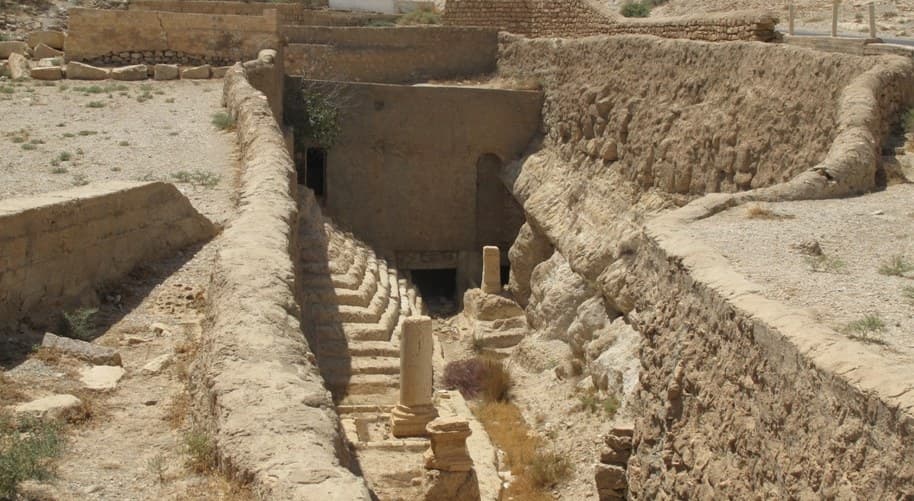
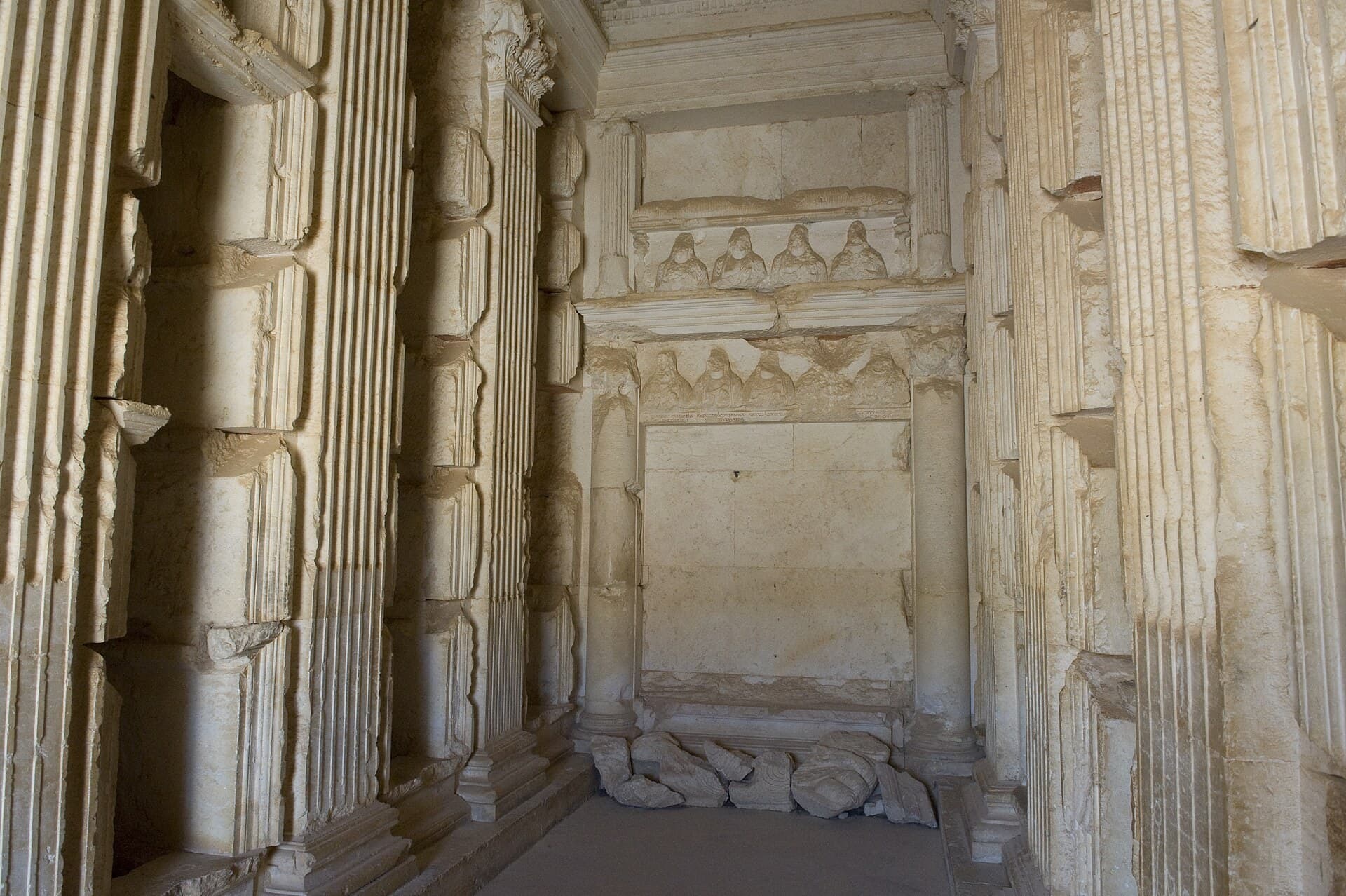
On day one be at the spring at 07:00. The mouth of the channel is backlit in the middle of the day and clear in the morning. Reach the camp around 09:00; the site is wide but built on a single axis, so forty-five minutes is enough. Spend the middle of the day in shade. Go down into the valley at 16:00: the tower was built in 103, blown up in August 2015, and today a heap of cut stone stands in its place. The line of the foundations and the threshold still read, and some of the neighbouring towers are standing. On day two set off at 06:00. Reach the palace before noon and you can walk both courtyards and the bath house before the shade turns; the drive back then falls in the cool of the evening.
Take care
Nothing on this route has shade. The second day should not be attempted in high summer; autumn and spring are the right seasons. Efqa dried up in 1994 and was reported flowing again after repair work; the volume varies from year to year, and if no water is coming the stair, the channel mouth and the stone basins are still there to see. Which parts of the ruins are open can change, and access to the valley depends on the day, so ask in town in the morning. Do not drive the Qasr al-Hayr road alone and do not leave the return until dark. Entrance fees at two of the stops vary, so carry cash.
The route on a map
Stops along the route
- 01
- 02
- 03
- 04
Transparency
- How this was chosen
- The stops and their order were set by hand. The line on the map is real road geometry, not a straight hop between pins; distance and duration belong to that itinerary.
- Facts checked
- September 2026
- Last updated
- September 15, 2026