What is Aleppo famous for?
Aleppo is known for trade, for its citadel and for laurel soap. The citadel does not stand on a hill — it is the hill, with thousands of years stacked beneath it. The covered Souq al-Madina and the Great Mosque sit on the same line, and the soap is still boiled from olive oil and laurel: after nine months of drying a bar comes out grey on the outside and green inside.
Highlights
- The Aleppo Citadel
- The Al-Madina Souq
- The laurel soap workshops
What to see
- Aleppo · 18th century
The Hilaliyya Zawiya in Aleppo
A Qadiri Sufi lodge in Aleppo's Al-Jalloum quarter, rebuilt in 1790, that has trained the city's qudud and muwashshah singers for four centuries. Still active.
- Aleppo · 16th century
Dar Rajab Pasha, Aleppo’s Palace of Culture
A 16th-century Ottoman mansion near Bab al-Faraj, now Aleppo's Palace of Culture. In 2025 it hosted craft shows, qudud concerts and a festival. Hours unconfirmed.
- Aleppo · 1417
The Tomb of Imadaddin Nasimi
Where the poet Nasimi lies in Aleppo: a walled tomb in a small Sufi lodge on the lane named after him in al-Farafira. Its repair came back on the agenda in 2025.
 Aleppo · 12th century
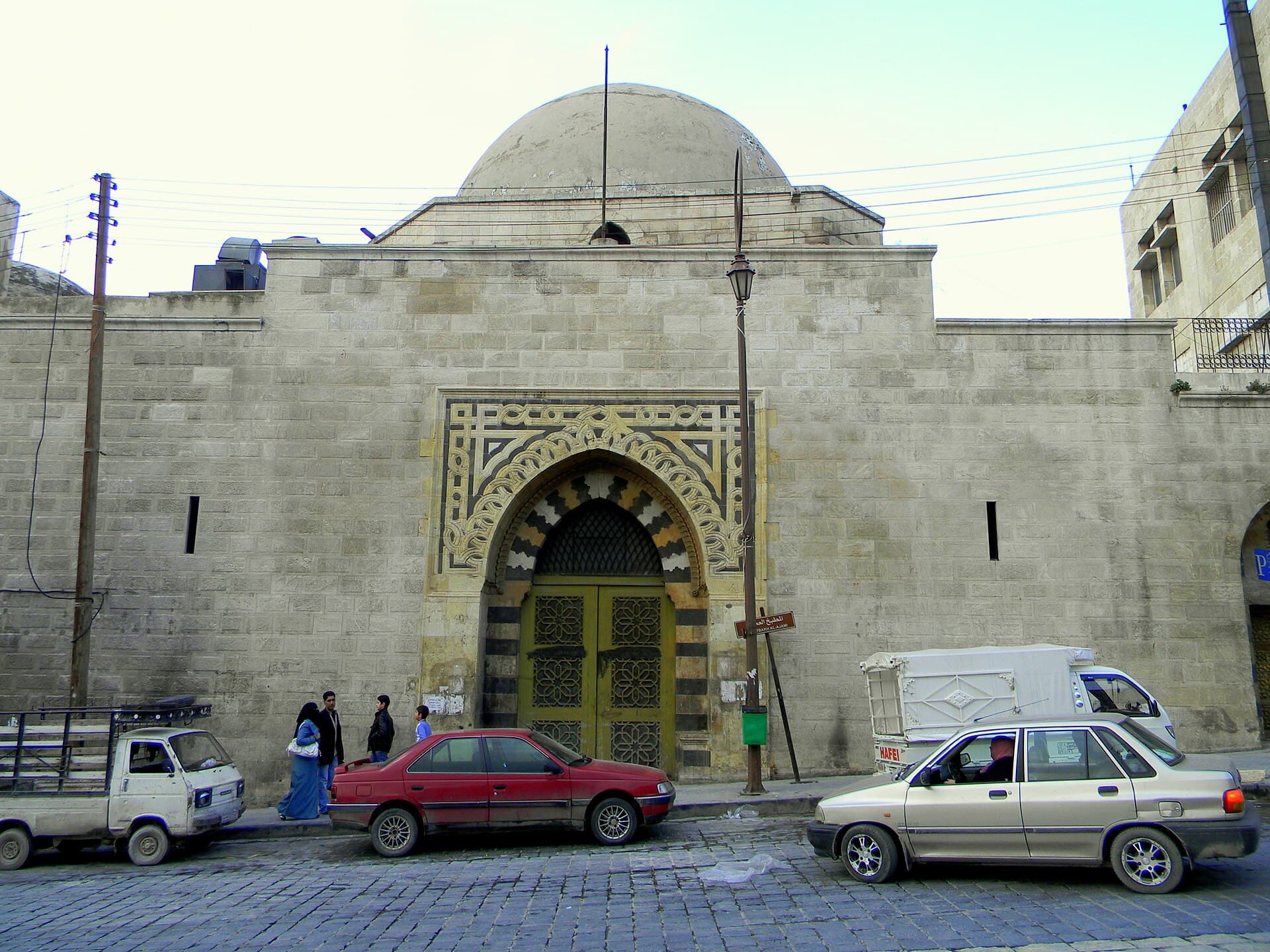
The Matbakh al-Ajami Palace
A 12th-century palace on the street from the Aleppo Citadel to the Great Mosque, under the largest surviving Ayyubid dome. It held a folk museum from 1967 to 1975.
 Aleppo · 968/1560
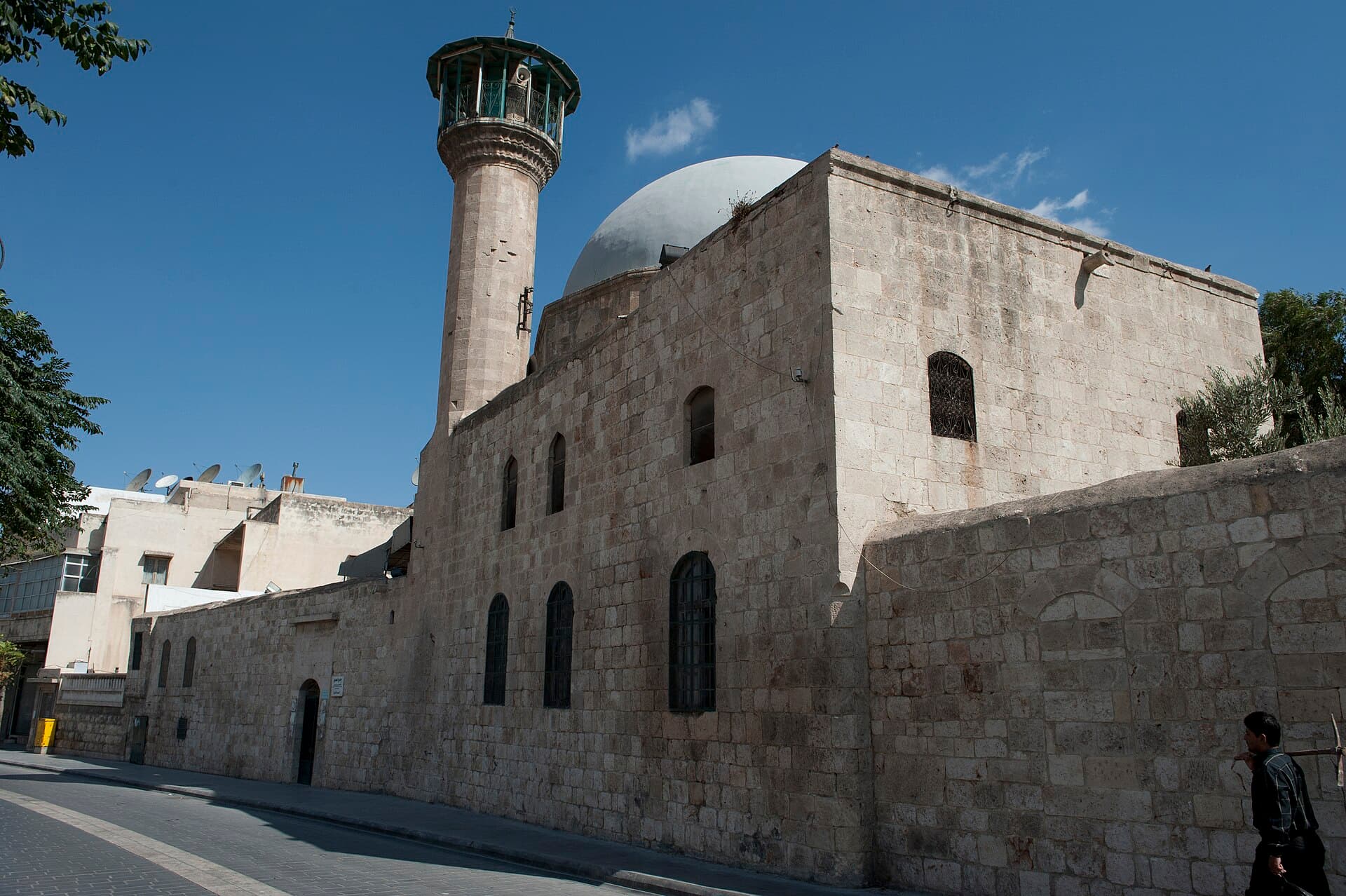
The Al-Hamawi Mosque
An Ottoman mosque of 968/1560 below the north-east side of the Aleppo Citadel, with its own school, fountain and tomb around it. Entry is free, at prayer times.
- Aleppo · 16th century
The Mevlevi Lodge of Aleppo (Mawlawiyya Takiyya)
A 16th-century lodge of the whirling dervishes outside Aleppo's north-west walls, with a hall for the sema, a square laid out in 1834 and a past as the order's seat.
Where to eat
 Aleppo · the pantry
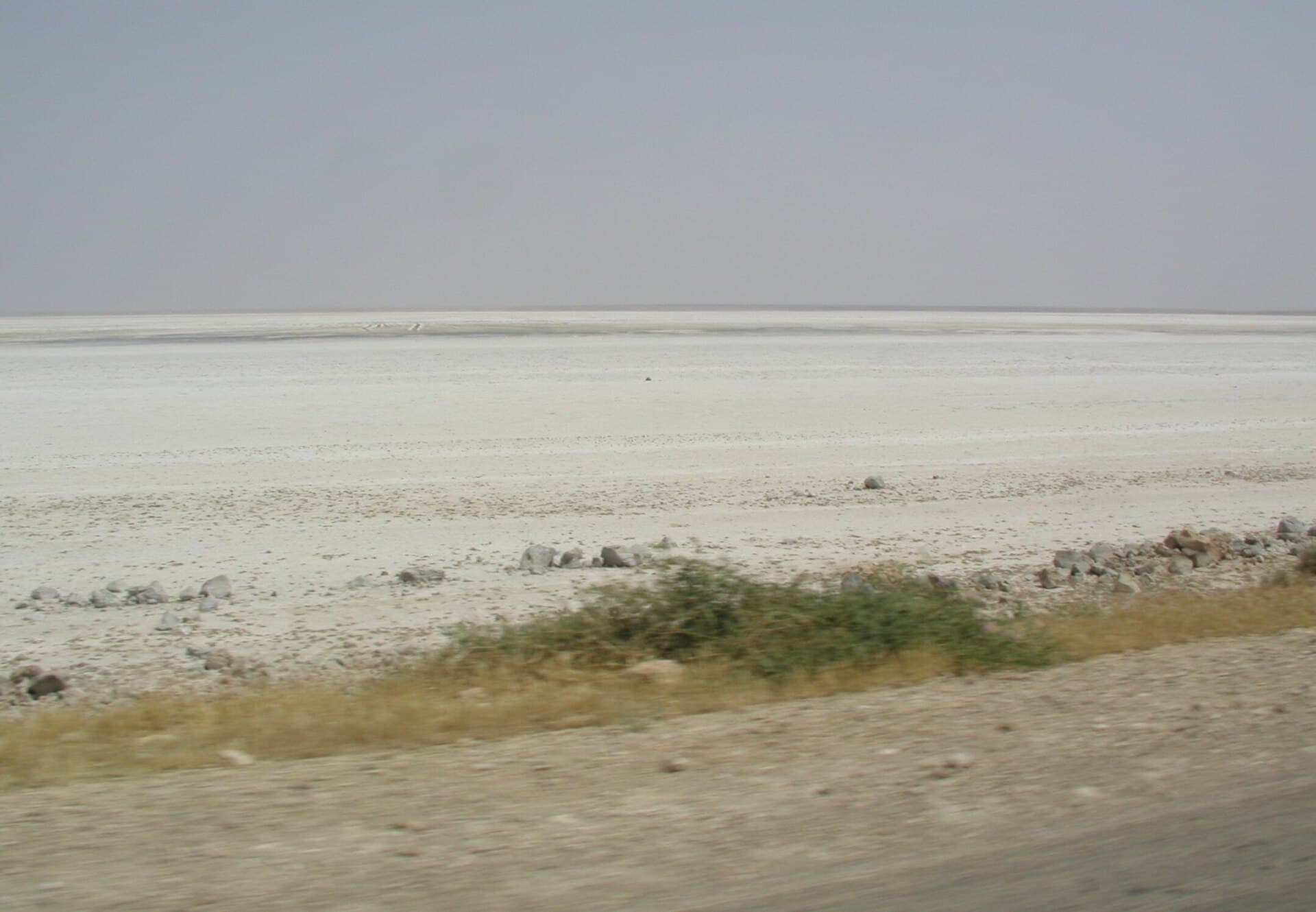
Syrian salt and Sabkhat al-Jabbul
Most of the country's salt comes off Sabkhat al-Jabbul, 30 km southeast of Aleppo. Every shelf of the winter pantry — olives, pickles, kishk, cheese — rests on it.
 Aleppo · spice shelf
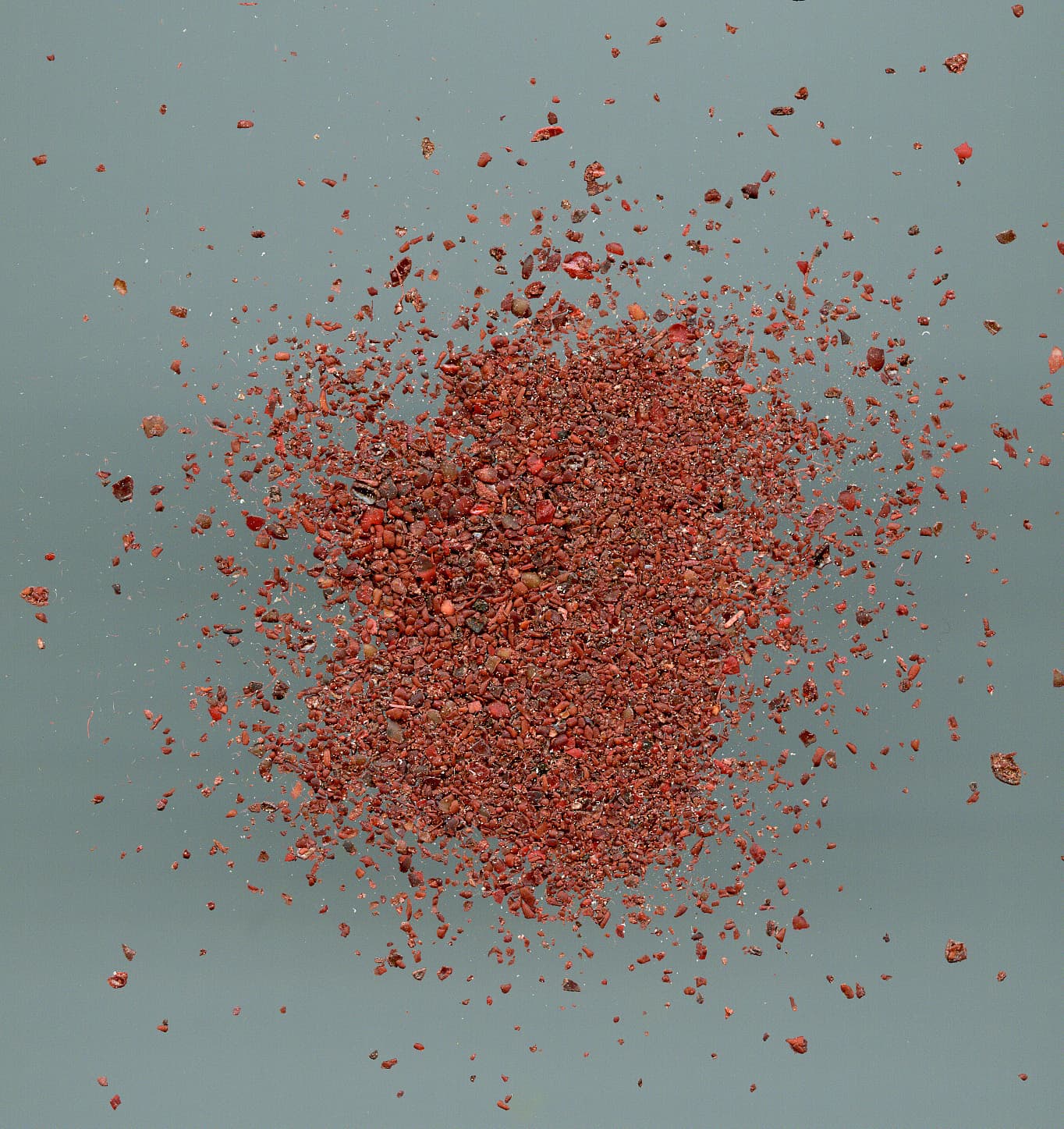
Sumac
Dried, crushed dark red grains. Before lemons spread through the Mediterranean this was the source of sourness, and it still reddens za'atar and fattoush.
- Aleppo · the breakfast tray
Syrian honey and the Syrian bee
It arrives on the breakfast tray beside clotted cream and tahini. Behind the jar sits a local subspecies: low-yielding, sharp-tempered, and hard to raid.
Ready-made routes
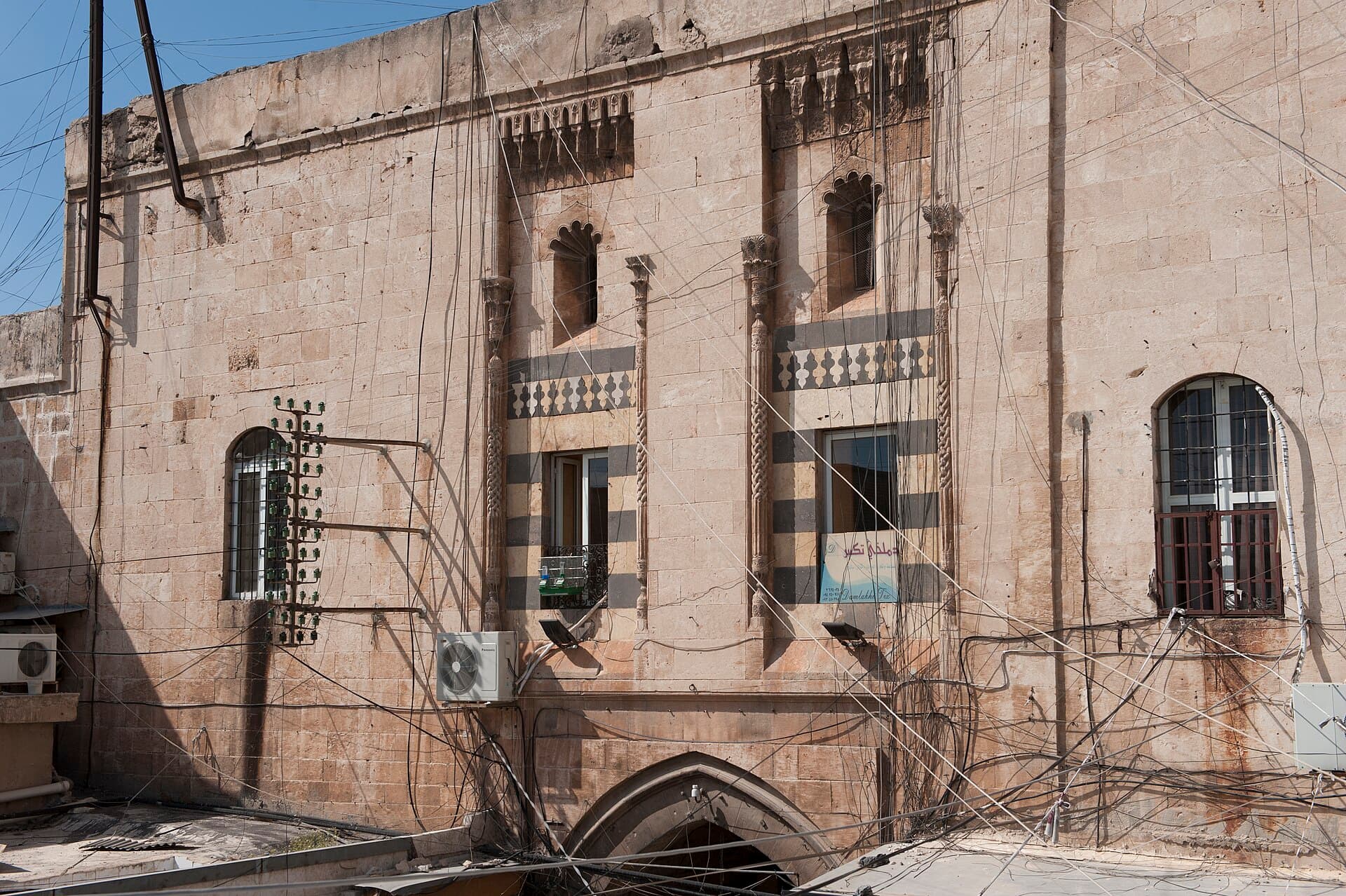 On foot · half a day
Aleppo’s consulate khans: from Khan al-Wazir to Khan al-Jumruk
A half-day walk in the Aleppo souq through six khans, tracing where Venetian, English and French consuls lived, from the treaty of 1207 to Khan al-Jumruk.
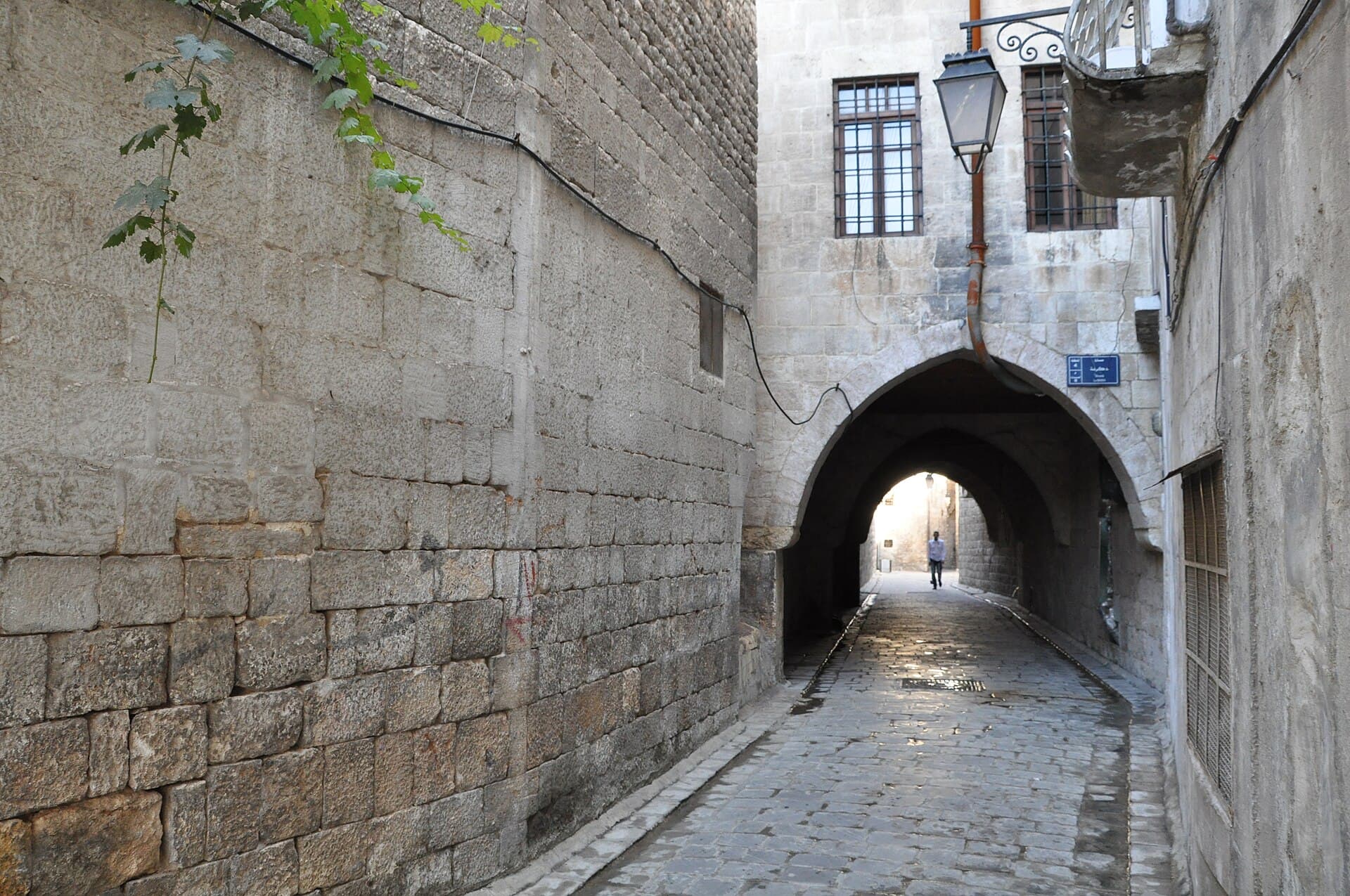 On foot · half a day
From al-Jdayde to al-Almaji: Hokedun, the wool souq and Burdbek’s two fountains
Half a day in Aleppo from Jdayde to al-Almaji: the Armenian pilgrims' khan, the wool souq, Al-Hatab Square and two works of Burdbek dated 1461 and 1491.
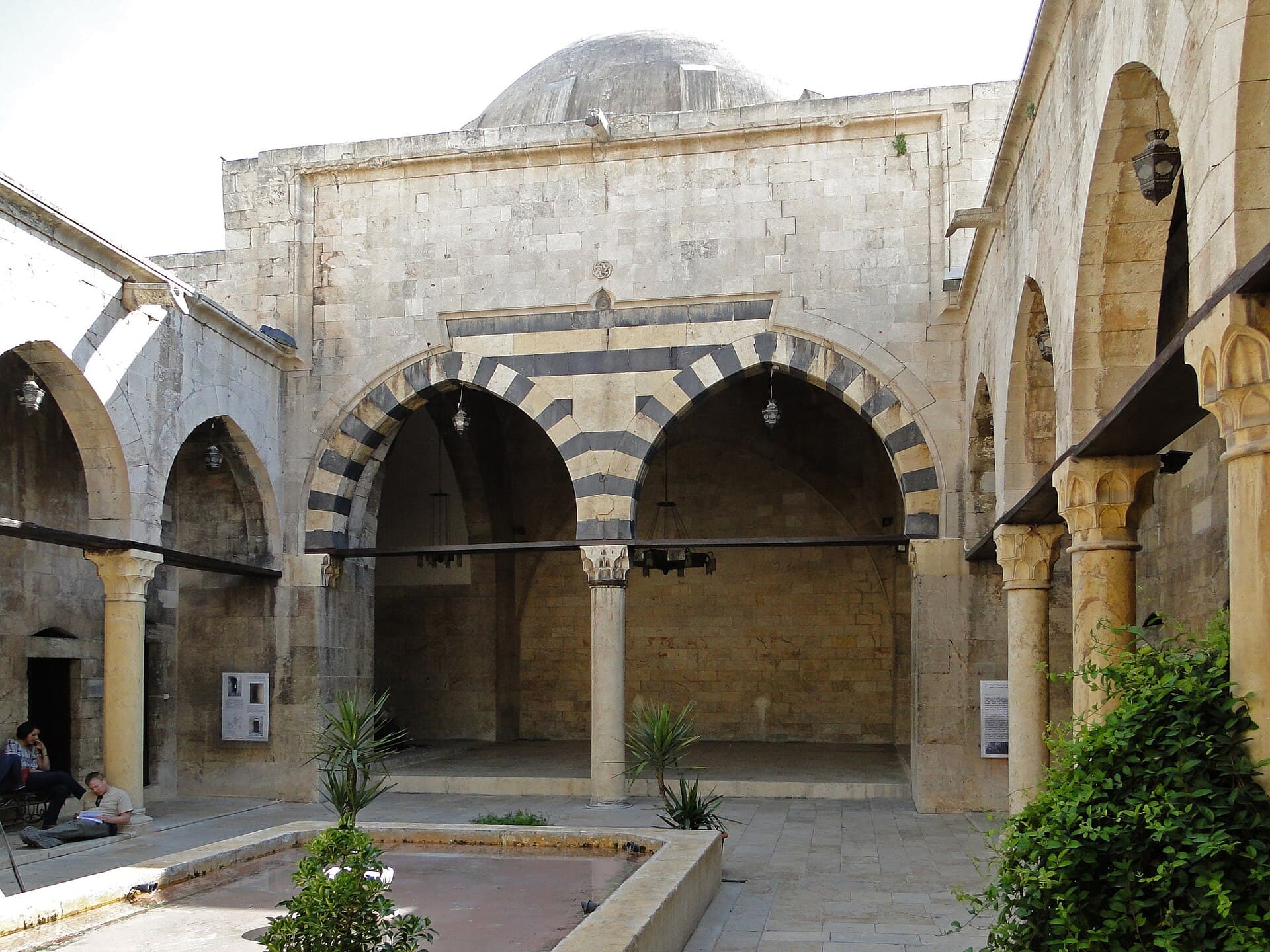 On foot · half a day
Inside Bab Qinnasrin: Aleppo’s southwest quarter from the Bimaristan to al-Rumi Mosque
A short walk inside Bab Qinnasrin in Aleppo: a Mamluk hospital of 1354, a khan of 1450, a mosque with a footprint stone, the gate itself and al-Rumi Mosque.
Transparency
- How this was chosen
- The answer on this page is written by hand. The lists are built from published records tied to this city and grow on their own as records are added.
- Facts checked
- August 2026
- Last updated
- September 15, 2026