A day northwest of Aleppo: the early churches of Mount Simeon
Five early churches northwest of Aleppo on one route: 100 kilometres, an apse dated to 372, a basilica left standing on its columns, and a hill with three layers.
- Duration
- 9 hours
- Distance
- 100 km
- Difficulty
- Moderate
- Best season
- April–June and September–October
- stops
- 5
- City
- Aleppo
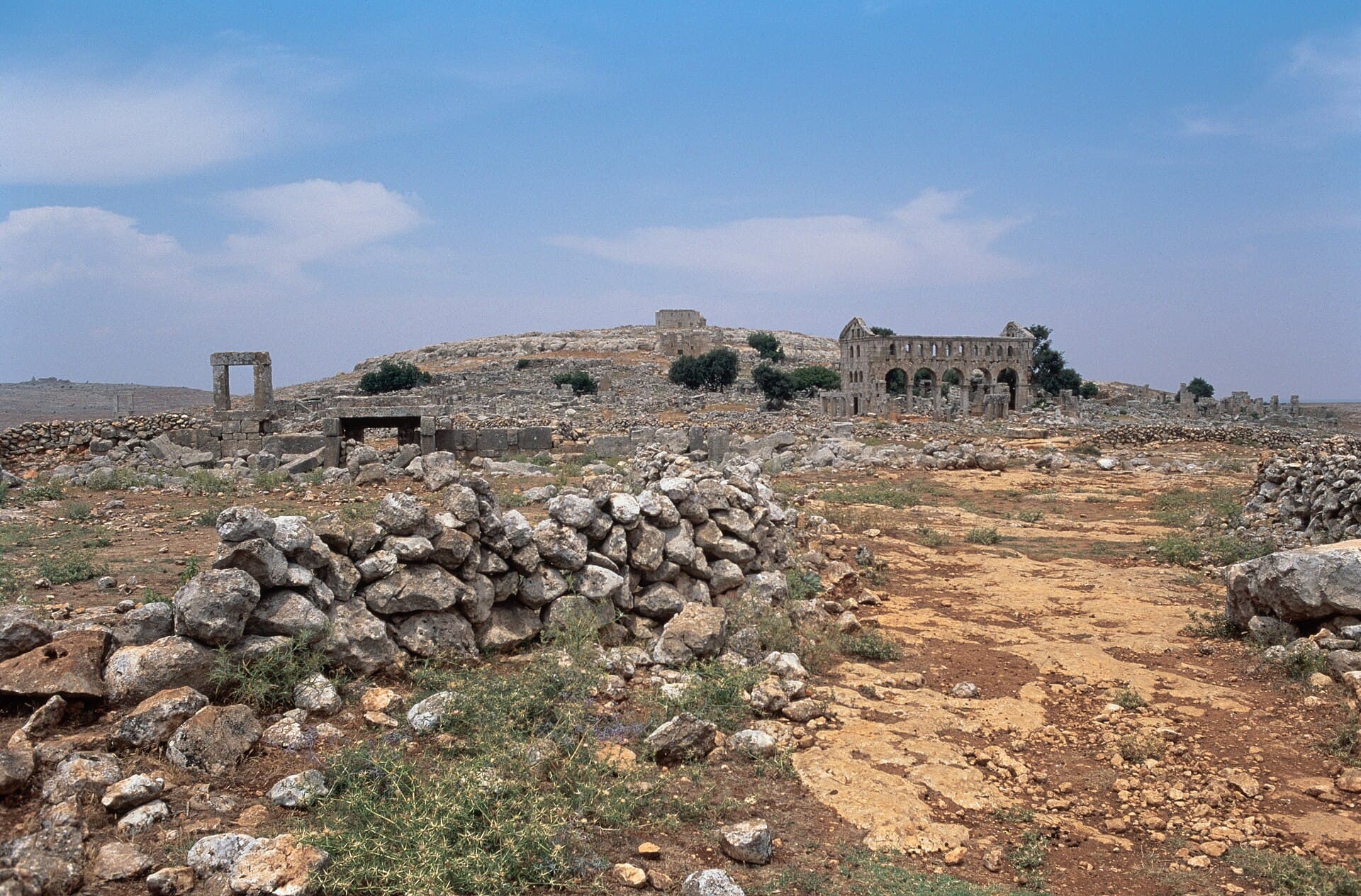
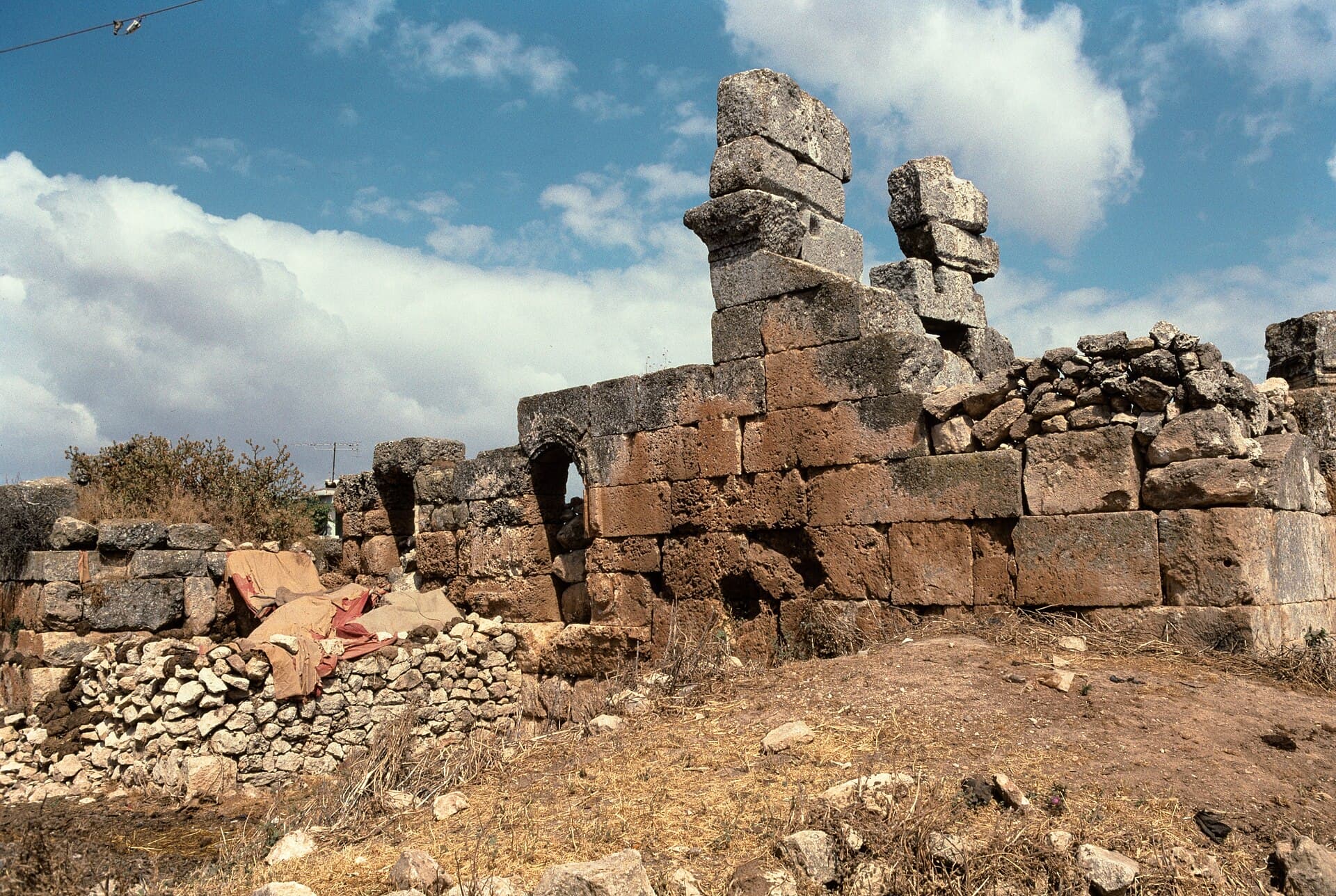
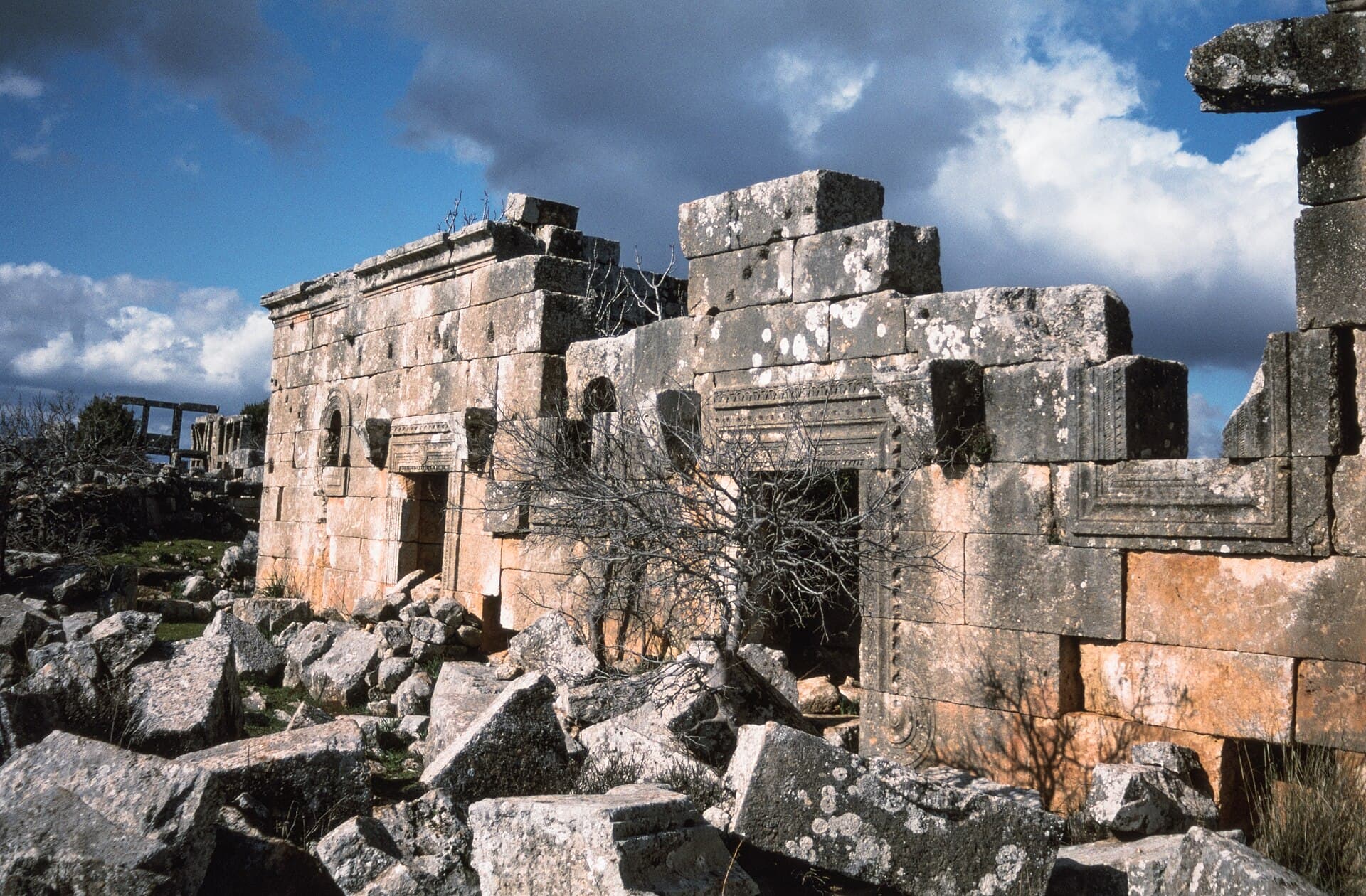
The earliest churches in Syria stand on Mount Simeon, northwest of Aleppo, and most of them sit a kilometre off the road that runs up to the Monastery of Saint Simeon. This day strings five of them onto one route: 100 kilometres, five stops, all by car. The oldest church in the country with a firm date, which is 372. A basilica left standing on its columns after an earthquake took its walls. A church in the middle of a village people still live in, a hill with three layers, and the most complete church of the Dead Cities.
The route
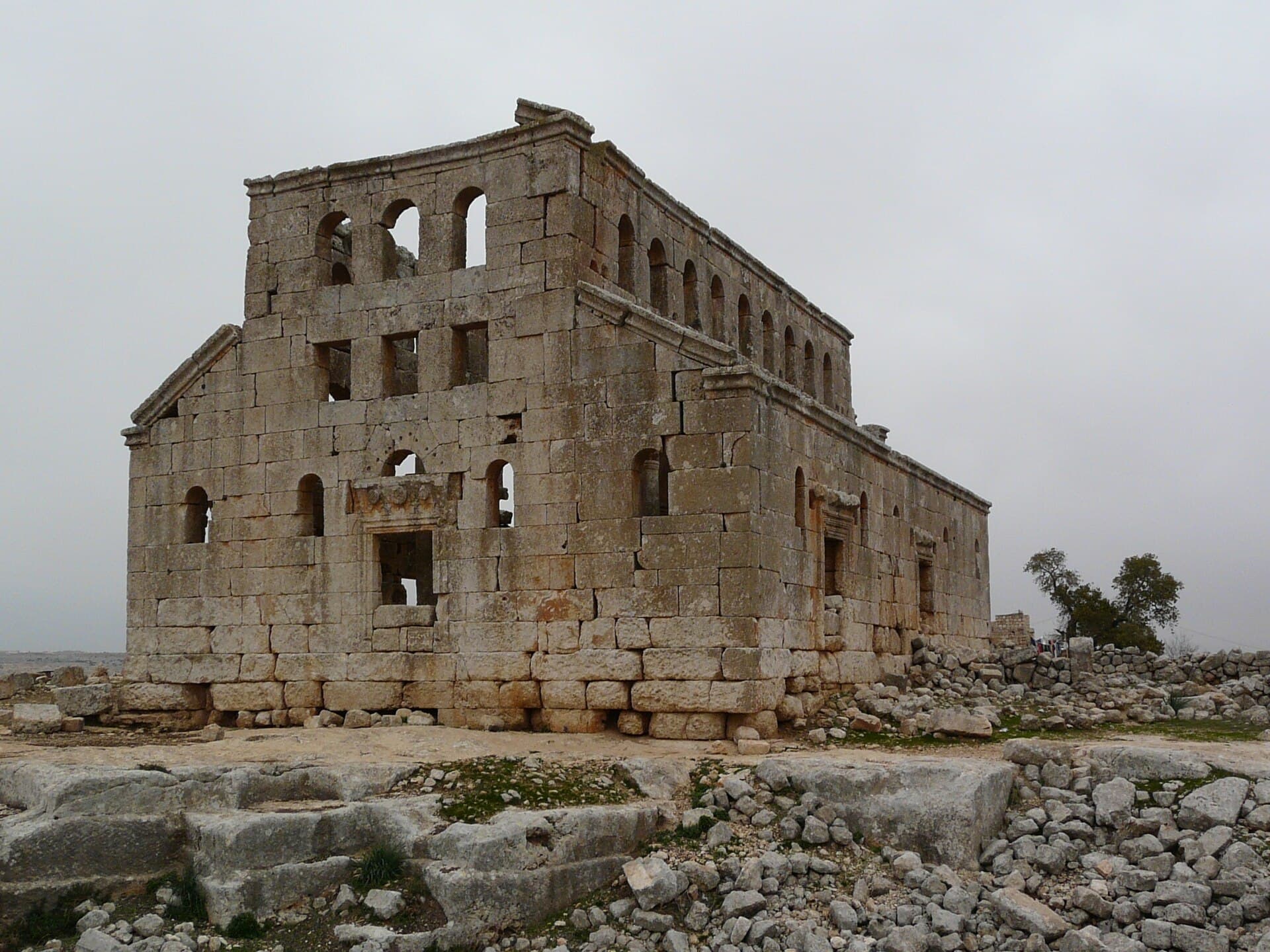
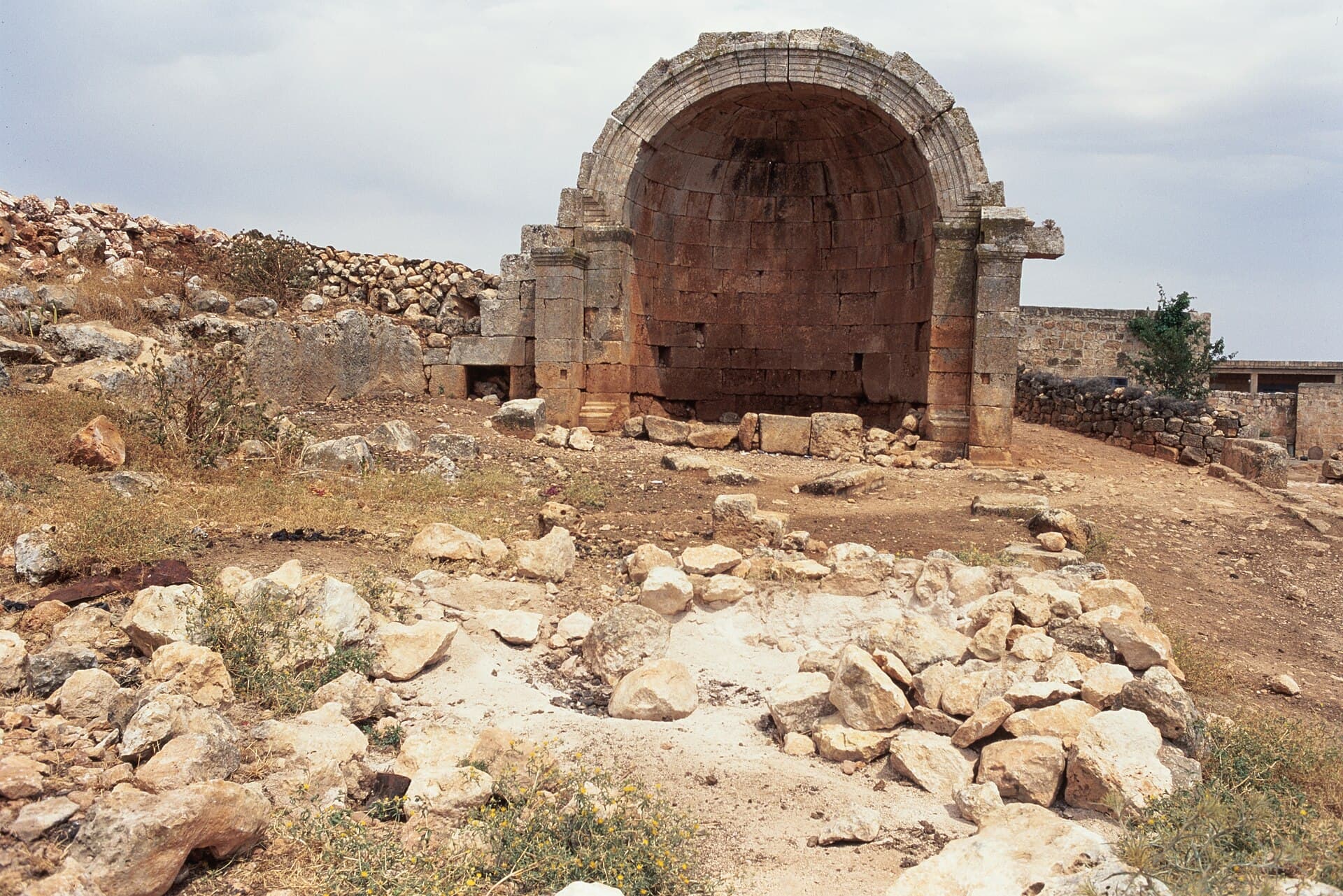
Leave Aleppo westwards, towards Daret Azzah. The Basilica of Mushabbak is 30 kilometres out and 600 metres south of the road; a surfaced spur runs right up to the church, and there is no village anywhere near it. From here carry on north towards Deir Semaan; the side road east of the Monastery of Saint Simeon takes you to Basufan. The church is in the middle of the village, among lanes where people live. Leave the car at the edge and walk in. The same road goes on through Burj Haydar to Kalota: you climb the hill, and the three layers sit one above the other at the top. From Kalota, 5 kilometres south brings the two gables and the row of columns of Kharab Shams into view from the road. The last stop is Fafertin, 5 kilometres southwest of that; the only piece standing is the apse, and the village is still lived in. The drive back to Aleppo is about forty kilometres.
Timing
Leave Aleppo at 08:00. Reaching Mushabbak in the morning is right: the church stands alone on its hill and low light separates the courses of the wall from the rows of windows. Get to Basufan before noon; the village is up by then, and if you need permission to stand around the church there will be someone to ask. Kalota takes an hour and a half, the climb included. Leave Kharab Shams for the afternoon: in slanting light the upper storey looks as though it were held in the air above the columns, and at noon that effect goes. Fafertin comes last because it is short. Forty-five minutes finishes it and you are on the road before dark.
Take care
No public transport joins these five places, so hire a car with a driver in Aleppo, and it matters that the driver knows the way — signs are rare on the side roads. The roads are narrow and broken in places; the dirt spurs turn to mud after rain. Basufan is a living village: do not photograph into courtyards and houses, and ask before entering the church. The climb at Kalota is stony and the path is unclear, so wear shoes that grip. There is no shade at any stop and no water for sale, so take your own. Winter days are short and five stops may not fit; in that season, drop Fafertin.
The route on a map
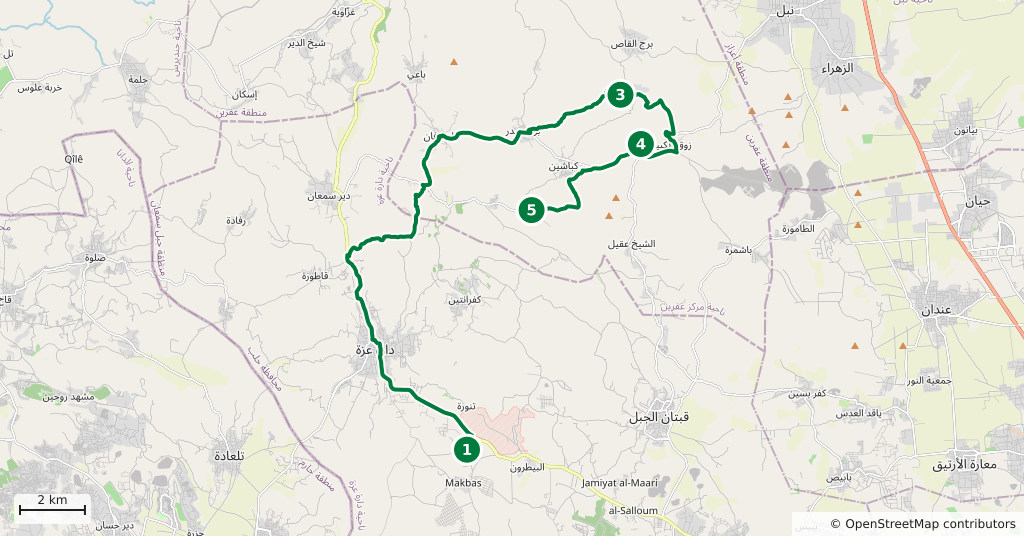
Stops along the route
- 01
- 02
- 03
- 04
- 05
Transparency
- How this was chosen
- The stops and their order were set by hand. The line on the map is real road geometry, not a straight hop between pins; distance and duration belong to that itinerary.
- Facts checked
- September 2026
- Last updated
- September 15, 2026