From the Citadel to Bab al-Saghir: Abu al-Darda, Dar al-Hadith al-Ashrafiyya and Nur al-Din’s Damascus
About 1400 metres from the Citadel of Damascus to Bab al-Saghir, six stops: Abu al-Darda’s shrine, a hadith college of 1233, Nur al-Din’s tomb, the Bashura Mosque.
- Duration
- 3 hours
- Distance
- 1.4 km
- Difficulty
- Easy
- Best season
- Year round; mornings
- stops
- 6
- City
- Damascus
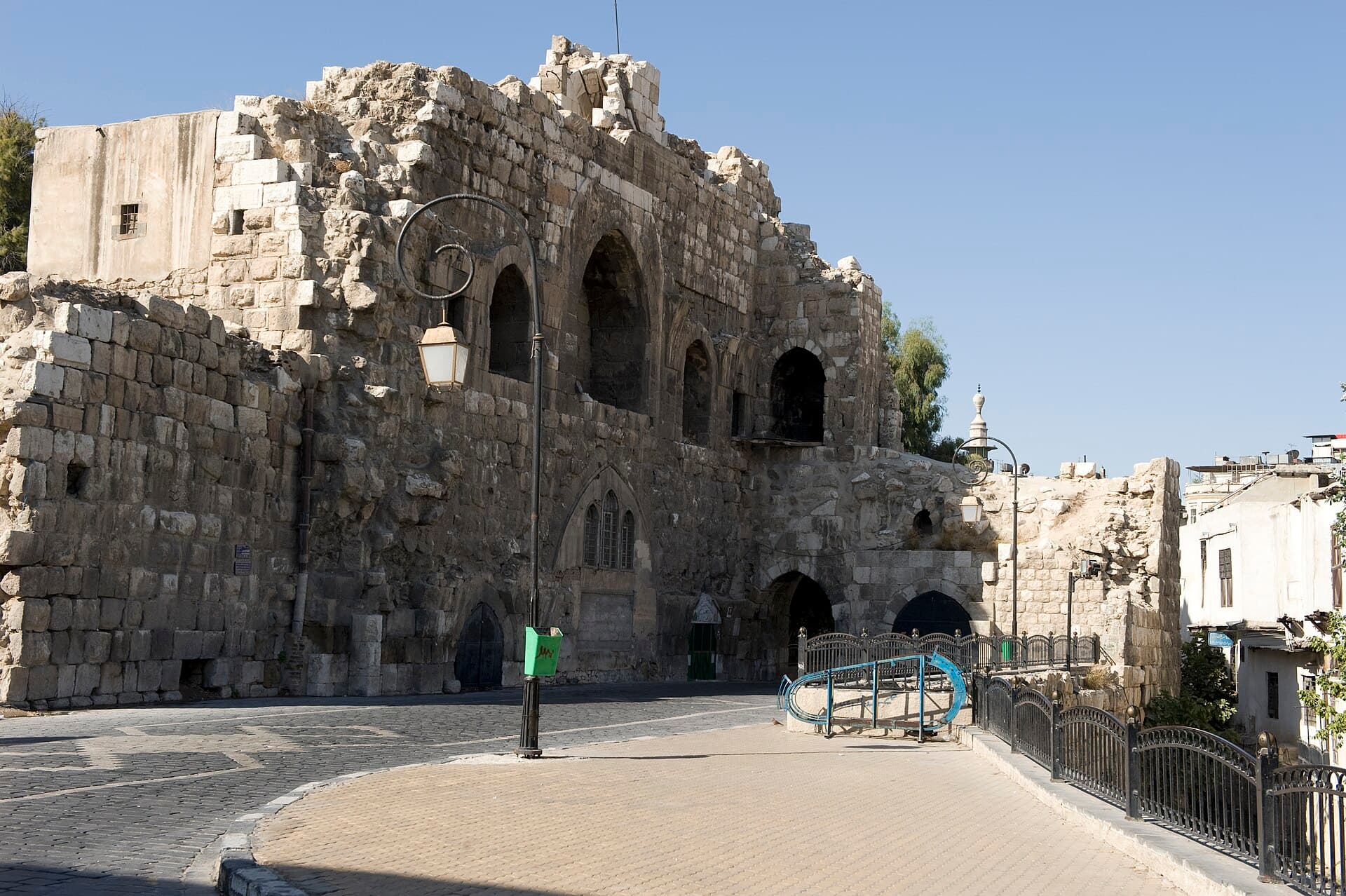
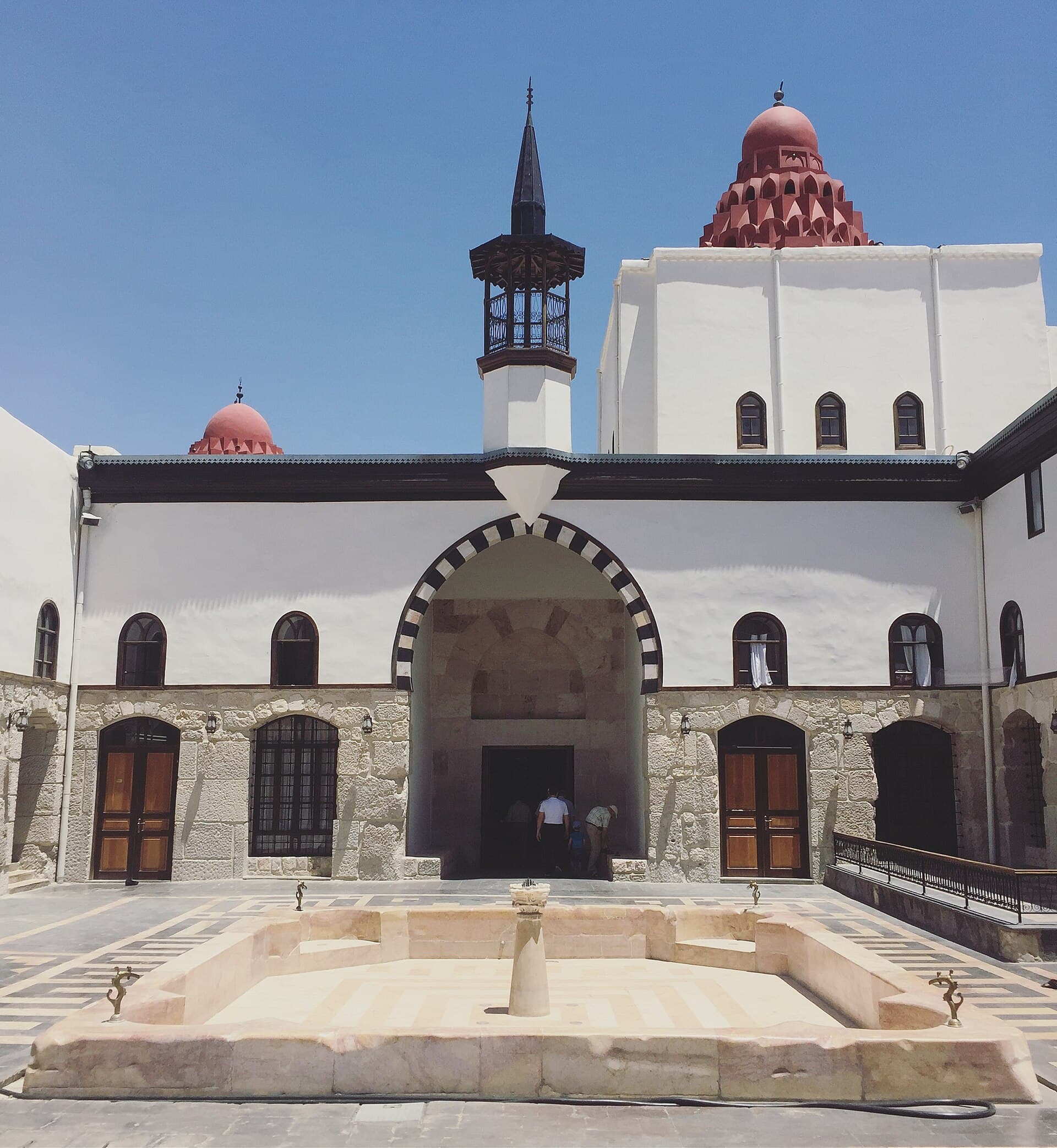
From the north wall of the Citadel of Damascus to the cemetery outside Bab al-Saghir, the southern gate of the Old City, this walk covers close to 1400 metres: six stops, three hours. It traces the city’s memory of learning and of the Prophet’s Companions from north to south, and the same name stands at both ends. A small mosque in the Citadel wall holds a shrine attributed to Abu al-Darda, a Companion of the Prophet, and tradition remembers him in the Bab al-Saghir Cemetery as well. In between come the Dar al-Hadith al-Ashrafiyya, founded in 1233, and the goldsmiths’ souq opposite the south gate of the Umayyad Mosque. Then two buildings of Nur al-Din Zengi: the Nur al-Din Madrasa, which he founded in 1172 and where he is buried, and the Al-Bashura Mosque, built in his time, in 1164-1165.
The route
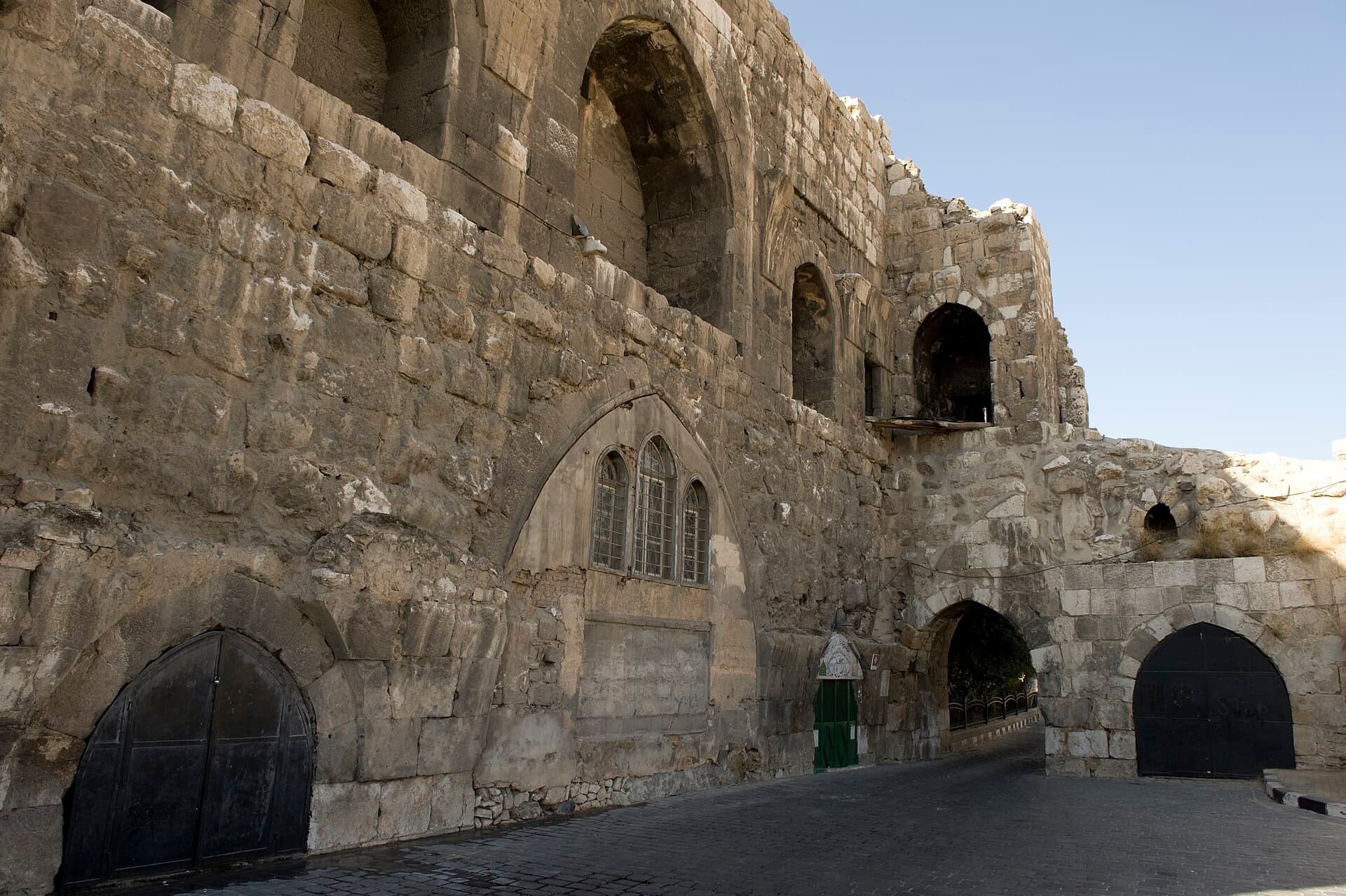
Look for the Abu al-Darda Mosque in the Citadel wall: three tall windows inside a pointed arch, to the left of Bab al-Hadid. From there walk east along the road north of the Citadel and turn south into the Asruniyya. After about 270 metres, beside the east gate of the Citadel at the head of the souq, is the Dar al-Hadith al-Ashrafiyya. The building is buried inside the market, so ask a shopkeeper for the door. The next leg is 310 metres: go along the west side of the Umayyad Mosque and round to its south side. Souq al-Sagha begins directly opposite the south gate, Bab al-Ziyada. From here it is 200 metres south-west to Suq al-Khayyatin, the tailors’ market. The door of the Nur al-Din Madrasa is plain; what leads you to it is the pointed muqarnas dome above the roofs. The last two legs run south, 500 metres and 160 metres. The Al-Bashura Mosque is right beside Bab al-Saghir, its front hidden behind shops. Step out through the gate and the cemetery begins on both sides of the road.
Timing
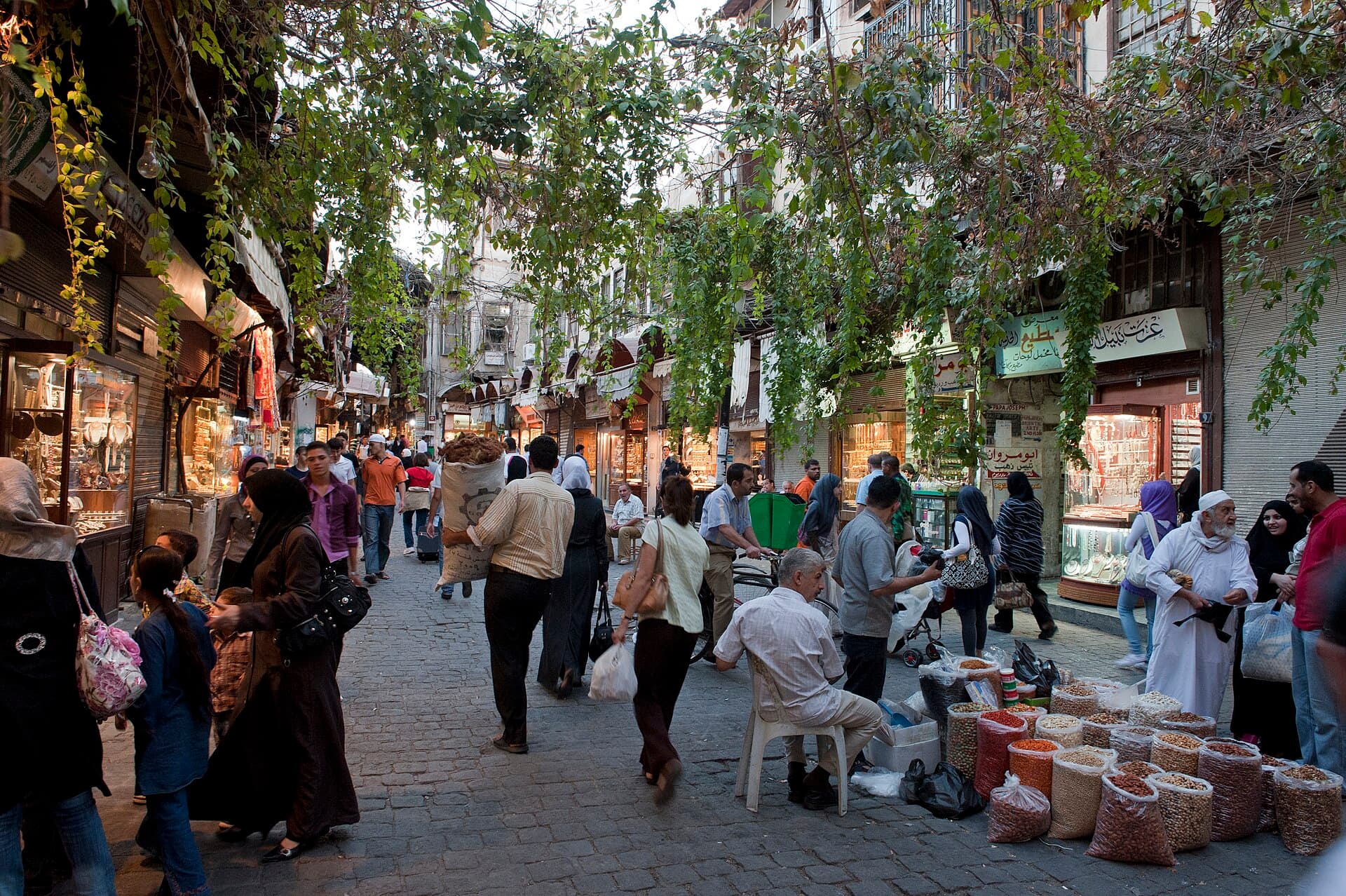
Be at the north wall of the Citadel at 09:00. The door of Abu al-Darda opens at prayer times; if it is shut, the windows can be seen from outside. The Ashrafiyya at 09:30, before the market fills up. At 10:15 you are in Souq al-Sagha, and the shops are open. The few shoemakers among the gold windows still carry the market’s old name, the Qawwafin. The Nur al-Din Madrasa at 10:45. The courtyard is in shade before noon, and shoes come off in the tomb chamber. The Al-Bashura at 11:30; as prayer time approaches, ask people nearby whether the door will open. Go into the cemetery before midday. Some of the shrines close over the midday break, and pilgrim groups arrive in the afternoon.
Take care
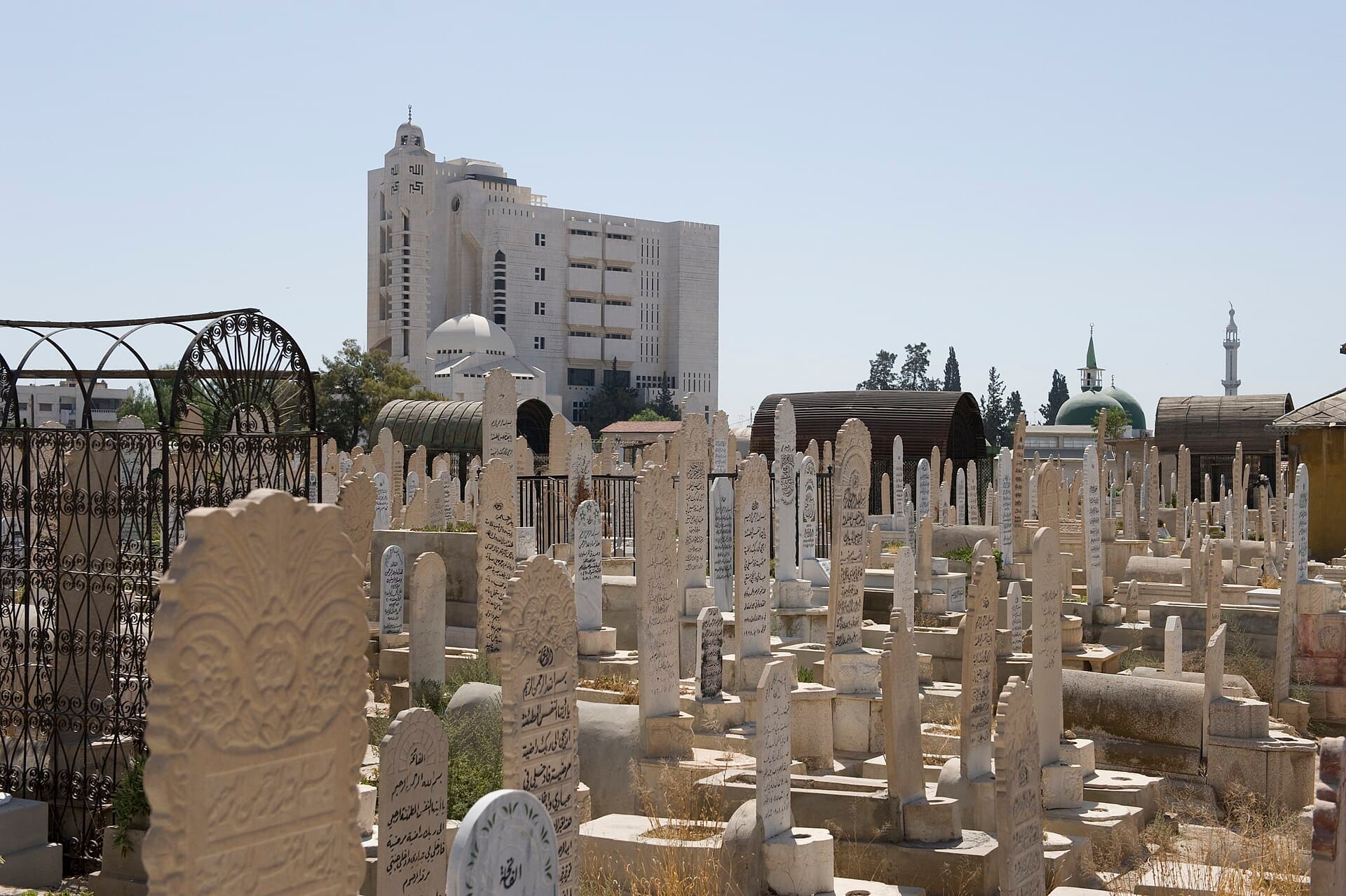
The current state of three stops on this route has not been confirmed by a recent source. The opening information for Abu al-Darda dates from 2015, and there is no record from the last twelve months for Souq al-Sagha or the Al-Bashura. No open door is promised; looking from outside is the point. Watch for two mix-ups. Damascus has two hadith colleges of the same name: the one on this route stands against the Citadel, the other is the Barraniyya in al-Salihiyya. The name Nuriyya also belongs to three buildings, so mention Suq al-Khayyatin when you ask the way. According to the archaeologist Carl Watzinger, the tomb in the Citadel wall is a shrine dating from 1733, not a 7th-century burial. Bab al-Saghir is still a working cemetery: keep quiet, do not step on gravestones, and if there is a funeral, move back and take no photographs. Women visitors cover their hair, and some shrines have separate entrances. In mosques keep shoulders and knees covered.
The route on a map
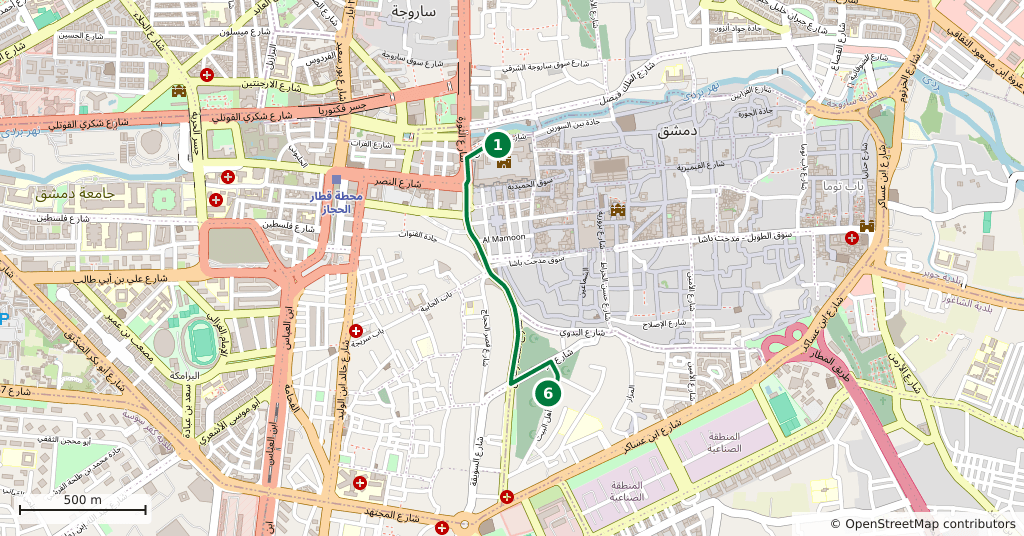
Stops along the route
- 01
- 02
- 03
- 04
- 05
- 06
Transparency
- How this was chosen
- The stops and their order were set by hand. The line on the map is real road geometry, not a straight hop between pins; distance and duration belong to that itinerary.
- Facts checked
- September 2026
- Last updated
- September 15, 2026