Half a day in Damascus: six stops from Bab al-Faraj to Aqsab
1300 metres and six stops north of the Umayyad Mosque: two madrasas, a bathhouse working since 985, a lived-in quarter, a city gate, and a mosque outside the wall.
- Duration
- 5 hours
- Distance
- 1.3 km
- Difficulty
- Easy
- Best season
- March–May and September–November, except summer middays
- stops
- 6
- City
- Damascus
North of the Umayyad Mosque, between Bab al-Faraj and Souq Saruja, lies a piece of Damascus that touches the busiest corner of the city and takes none of its crowds. This walk covers 1300 metres there. An Ayyubid madrasa, a bathhouse working since 985, a Mamluk madrasa facing the north gate of the Umayyad Mosque, a lived-in quarter, one of the north gates of the wall, and a mosque outside it. The longest leg between two stops is 500 metres.
The route
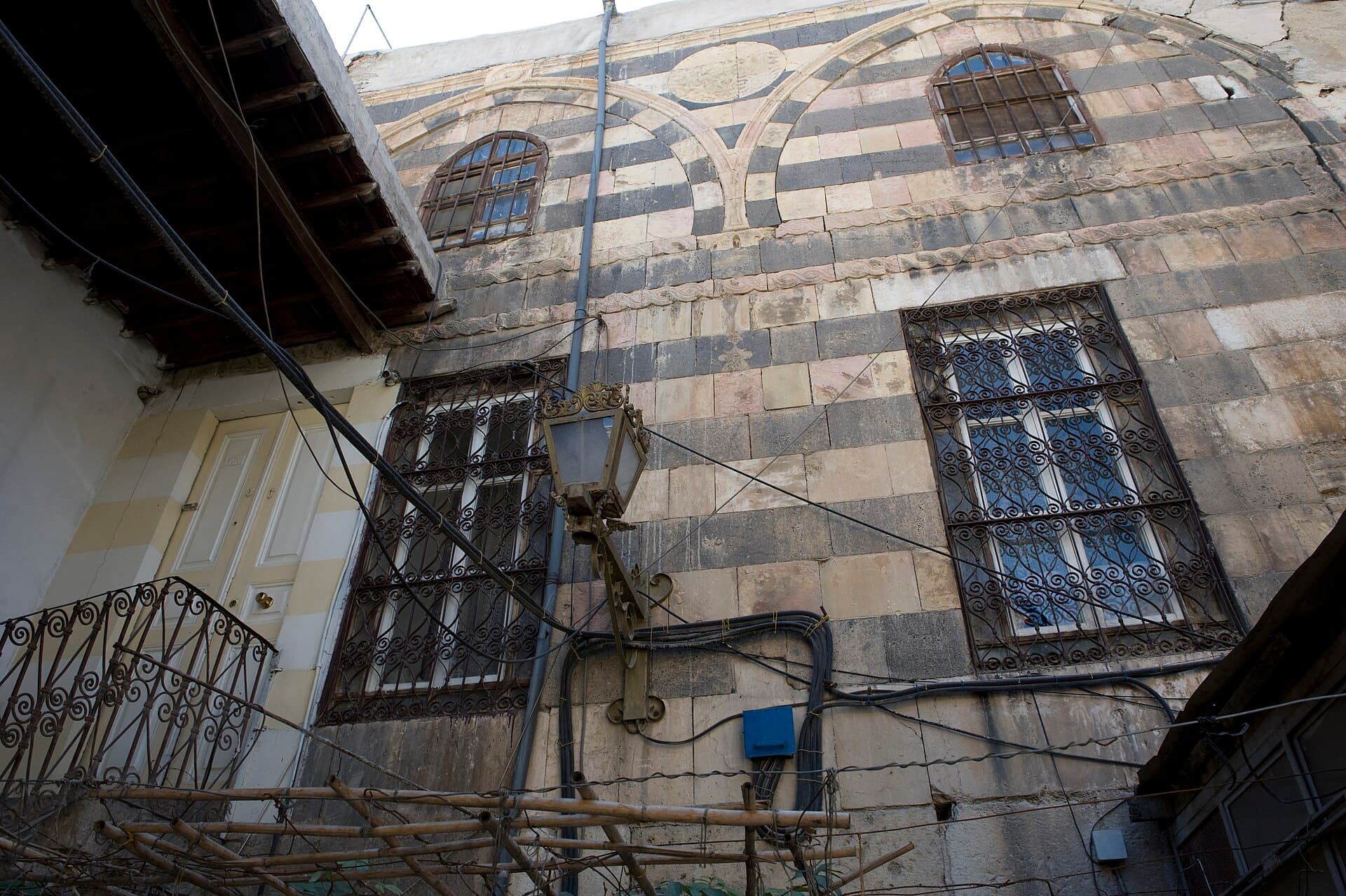
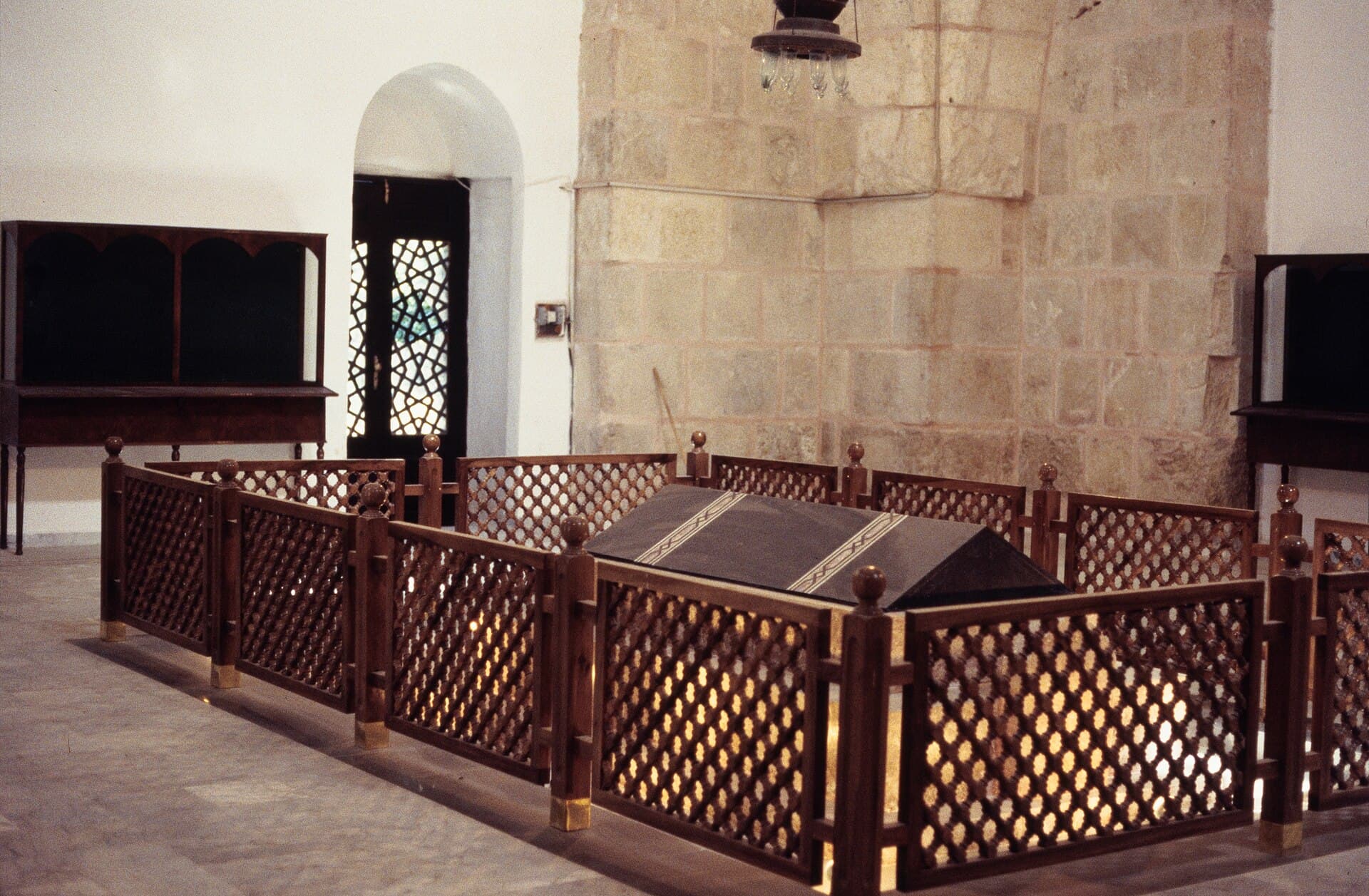
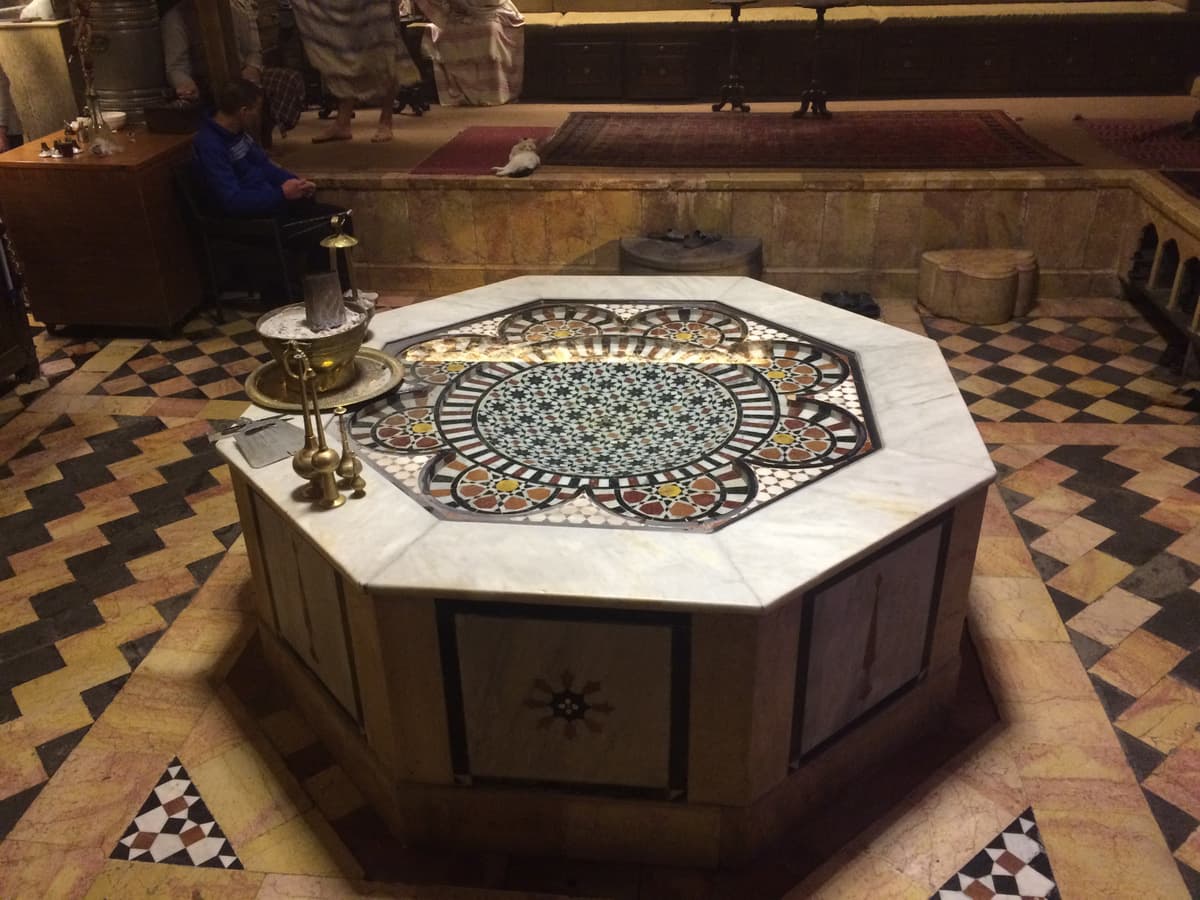
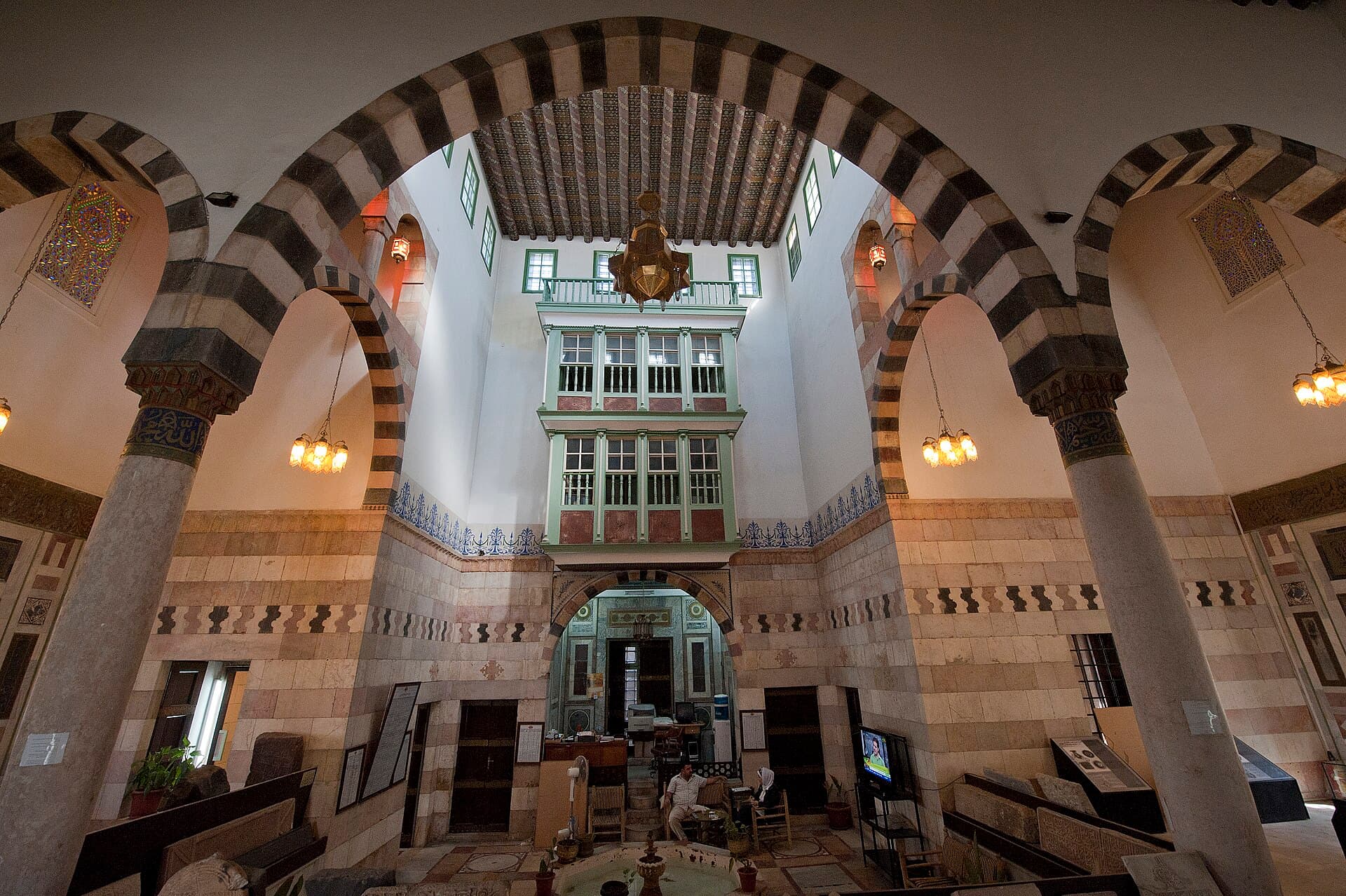
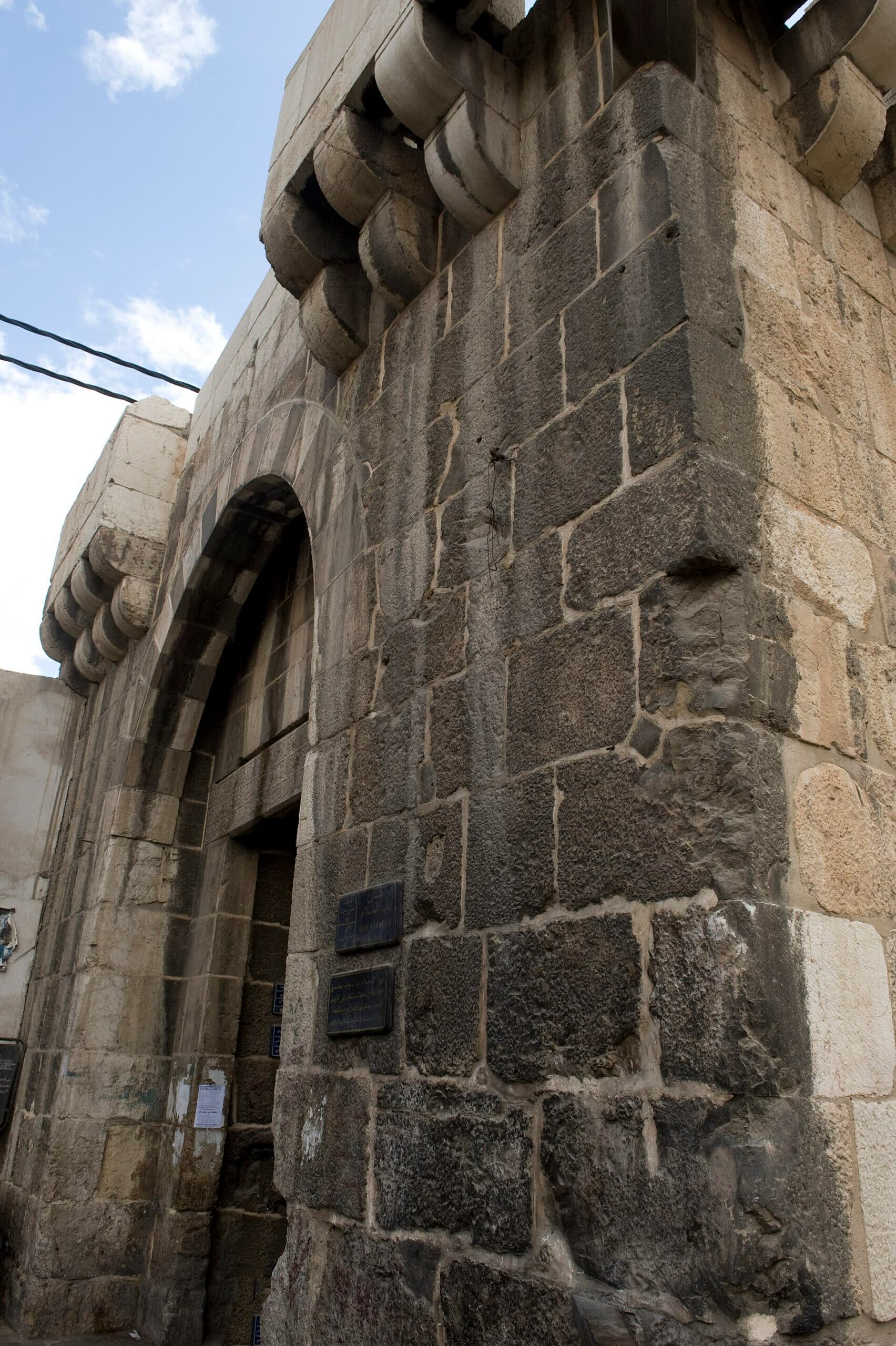
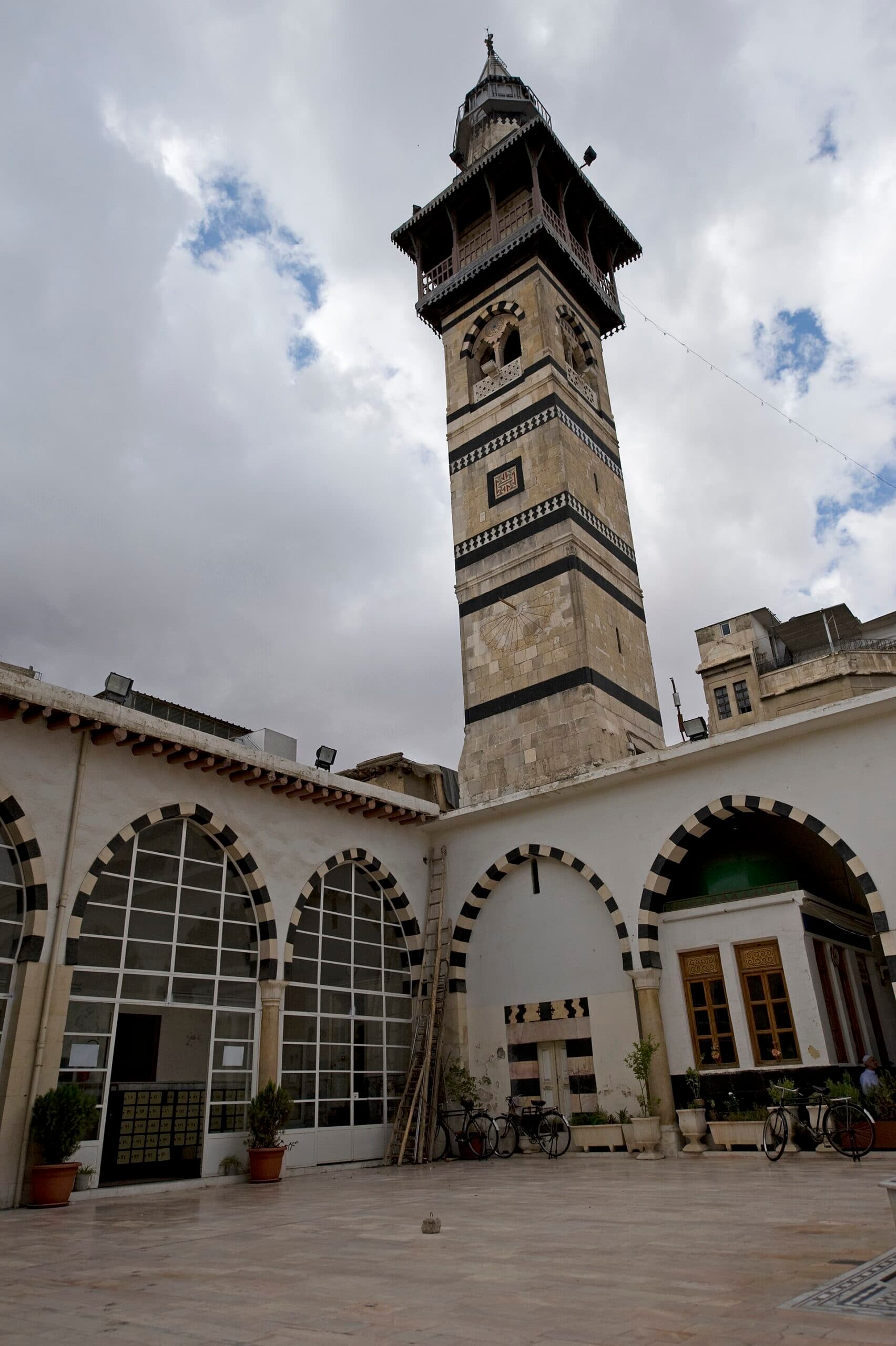
From the north exit of the Hamidiyah Souq, head towards Bab al-Faraj. The Al-Adiliyah Madrasa and the Zahiriyah face each other across a narrow lane; Al-Adiliyah is the western one, its portal set deep inside a high hood. Come out, turn east and go 110 metres: the Hammam al-Malik al-Zahir adjoins the Zahiriyah, and its door is low and at street level. Another 170 metres east brings you to the black-and-white front opposite the north gate of the Umayyad Mosque, which is the Jaqmaqiyya. Then turn north; 130 metres on, you are in the lanes of Amara. Cross the quarter and follow the wall east for 380 metres — the second gate after Bab al-Faradis is Bab al-Salam. Step outside it and go 500 metres north: the minaret of the Aqsab Mosque stands above the roofs, so walk towards it.
Timing
Be in the lane at Al-Adiliyah at 09:00. The building houses an institution today; whether you can enter the courtyard depends on how it is used that day, and if the door is shut the simplest answer is to cross to the Zahiriyah. The bathhouse is the long stop here: with a scrub and a massage it runs to two hours, and going in only to look is awkward. If you would rather bathe at the end, the way back from Aqsab is 1000 metres, thirteen minutes. Enter the Jaqmaqiyya before noon, while the courtyard still takes light. Do not rush Amara. The quarter gets going towards midday, and that is when the carpenters and the weavers have their doors open. Reach Bab al-Salam in the afternoon and its east face is in shadow; the muqarnas corbels above the arch read better in the morning.
Take care
Hours for men and women at the bathhouse shift through the day, so ask before going in. Towels and a scrub are provided, but the price is not fixed; carry cash. Three of the six stops are working mosques: cover shoulders and knees, and stay out of the prayer hall at prayer times. The lanes of Amara and Souq Saruja are narrow and motorbikes use them, so step aside when you stop to photograph. There is no shade on this route at midday in summer and the walk moves to the morning. In winter the stone underfoot turns slippery, so wear shoes that grip.
The route on a map
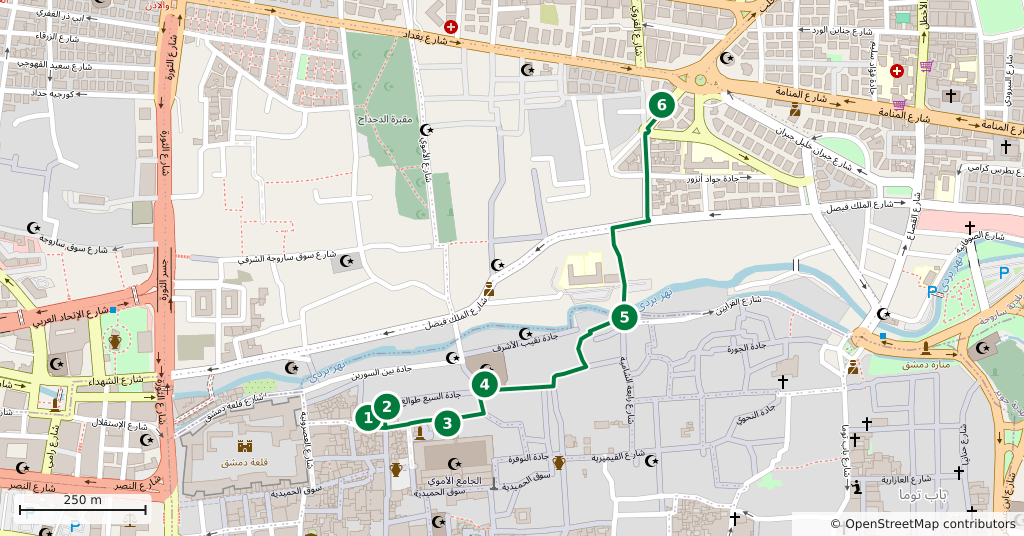
Stops along the route
- 01
- 02
- 03
- 04
- 05
- 06
Transparency
- How this was chosen
- The stops and their order were set by hand. The line on the map is real road geometry, not a straight hop between pins; distance and duration belong to that itinerary.
- Facts checked
- September 2026
- Last updated
- September 15, 2026