Mamluk mosques of Damascus: a walk from Bab al-Jabiya to al-Midan
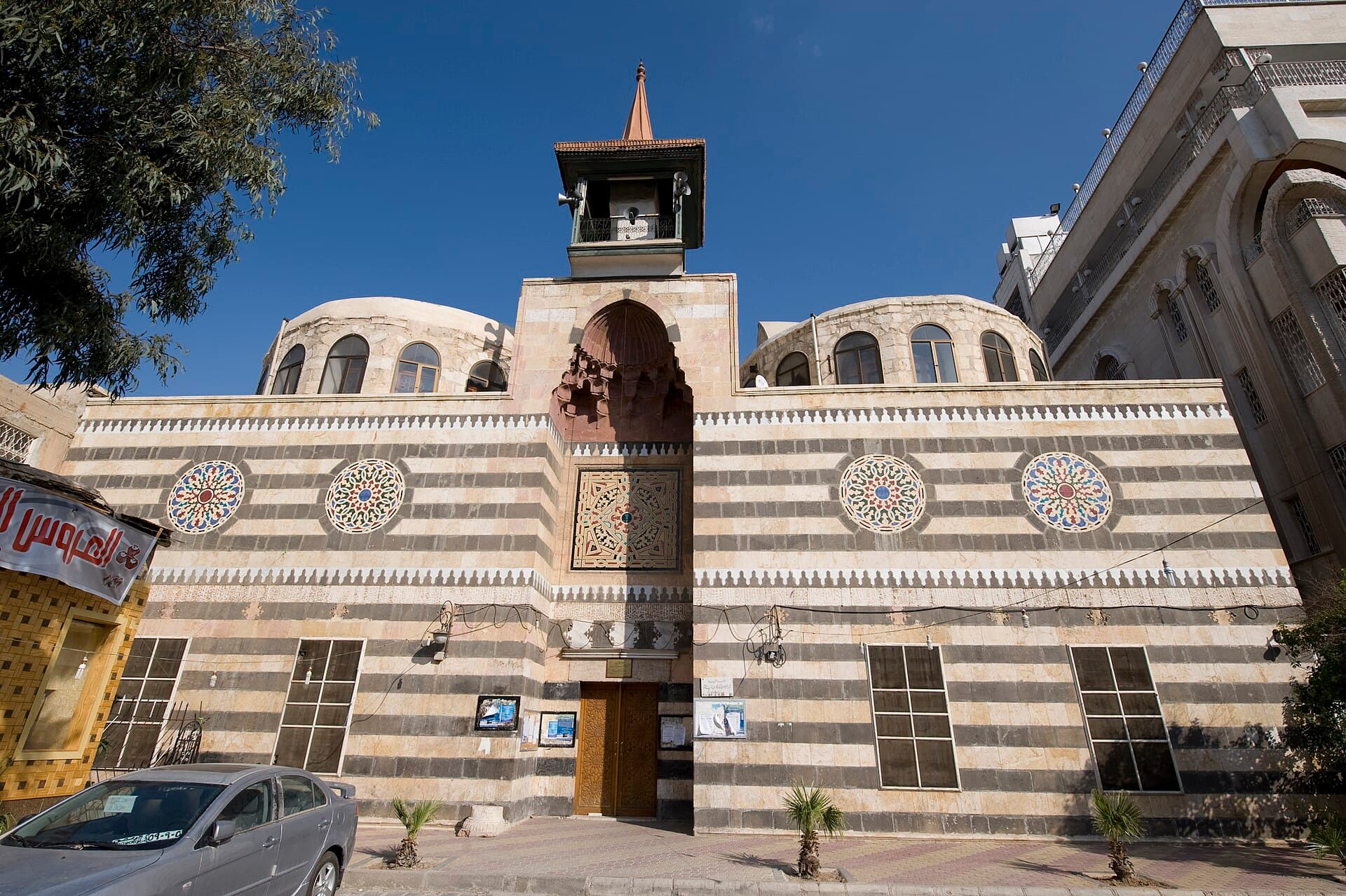
Nearly three kilometres from Bab al-Jabiya down the Midan pilgrim road, seven stops: Mamluk mosques and tombs from 1318 to 1464, fronts banded black and white.
- Duration
- 4 hours
- Distance
- 2.9 km
- Difficulty
- Easy
- Best season
- Year round; mornings except Friday
- stops
- 7
- City
- Damascus
From Bab al-Jabiya south along the pilgrim road through al-Midan runs a walk of nearly three kilometres with seven stops. Six of them are Mamluk, and the dates sit close together: the oldest is the Al-Daqqaq Mosque, founded in 1318, the newest the Al-Sabuniyya Madrasa, built in 1459-1464. The one Ayyubid building on the line is the Bab Musalla Mosque. Three of the stops were founded as tombs or funerary endowments and only later became mosques.
The route
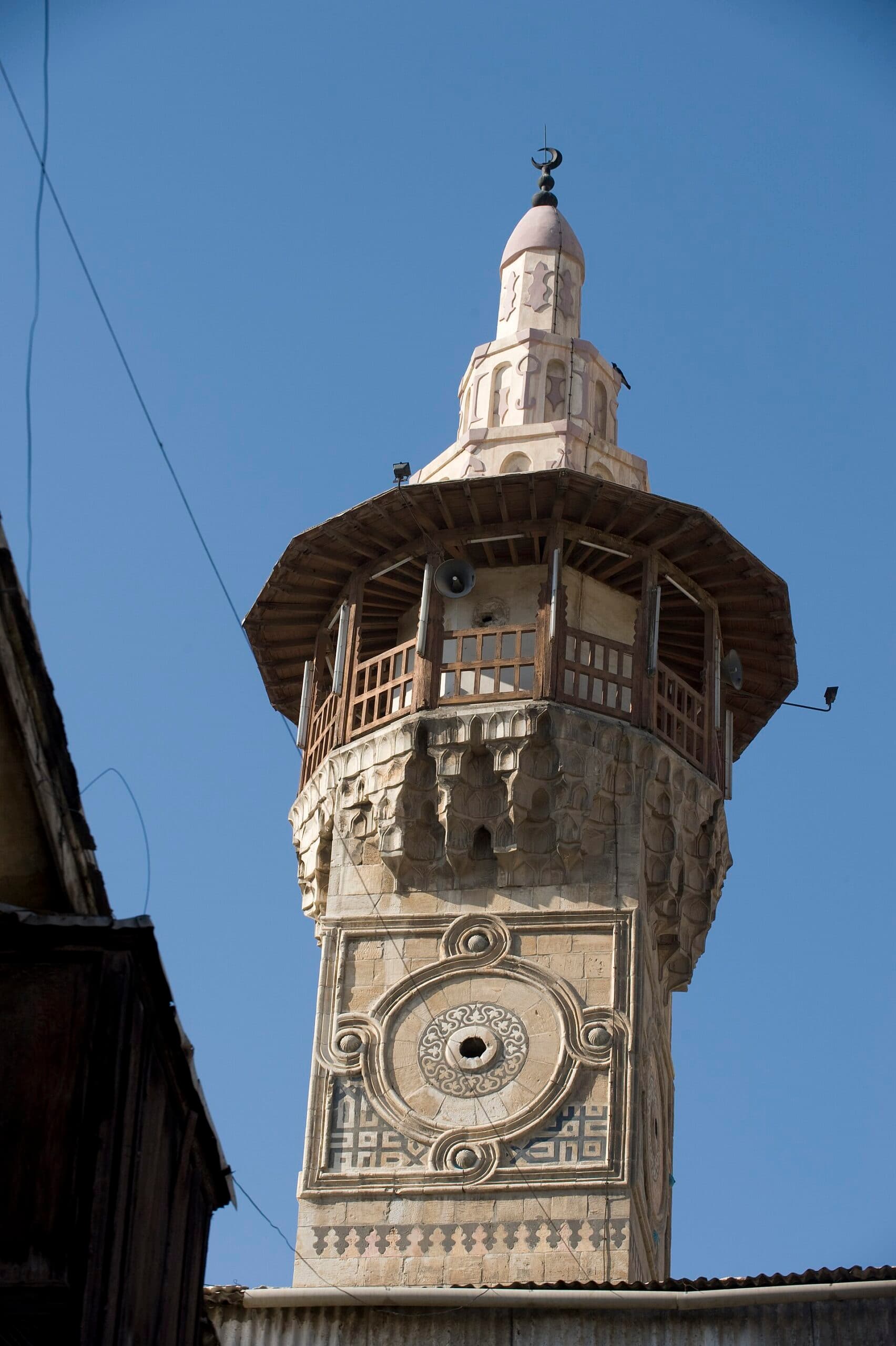
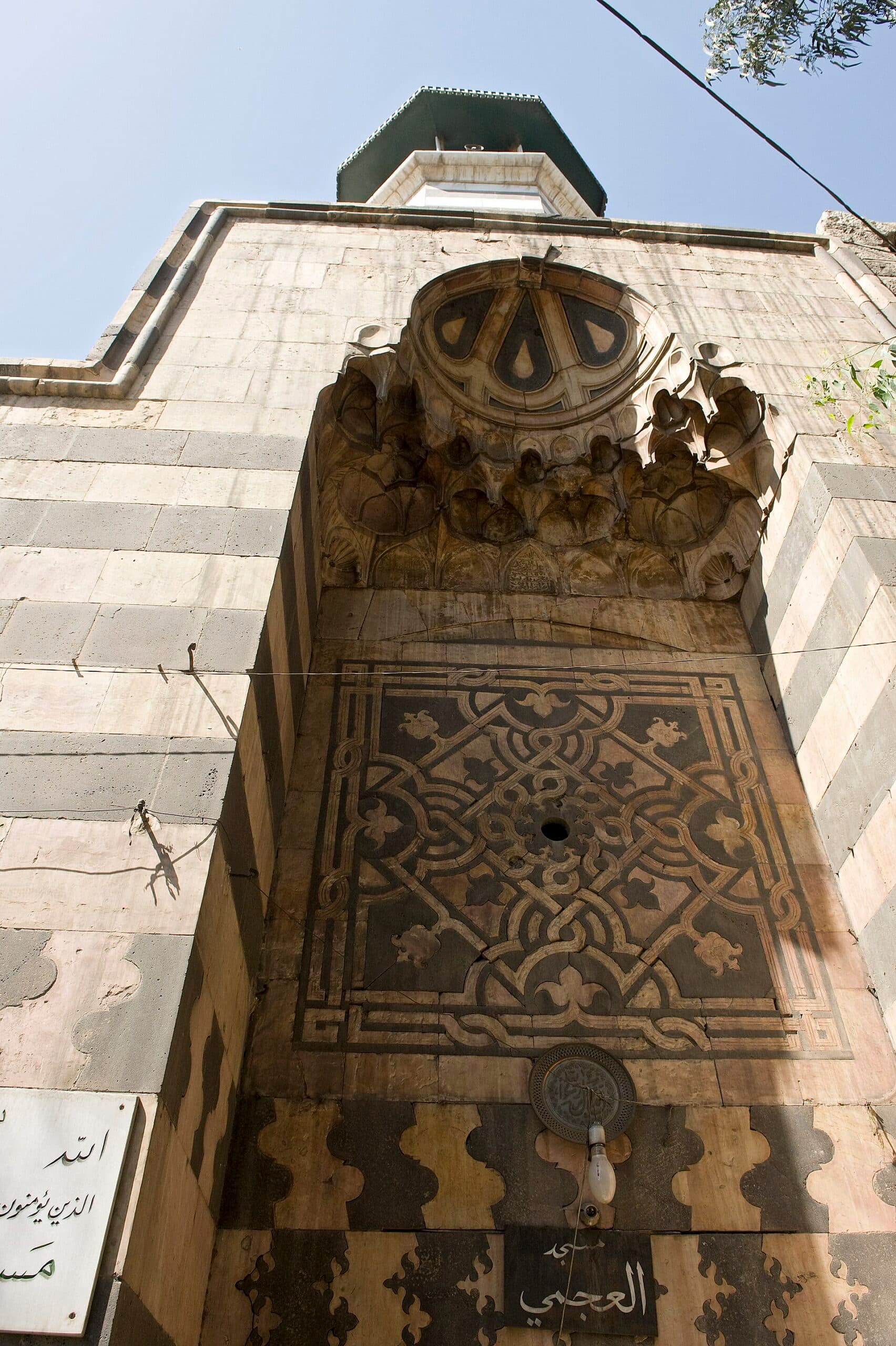
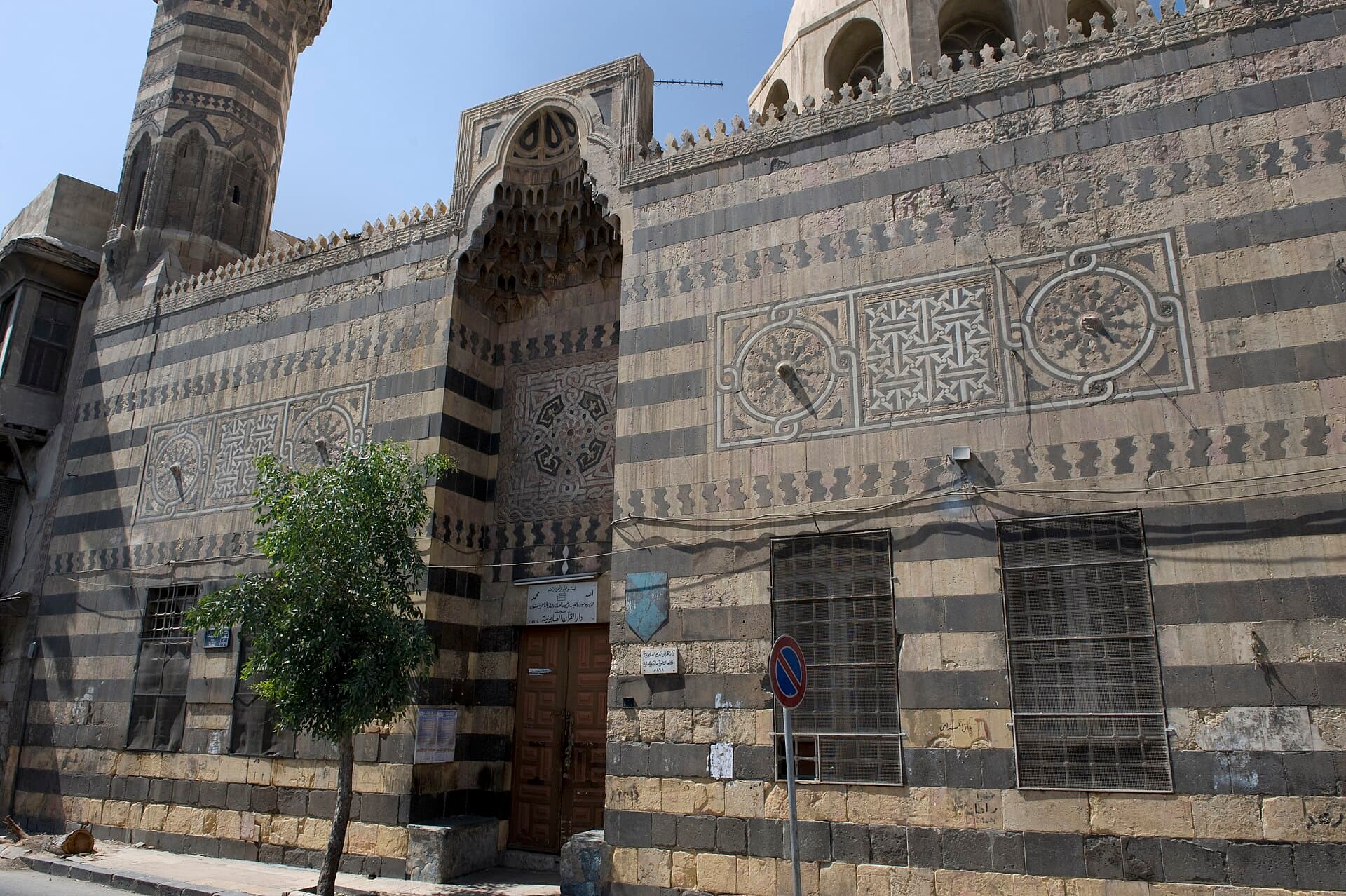
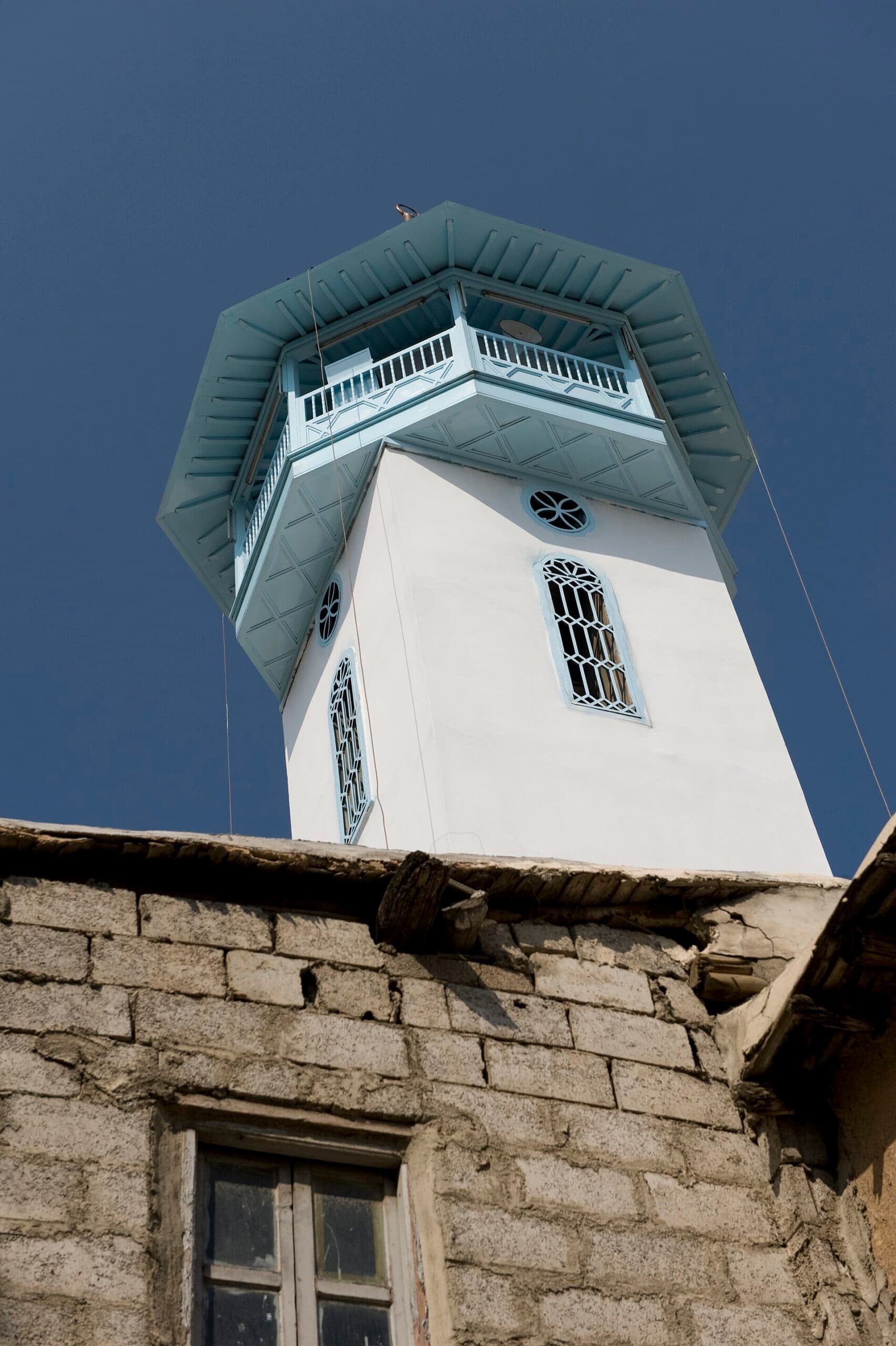
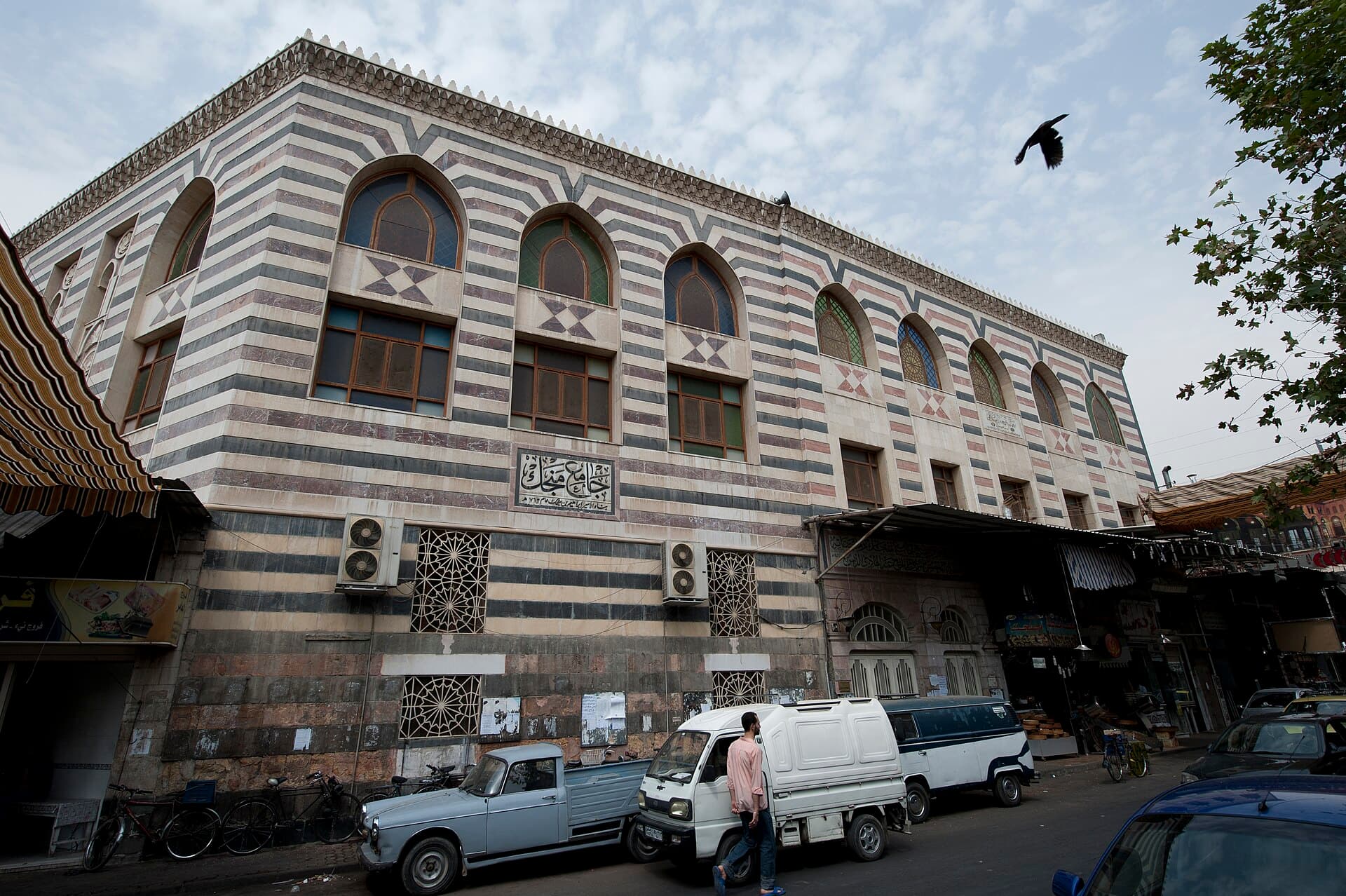
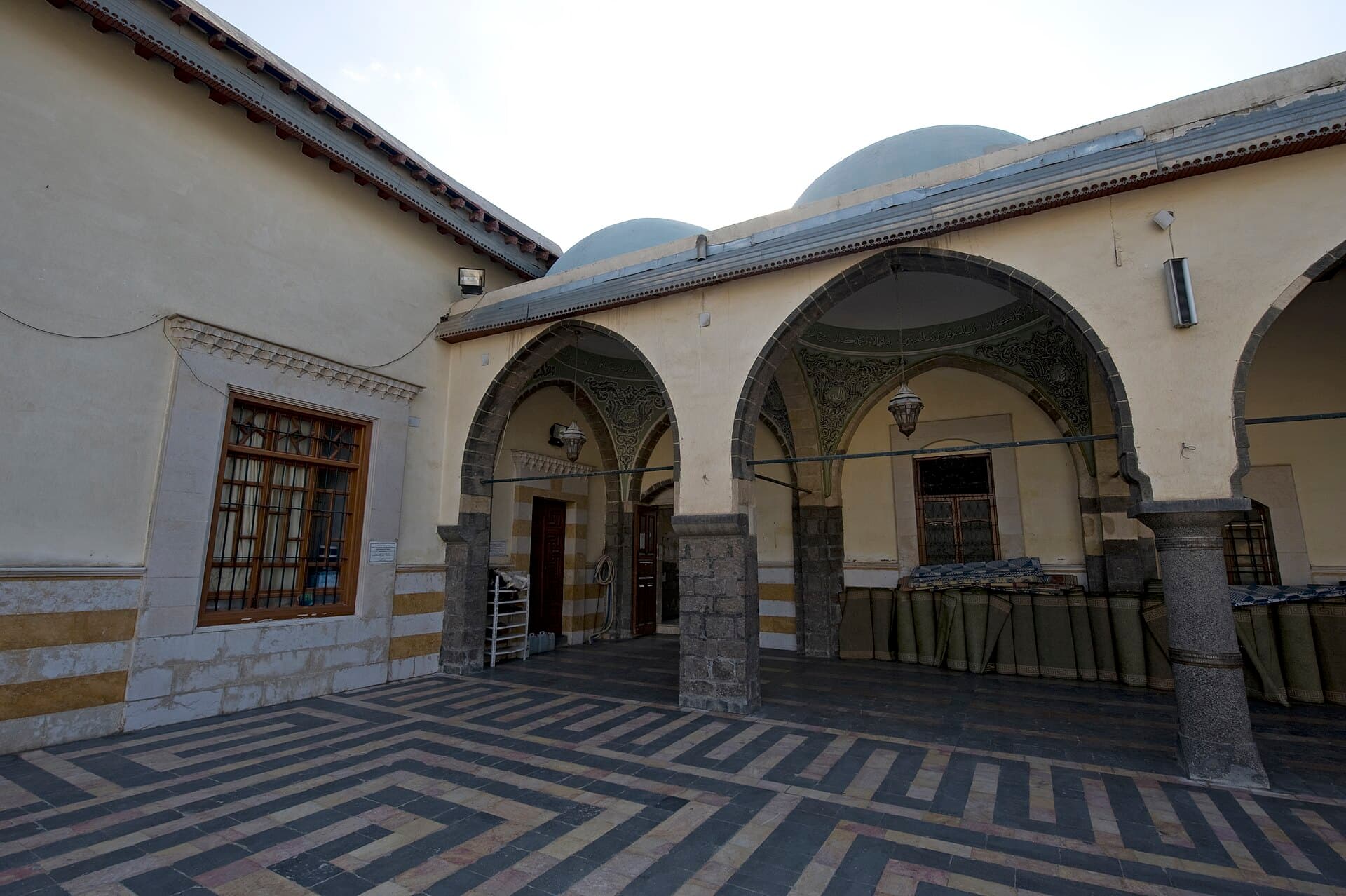
On the western stretch of Souq Midhat Pasha, the square minaret above the roofs belongs to the Al-Qali Mosque; the sabil beneath it is at street level. Leave the walls by Bab al-Jabiya and turn onto Saad Zaghloul Street: the small building on the corner, with a door niche of inlaid marble, is the Al-Ajami Mosque. Just to the south, on Al al-Bayt Street opposite the Bab al-Saghir cemetery, stands the banded front of the Al-Sabuniyya Madrasa. From here go south into Midan Street. The minaret of the Bab Musalla Mosque shows before you reach the square. The next leg is the longest on the route, 900 metres: keep south along the street to the black and white block rising over the row of shops in the middle of Souq al-Jazmatiya. This is the Manjak Mosque. On the same street, the mass under two domes is the Mosque and Mausoleum of Amir Tanbak. The last stop is in Qubaybat, on the east side of the street: the Al-Daqqaq Mosque, whose main door is in a side lane at right angles to the main road.
Timing
Be in front of the Al-Qali Mosque at 08:30. The carved face of the minaret catches the light before noon, and with the market not yet open the space in front of the sabil is empty. Al-Ajami at 09:00, Al-Sabuniyya at 09:30. Al-Sabuniyya is rarely open; cross to the cemetery side to see the whole front. At 10:15 you are at Bab Musalla. Go into the courtyard for the twelve-sided pool; to see the balcony of the minaret you have to cross the street. Manjak at 11:00: by then the market is open, and for the three onion caps of the minaret go to the corner opposite the mosque. Tanbak at 11:30, Al-Daqqaq at 12:00. If you arrive at the midday prayer, wait outside rather than in the courtyard. Make the way back by car rather than on foot; the old city is more than two kilometres behind you.
Take care
Midan Street carries traffic and its pavements are narrow. Keep to the shop side as you walk and do not rush the crossings; in front of Al-Sabuniyya, do not step into the road to look at the facade, cross to the far pavement. All the mosques are working places of worship: do not go in during prayers, keep shoulders and knees covered and take your shoes off at the prayer hall door. Doors can be closed outside prayer times, and most of what there is to see at these stops is on the facade anyway. When you ask for Tanbak, the names Tinabiyya or Jasbak are better known locally. Sources put the building of the Manjak Mosque anywhere from 1370 to 1412, and the Al-Qali between 1431 and 1450; without seeing the inscription, no single year can be written.
The route on a map
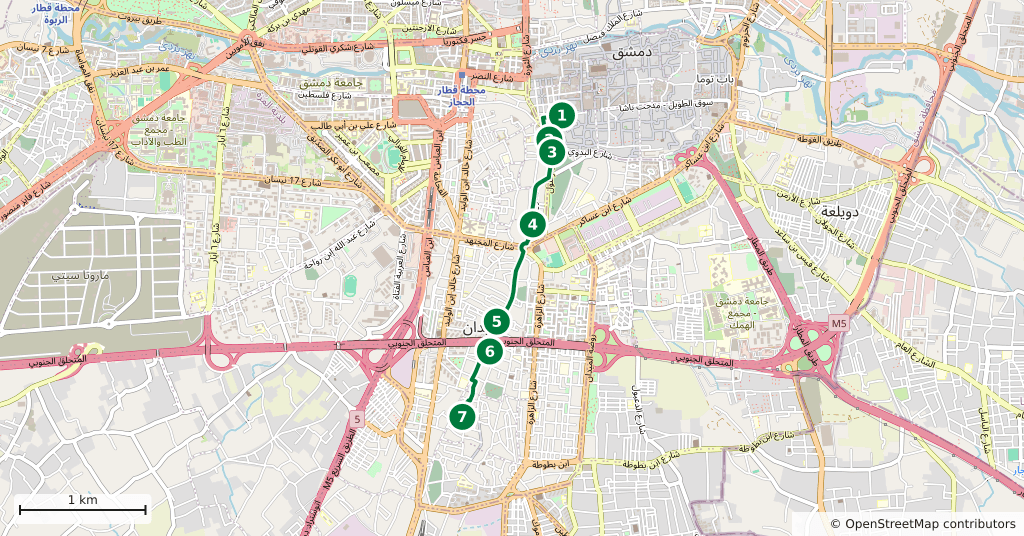
Stops along the route
- 01
- 02
- 03
- 04
- 05
- 06
- 07
Transparency
- How this was chosen
- The stops and their order were set by hand. The line on the map is real road geometry, not a straight hop between pins; distance and duration belong to that itinerary.
- Facts checked
- September 2026
- Last updated
- September 15, 2026