Sarouja to Uqaybah: Ayyubid and Mamluk Damascus north of the walls
Nearly three kilometres north of the walls of Damascus: a madrasa by Saladin’s sister, the wall’s only Islamic-era gate, a mosque of 1426 and Dahdah Cemetery.
- Duration
- 3 hours
- Distance
- 2.8 km
- Difficulty
- Easy
- Best season
- Year round; mornings except Friday
- stops
- 6
- City
- Damascus
North of the walls, from Sarouja to Uqaybah, runs a walk of nearly three kilometres with six stops. The line crosses some of the first quarters where Damascus spilled outside its wall. Its buildings are nothing alike in age. An Ayyubid madrasa was founded in 1187-1191 and a gate opened in 1154-1155. A small mosque became a Friday mosque in 1426, and one mosque carries a name from 1563 in a building from 1936. Most of the surroundings are modern; minarets and domes give the old buildings away.
The route
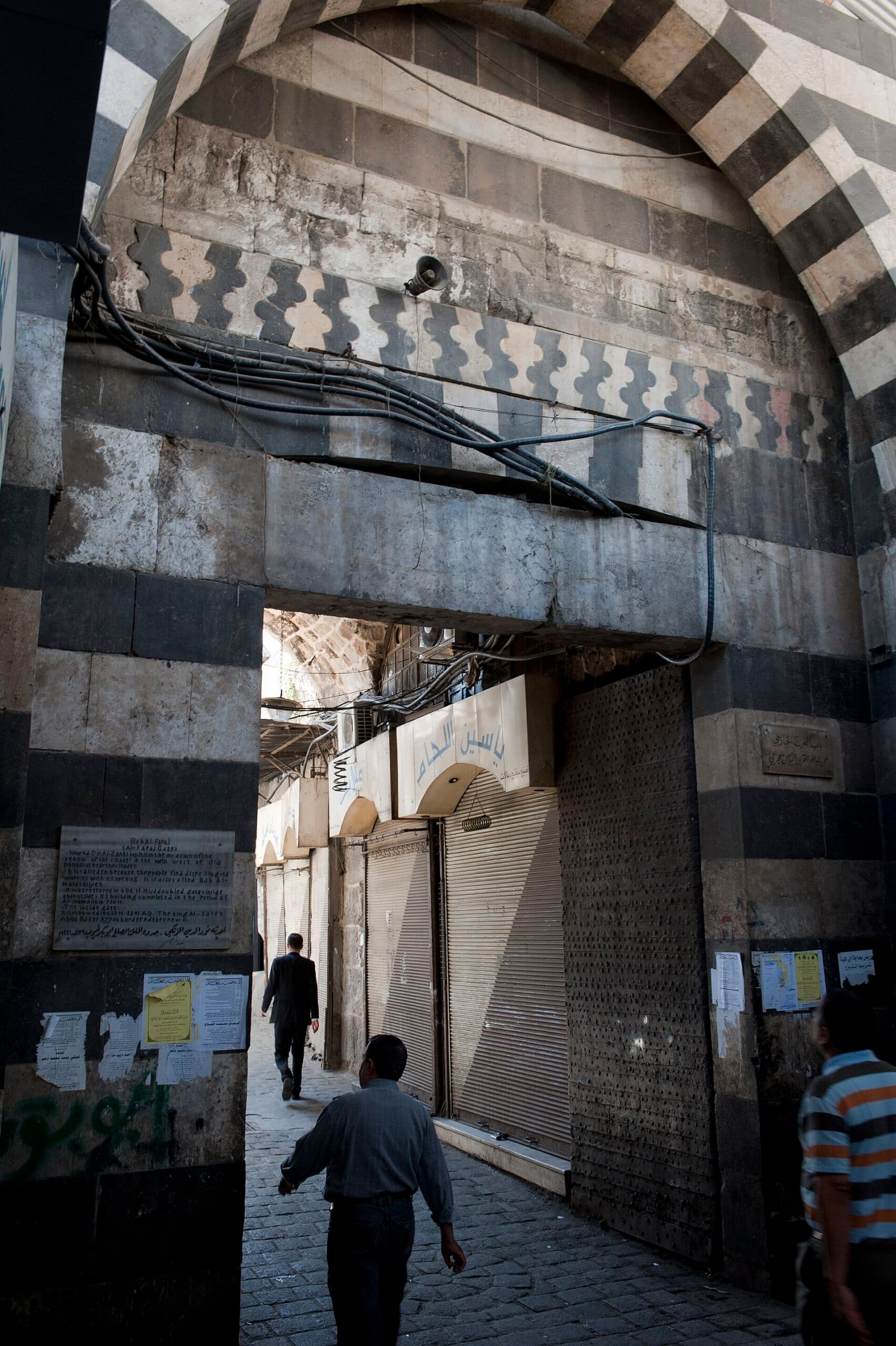
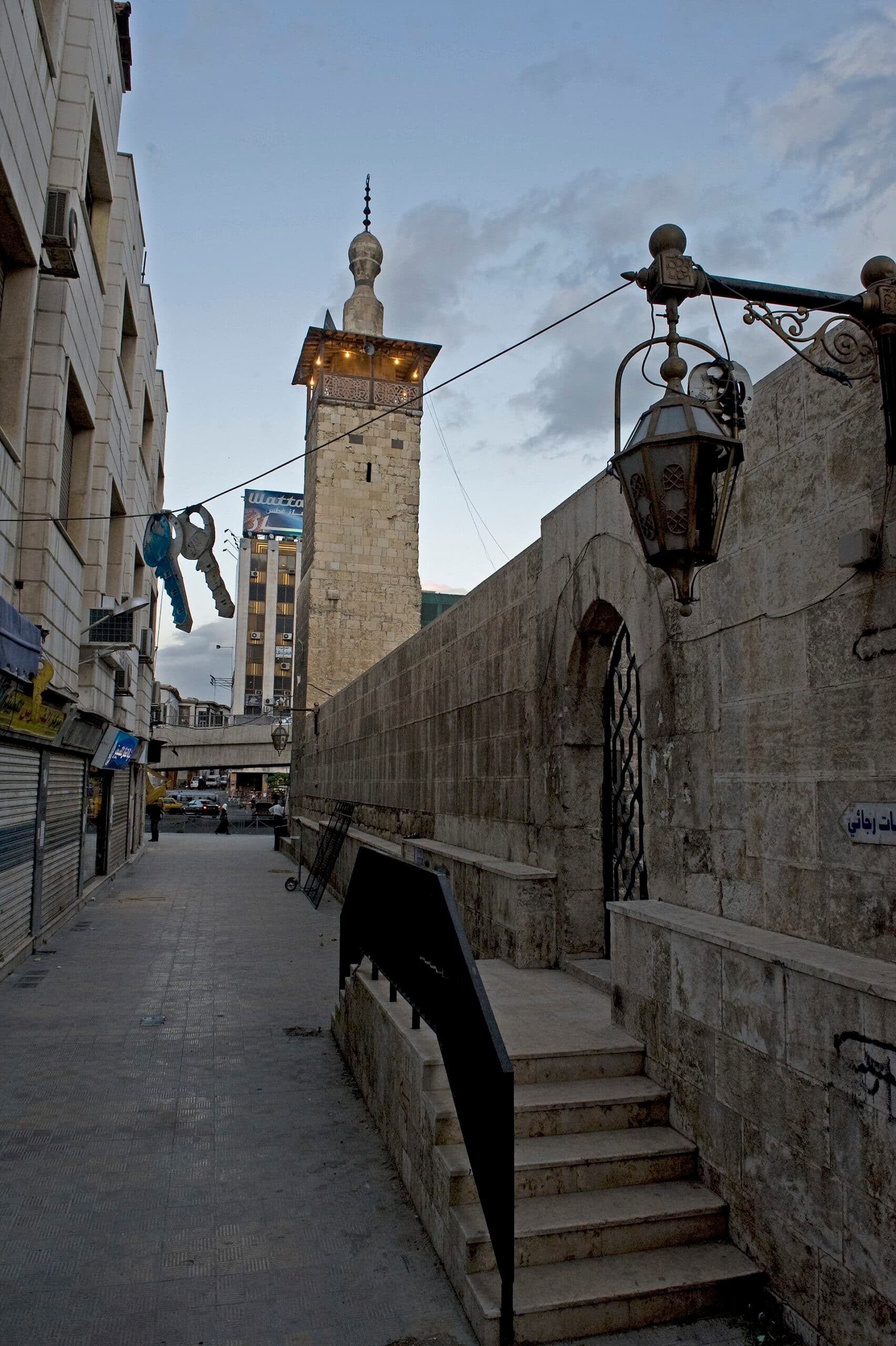
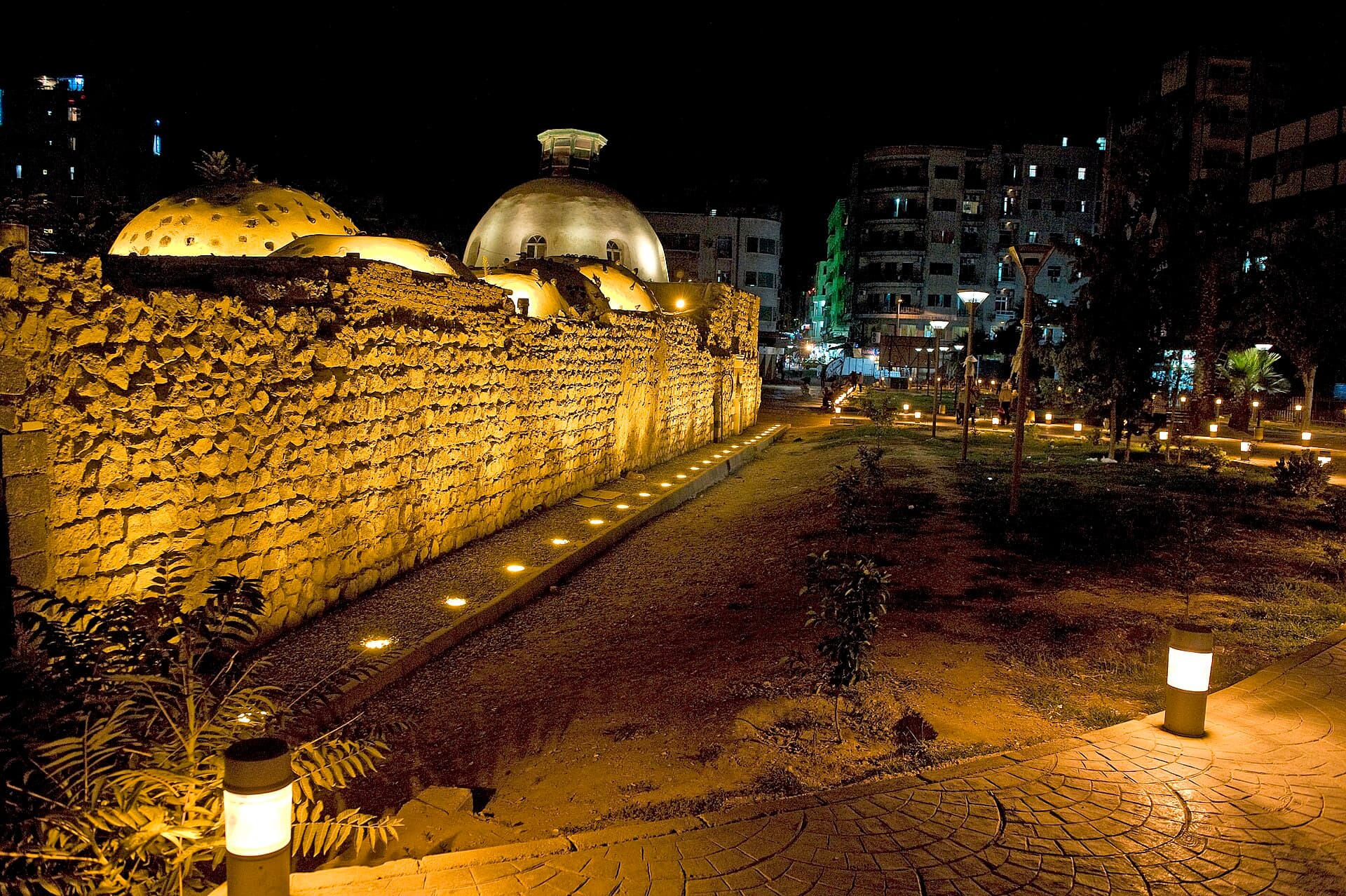
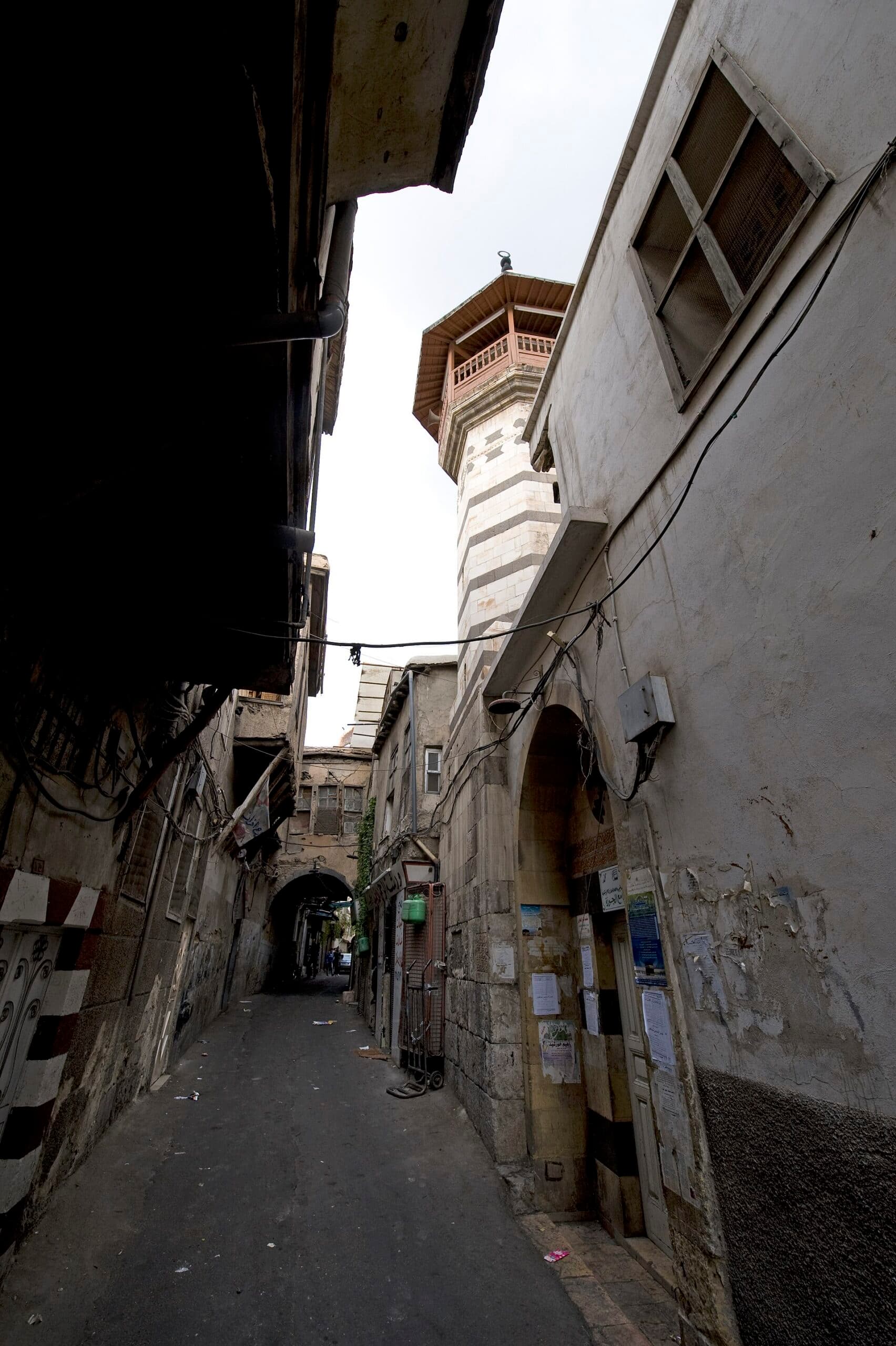
Start at the Lala Mustafa Pasha Mosque on Baghdad Street. The building is the one the Mardam Bek family put up in 1936; the mosque of 1563 stood elsewhere and was pulled down when the Suq al-Hal went in. From here drop south into Souq Sarouja. On the corner of Thawra and Shukri al-Quwatli streets, the plain stone minaret belongs to the Al-Shamiyah al-Kubra Madrasa. A short walk through the quarter brings you to the Qarmani Garden; the glass-eyed domes of the disused bath are visible from it. Walk east to the northeast corner of the citadel: the arch banded in black and white stone is Bab al-Faraj. Out of the gate, cross north-east into Uqaybah. The building whose octagonal minaret you can pick out from a distance is the Al-Jawza Mosque. The last leg runs north-west to Dahdah Cemetery in Uqaybiya.
Timing
Be in front of Lala Mustafa Pasha at 09:00: what there is to see takes fifteen minutes, and the street is quiet in the morning. Reach Al-Shamiyah al-Kubra at 09:30. The mosque is open at prayer times; if you arrive with the call to prayer, wait in the courtyard, because the portico empties once the congregation leaves. Do not leave without asking for the tomb chamber and its three graves. The Qarmani Garden at 10:15. You cannot go inside the bath, and fifteen minutes is enough for the domes. Bab al-Faraj at 10:45: in the morning the space under the arch is still empty and the plaques are easy to read. At 11:15 you are in the courtyard of the Al-Jawza Mosque; look for the inscription dated 1676 on the west face of the minaret base. Reach Dahdah before 12:00. On Friday, visiting the mosques around the midday prayer is difficult; put this walk on another day.
Take care
Dahdah is a working cemetery. The novelist Abdul Rahman Munif and the former president Husni al-Zaim are buried here, but most visitors are families. Keep quiet and do not step on the stones. If there is a funeral, step back and take no photographs; women visitors cover their heads. If you are looking for a particular grave, ask the attendant at the entrance. Al-Shamiyah al-Kubra and Al-Jawza are working mosques: do not go in during prayers, and keep shoulders and knees covered. Whether the Qarmani bath can be entered has to be checked on the spot. The passage under Bab al-Faraj is narrow and the shopfronts can be crowded. Baghdad Street and Shukri al-Quwatli Street carry traffic; wait for a crossing.
The route on a map
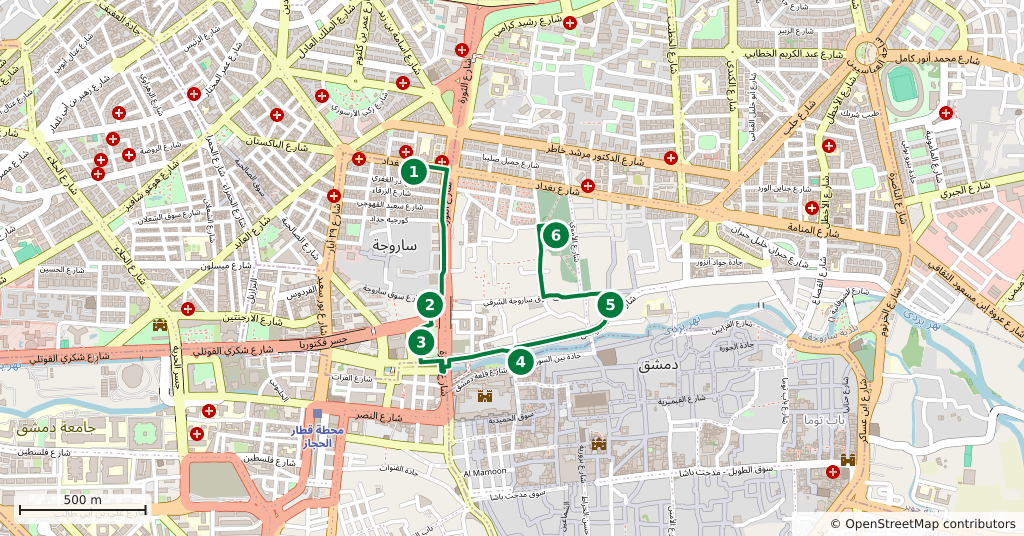
Stops along the route
- 01
- 02
- 03
- 04
- 05
- 06
Transparency
- How this was chosen
- The stops and their order were set by hand. The line on the map is real road geometry, not a straight hop between pins; distance and duration belong to that itinerary.
- Facts checked
- September 2026
- Last updated
- September 15, 2026