Damascus churches walk: six cathedrals from Bab Touma to Bab Sharqi
Just under a kilometre from Bab Touma to Bab Sharqi: six cathedrals of six communities, built between 1848 and 1951, free to enter whenever the doors are open.
- Duration
- 3 hours
- Distance
- 1 km
- Difficulty
- Easy
- Best season
- Year round; weekday mornings
- stops
- 6
- City
- Damascus
Between Bab Touma and Bab Sharqi, along just under a kilometre, stand the cathedrals or monasteries of six separate communities: Armenian Catholic, Maronite, Latin, Syriac Orthodox, Syriac Catholic and Armenian Apostolic. The oldest building dates from 1848, the newest from 1951. Entry is free at all of them. The doors, though, open around the services, and knowing those hours is what makes this route work. The walk runs north to south and ends at Bab Sharqi, where the Christian quarter walk begins.
The route
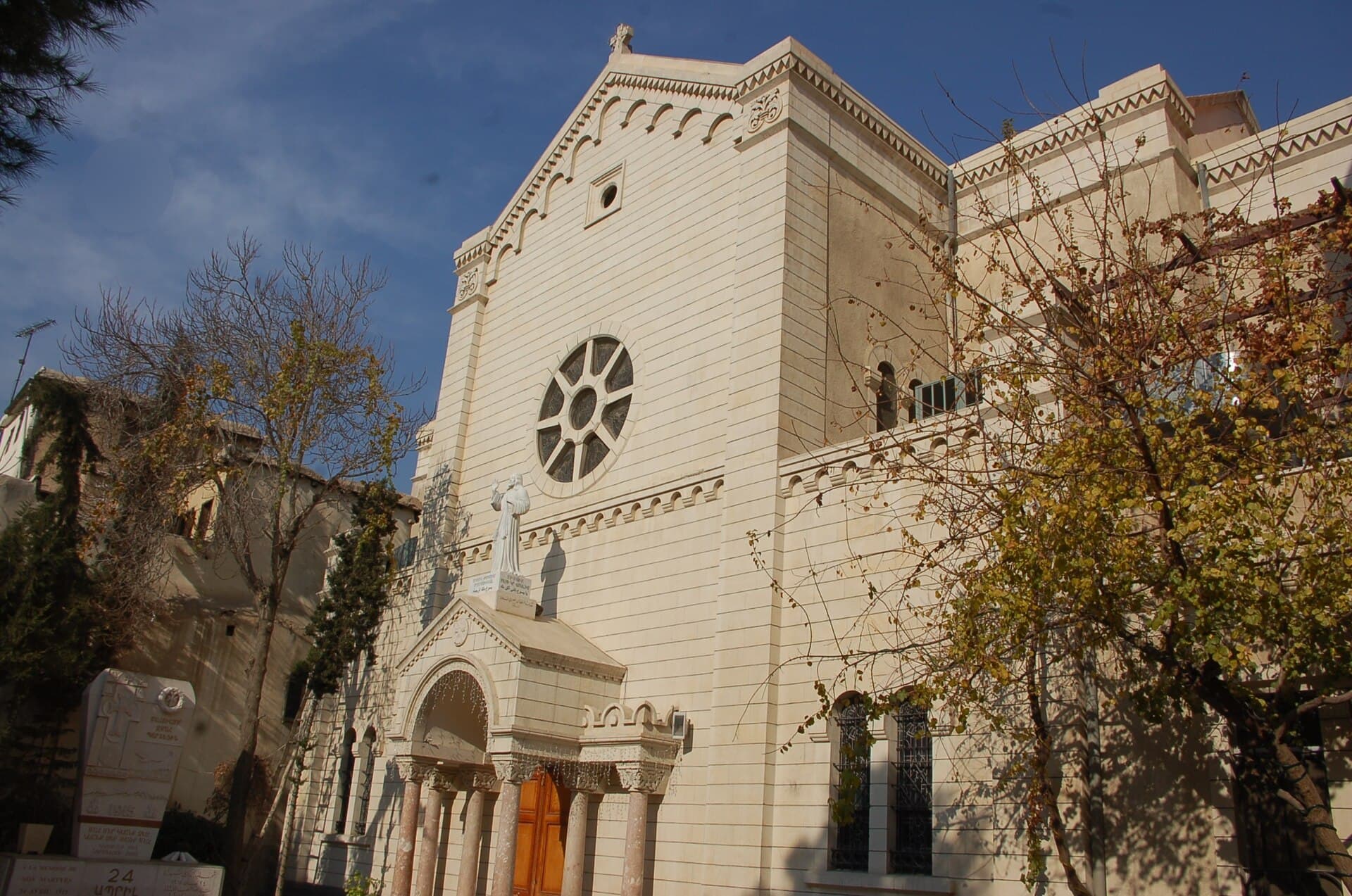
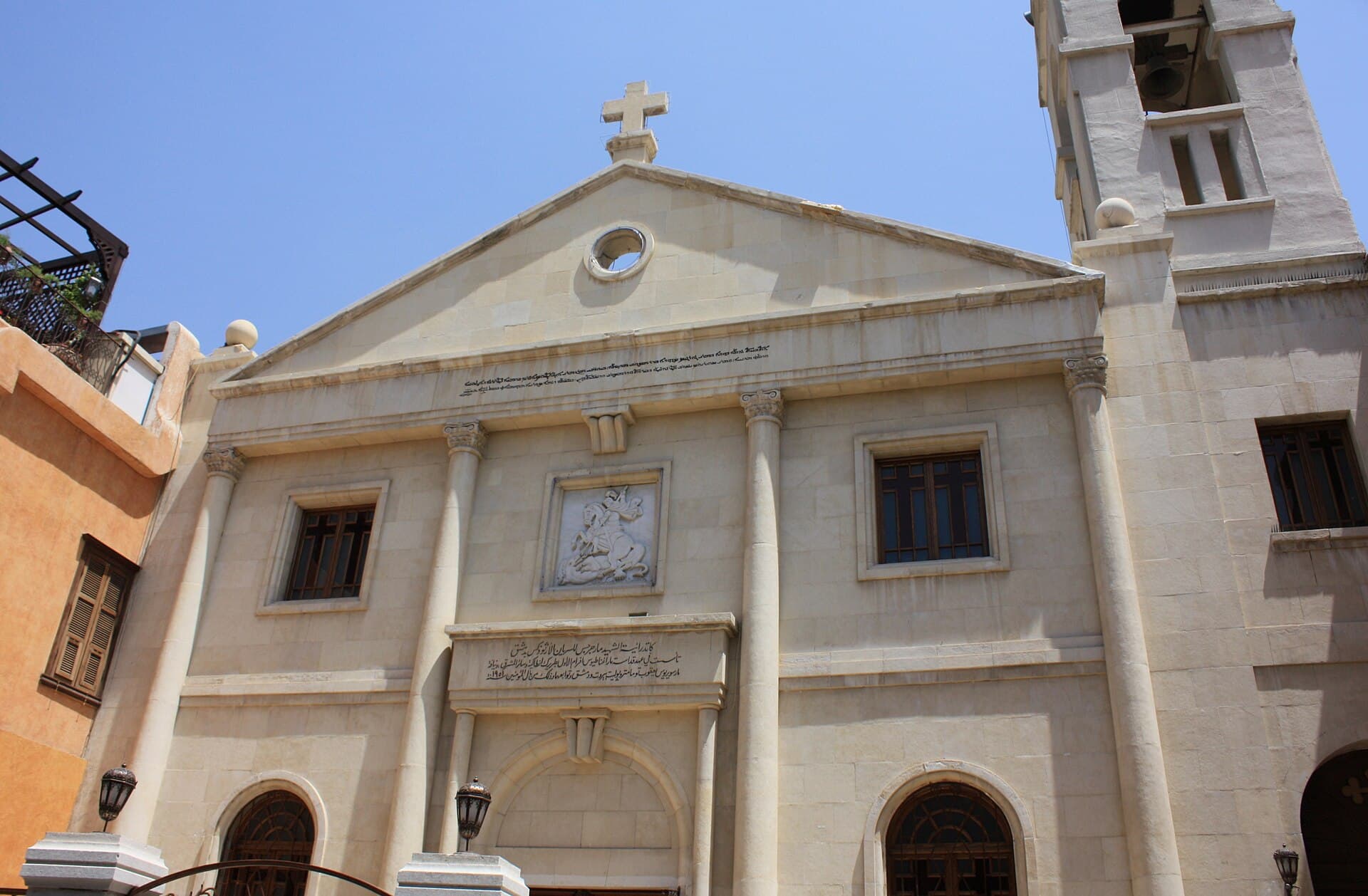
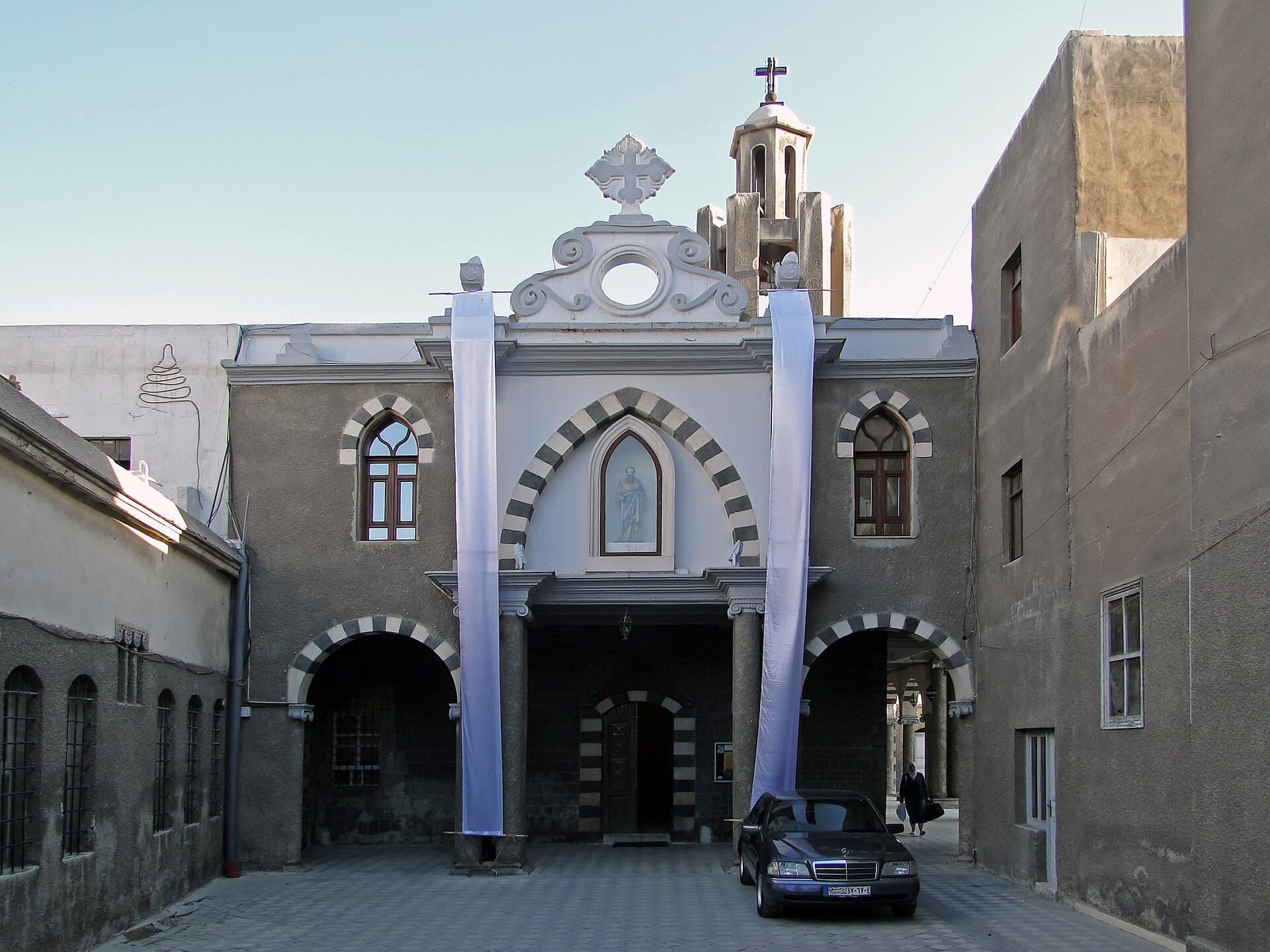
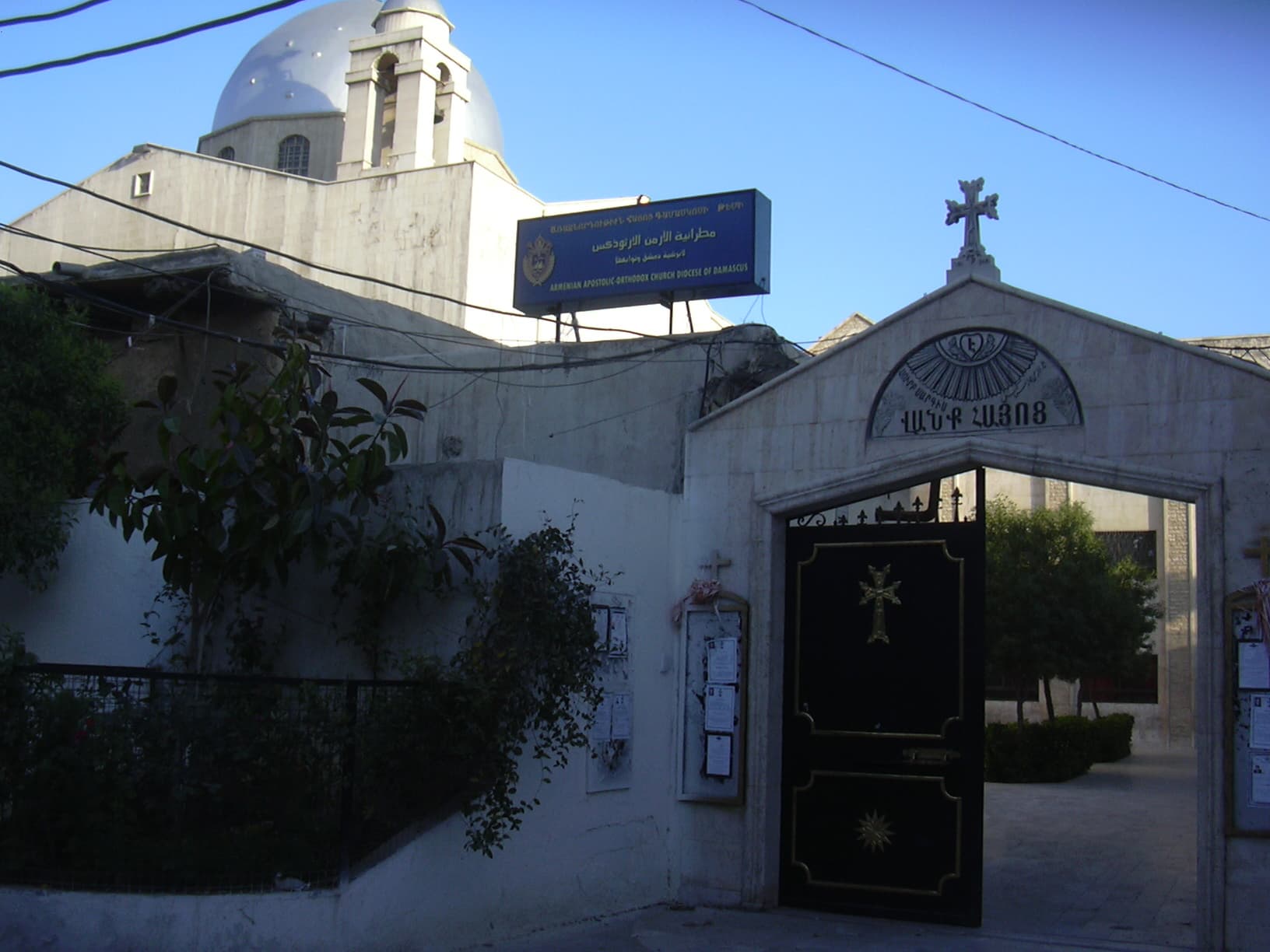
From Bab Touma square turn west into Qanayat al-Hatab Street. The front with the rose window at No. 54 is the Queen of the Universe Cathedral; the Hammam al-Bakri stands across the pavement. Return to the square and walk south into Deir Street. Two buildings face each other here: the Maronite Cathedral of Saint Anthony on the north side, the Franciscans’ Latin Monastery on the south corner. Twenty paces separate the two doors. Keep south along Bab Touma Street. On the east side, the front with a triangular pediment and four columns is Saint George’s Cathedral. Where the street meets Straight Street, turn east. On the south side, a courtyard gate set back between the shops belongs to the Syriac Catholic Cathedral of Saint Paul. The last stop is a short walk on: just inside Bab Sharqi, again on the south side, the gate with the Armenian inscription is Surp Sarkis.
Timing
Be in Qanayat al-Hatab Street at 09:00 on a weekday morning. Outside services the doors look shut, but there is usually a caretaker in the courtyard, and in the morning it is easy to ask. Move to Deir Street at 09:30 and give the two buildings forty minutes; the courtyard of the Latin Monastery is worth going in for. Saint George’s at 10:15. The relief and the Syriac inscription are on the front, visible even when the door is closed. Saint Paul’s at 10:45: the portico with its black and white arches reads from the courtyard. At 11:15 step into the courtyard of Surp Sarkis and look up at the dome. By 11:45 you are at Bab Sharqi. On Sunday morning the doors are open but the liturgy is on; stand at the back and take no photographs. If you want to see the churches full, there are four dates: Surp Sarkis on 6 January, Saint George’s on 6 May, Saint Paul’s on 29 June and the Latin Monastery on 10 July.
Take care
All six are working places of worship: shoulders and knees covered, no photographs during a service, and ask afterwards. No door keeps fixed hours; check at the entrance. Qanayat al-Hatab and Deir Street are narrow and motorbikes come through, so keep to the wall. In the Latin Monastery do not stop at the main altar: the graves of the 11 people killed in the events of 1860 lie beside the side altar. After 2013 the quarter took mortar fire from the Eastern Ghouta; Saint Anthony’s was hit more than any other building, and its repair continues. Reaching Bab Sharqi does not have to end the day. The Christian quarter walk to the Chapel of Saint Ananias and Bab Kisan starts in front of the same arch.
The route on a map
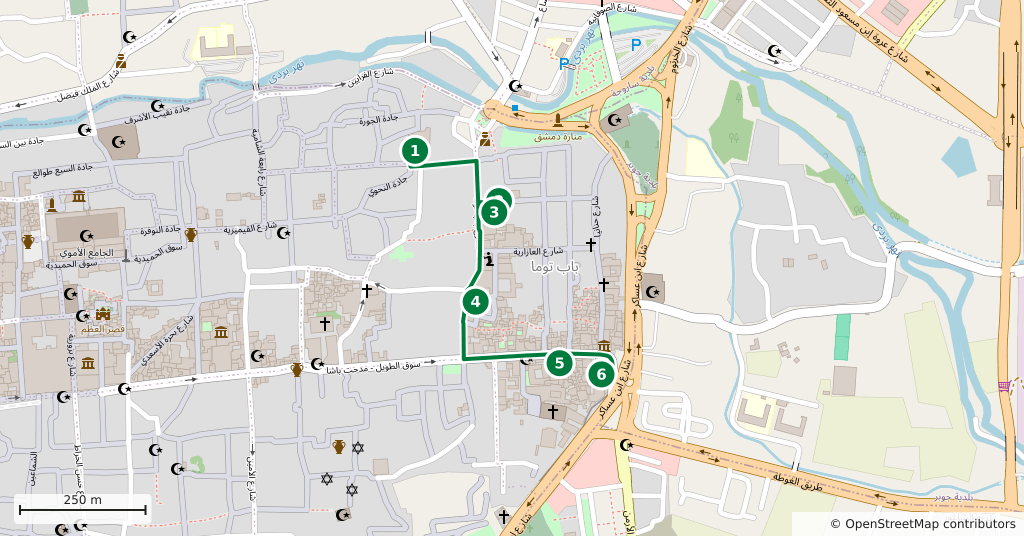
Stops along the route
- 01
- 02
- 03
- 04
- 05
- 06
Transparency
- How this was chosen
- The stops and their order were set by hand. The line on the map is real road geometry, not a straight hop between pins; distance and duration belong to that itinerary.
- Facts checked
- September 2026
- Last updated
- September 15, 2026