Marjeh to Sabaa Bahrat: a walk through late Ottoman and Mandate-era Damascus
Two kilometres, seven facades, from the Al-Hamidiyah Souq to Sabaa Bahrat: a seat of government since 1554, a hotel that never opened and the Mandate parliament.
- Duration
- 3 hours
- Distance
- 2 km
- Difficulty
- Easy
- Best season
- Year round; in the morning
- stops
- 7
- City
- Damascus
From the western exit of the Al-Hamidiyah Souq to Sabaa Bahrat Square is just under two kilometres, with seven stops. The subject is how Damascus built its new face between 1900 and 1962: a governor’s palace turned courthouse, a block built as a hotel that never became one, the Mandate-era parliament and a theatre. You cannot go inside most of these buildings. This is a walk for reading facades; do not come expecting interiors.
The route
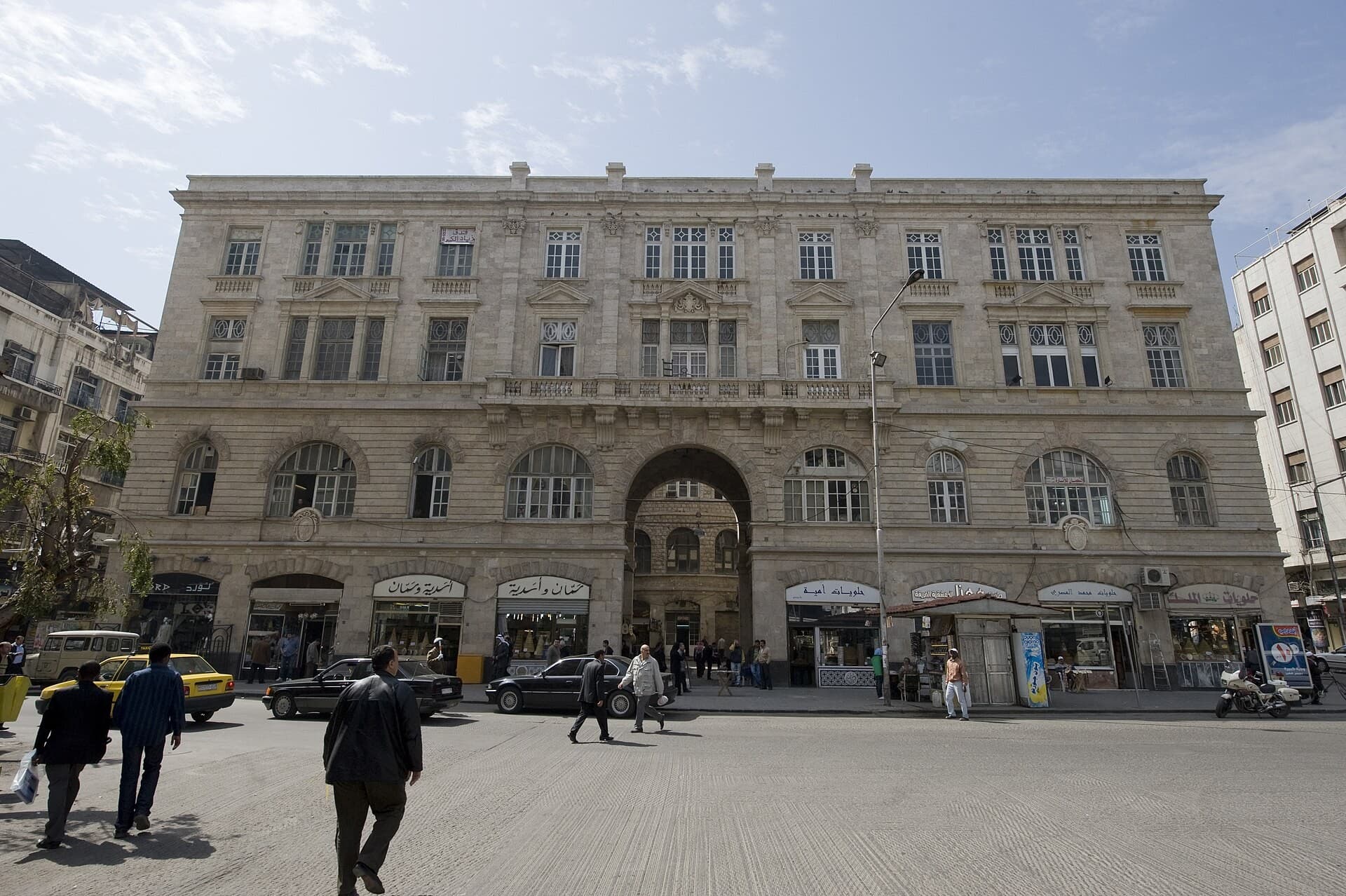
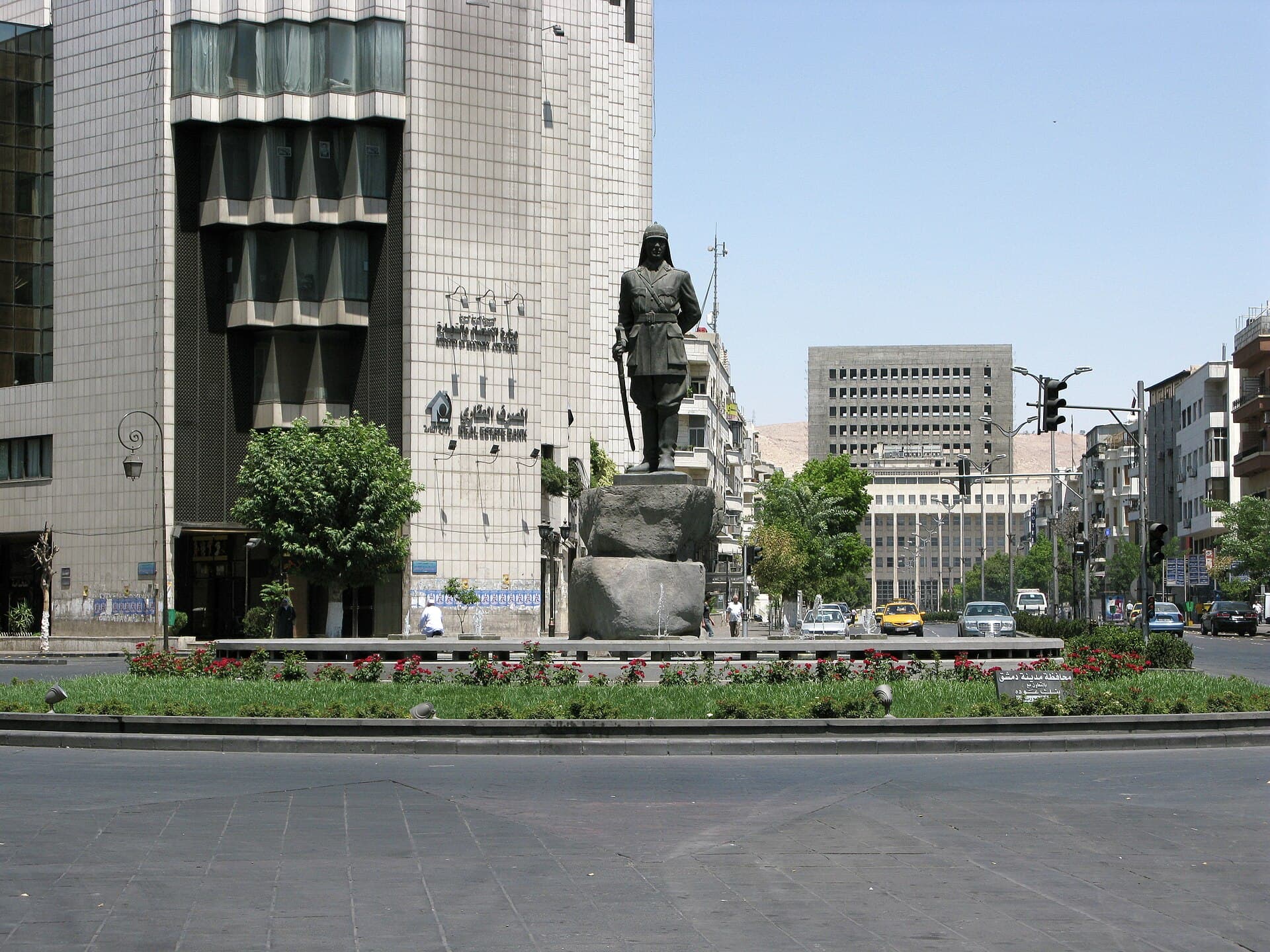
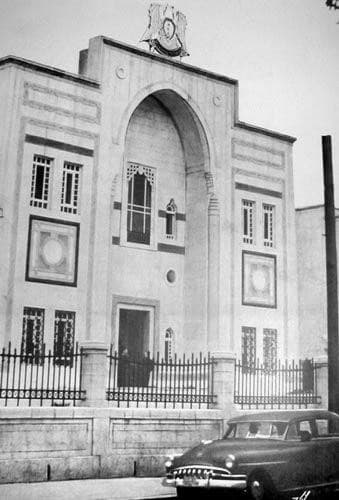
Leave the western end of the Hamidiyah onto An-Nasr Street. The long stone front opposite is the Palace of Justice: in 1554 it became the Ottoman governor’s residence, under the Mandate it held the High Commission, and today it is a court. Walk west along the street into Marjeh Square. The four-storey building with an arch at its centre, on the east side, is the Al-Abed Building. On the south edge of the square, across the Barada, stands the Grand Serail. From here walk north-west to Yusuf al-Azma Square; this leg is the longest on the route, about 550 metres. Past the statue, take the Salihiyah road: the stone building of two adjoining blocks is the parliament. One street away, on 29 May Street, is the Al-Qabbani Theatre. The last stop is a short walk north: Sabaa Bahrat Square, named after its seven pools.
Timing
Be at the western exit of the Hamidiyah at 09:00; while the street is still empty, the arched entrance of the courthouse and the band of inscription above it are easy to see. Reach the Al-Abed Building at 09:30. The front takes direct light before noon. Step one pace into the arched passage in the middle and the courtyard shows. At 10:00 stand in front of the Grand Serail and look at it from the footbridge over the Barada. The empty panel where the tughra was removed is there. Yusuf al-Azma Square at 10:30, the parliament at 11:00. Look for the passage between the two blocks. The door of the Al-Qabbani can be shut in the daytime; with no play on, seeing the foyer is a matter of luck. You reach Sabaa Bahrat around 11:45. The fountains come on in the late afternoon. If there is a play on, move the walk to the afternoon, swap the last two stops and end the evening at the Qabbani.
Take care
The courthouse, the Grand Serail and the parliament are working government buildings: no visitors inside and security at the doors. Take photographs from the pavement and do not linger at the gates; there may be restrictions on photographing official facades, so ask the guard before you shoot. At Marjeh and Yusuf al-Azma the traffic circles the square. Cross on the pavement, not through the central island. The ground floor of the Al-Abed Building is shops; the building itself is offices and flats, and you go no further than the courtyard. On Friday morning the shops are shut and the street is quiet. That suits the facades, but the Al-Abed courtyard may be closed too. Check tickets and curtain times for the Qabbani at the box office.
The route on a map
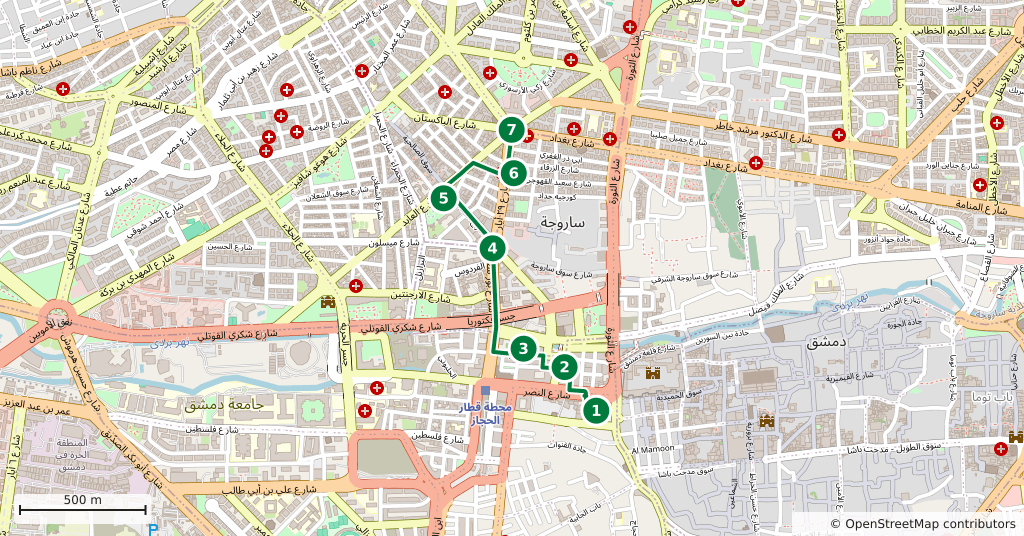
Stops along the route
- 01
- 02
- 03
- 04
- 05
- 06
- 07
Transparency
- How this was chosen
- The stops and their order were set by hand. The line on the map is real road geometry, not a straight hop between pins; distance and duration belong to that itinerary.
- Facts checked
- September 2026
- Last updated
- September 15, 2026