Madrasa Street in al-Salihiyya, Damascus: from al-Sahiba Madrasa to the Mausoleum of Amat al-Latif
About 1800 metres downhill through al-Salihiyya in Damascus, ten stops: madrasas founded by Ayyubid women, Ibn Arabi’s tomb and a 13th-century minaret.
- Duration
- 3 hours
- Distance
- 1.8 km
- Difficulty
- Easy
- Best season
- Year round; mornings, not on Friday
- stops
- 10
- City
- Damascus
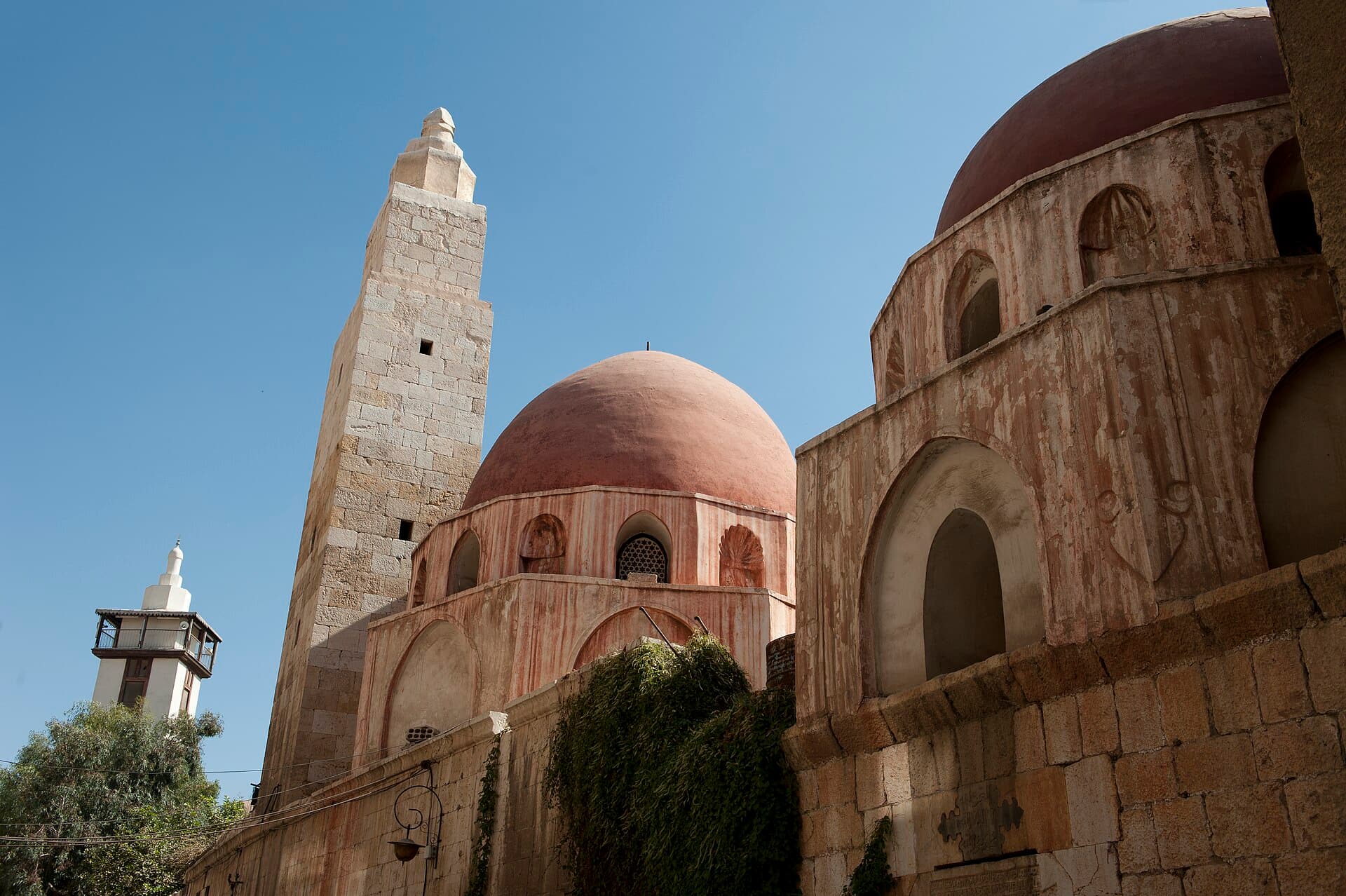
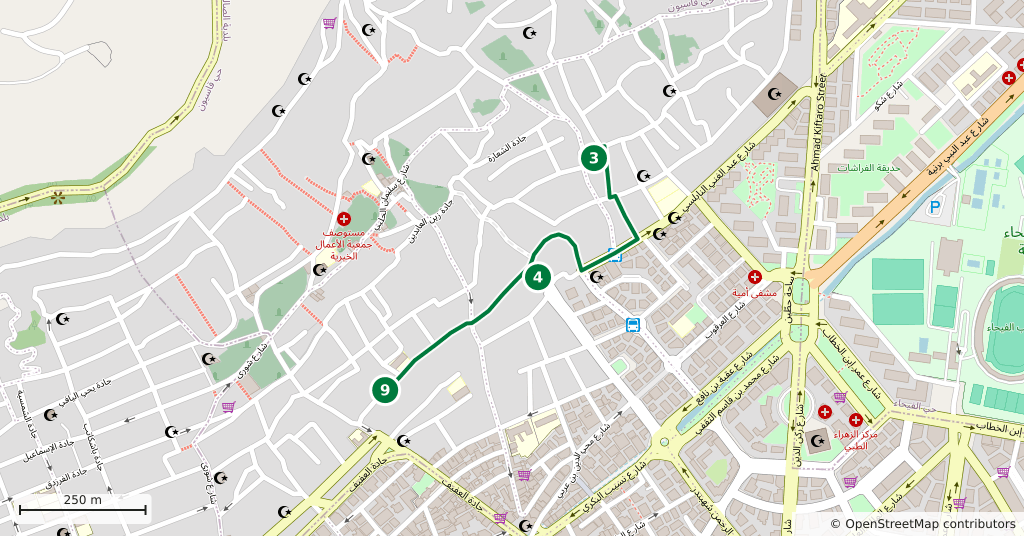
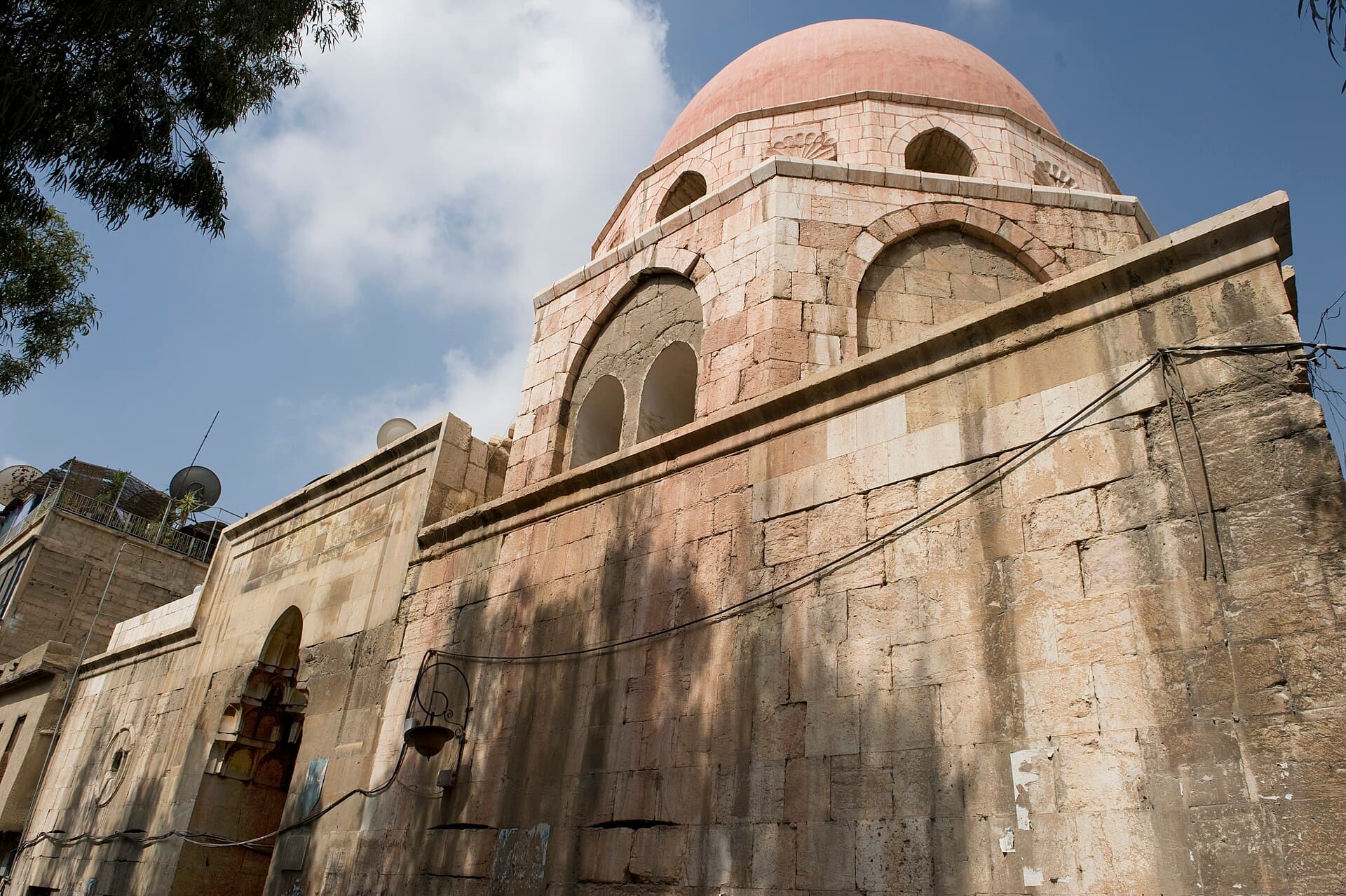
On the lower slopes of Mount Qasioun, in the Damascus district of al-Salihiyya, this walk covers close to 1800 metres: ten stops, three hours, most of it downhill. It starts at the Al-Sahiba Madrasa in the north-east, passes the Ibn Arabi Mosque and drops south-west to the Mausoleum of Amat al-Latif at the far end of Madrasa Street. More than half of the stops date from the 13th century, and women founded many of them. Rabia Khatun, Saladin’s sister, built the Al-Sahiba in 1233; Khadija Khatun’s Al-Murshidiyya followed in 1252. Under the last dome on the route lies Amat al-Latif, Rabia Khatun’s adviser. Most of what you see is read from the street, in doorways, minarets and domes, and a good number of the buildings cannot be entered.
The route
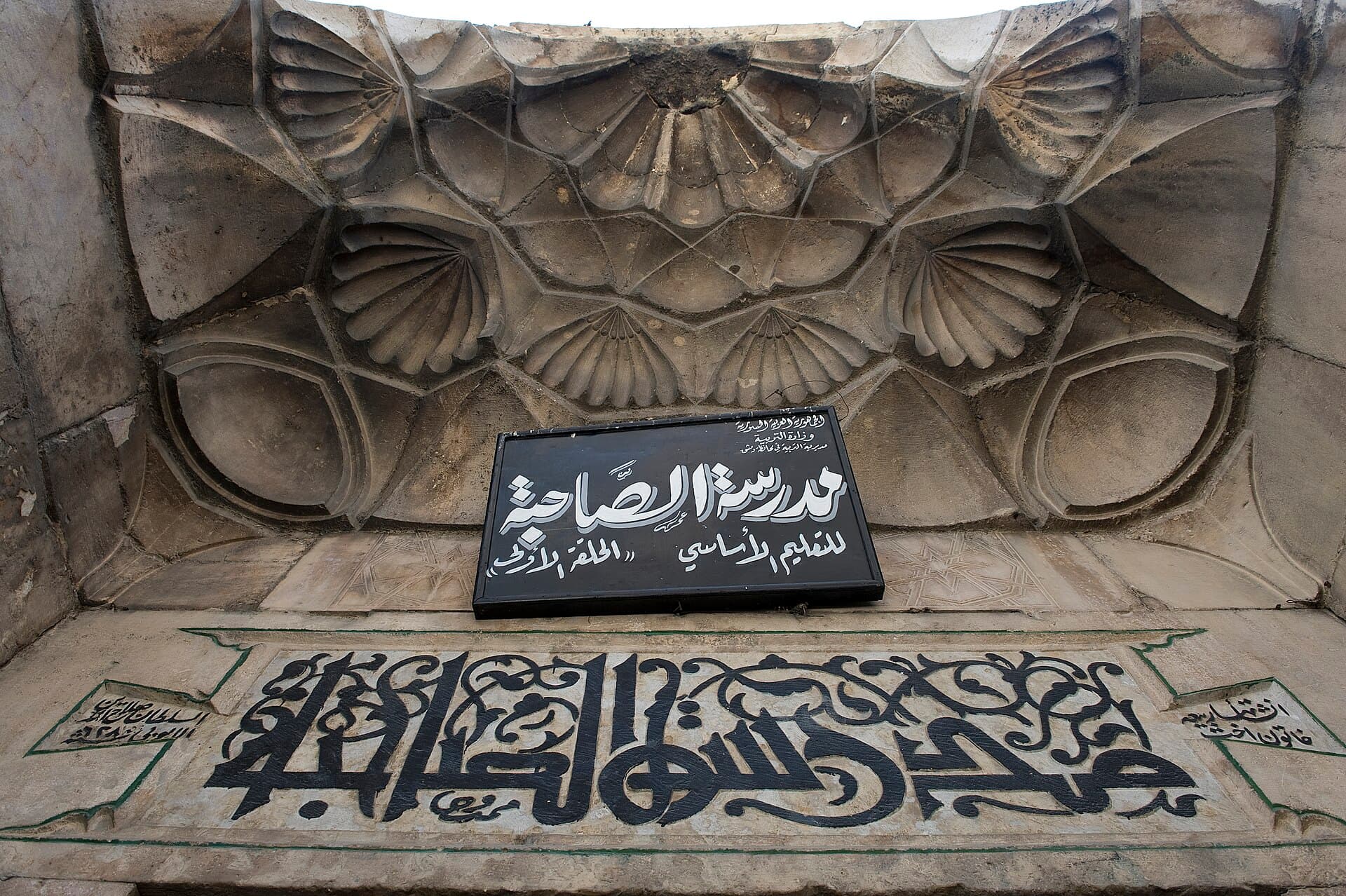
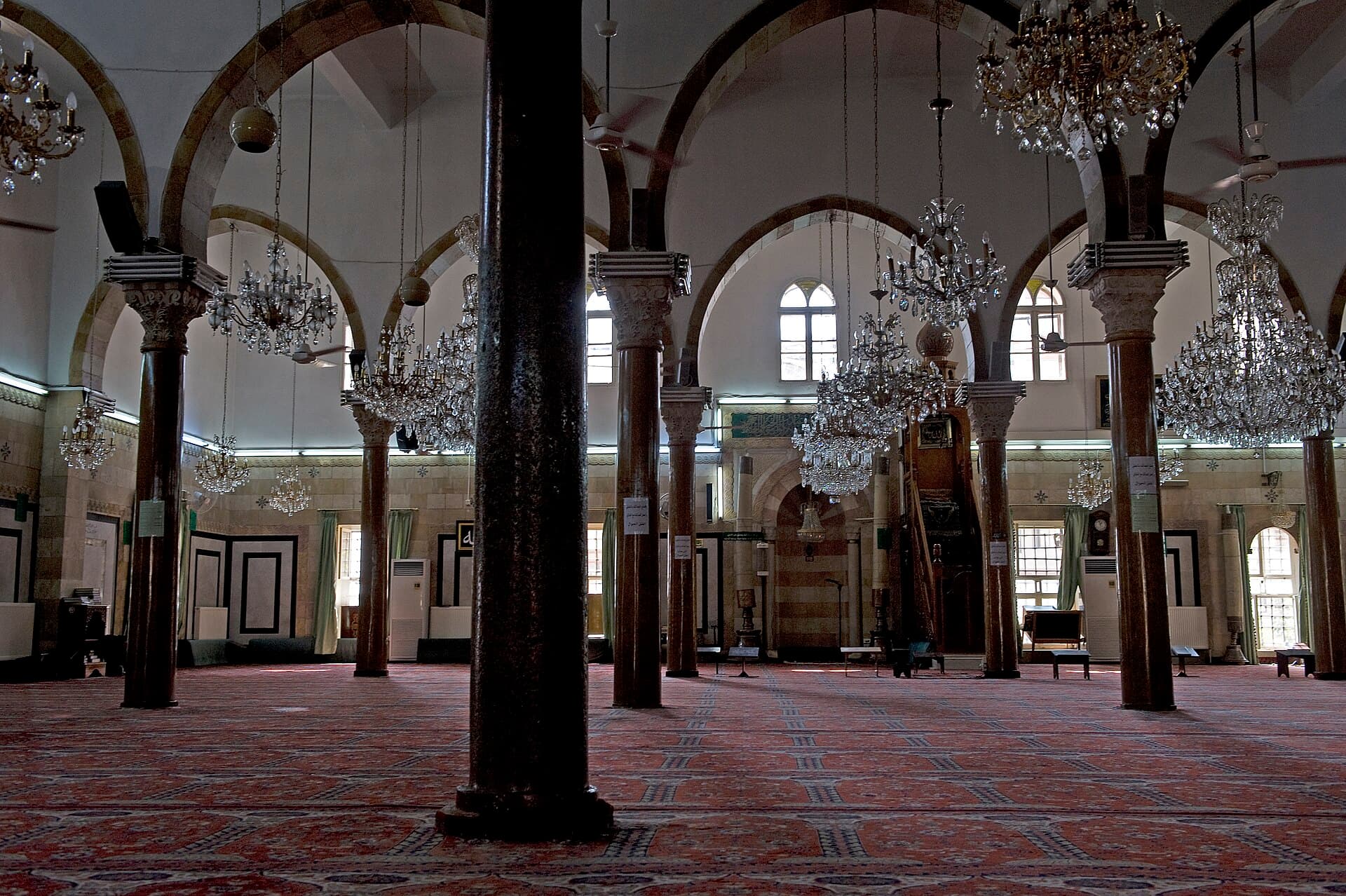
The Al-Sahiba Madrasa stands near Abd al-Ghani al-Nabulsi Street. Read its doorway from the opposite pavement: three tiers of muqarnas, the honeycomb vaulting of Islamic architecture, under a half-dome carved like a shell. Walk south for about 270 metres to the Abd al-Ghani al-Nabulsi Mosque, built over the grave of the scholar who gave the street its name. The Sheikh Ibrahim al-Nabulsi Mosque opposite is a separate building. The next leg goes west and slightly uphill, 320 metres. The Hanabila Mosque has no street front; you enter through a narrow gap. Work on it began in 1201, which makes it the oldest mosque in al-Salihiyya, and the money came from Muzaffar al-Din Gokburi, Rabia Khatun’s husband. The longest leg starts here: 550 metres south-west to the Ibn Arabi Mosque. From the street only its minaret shows.
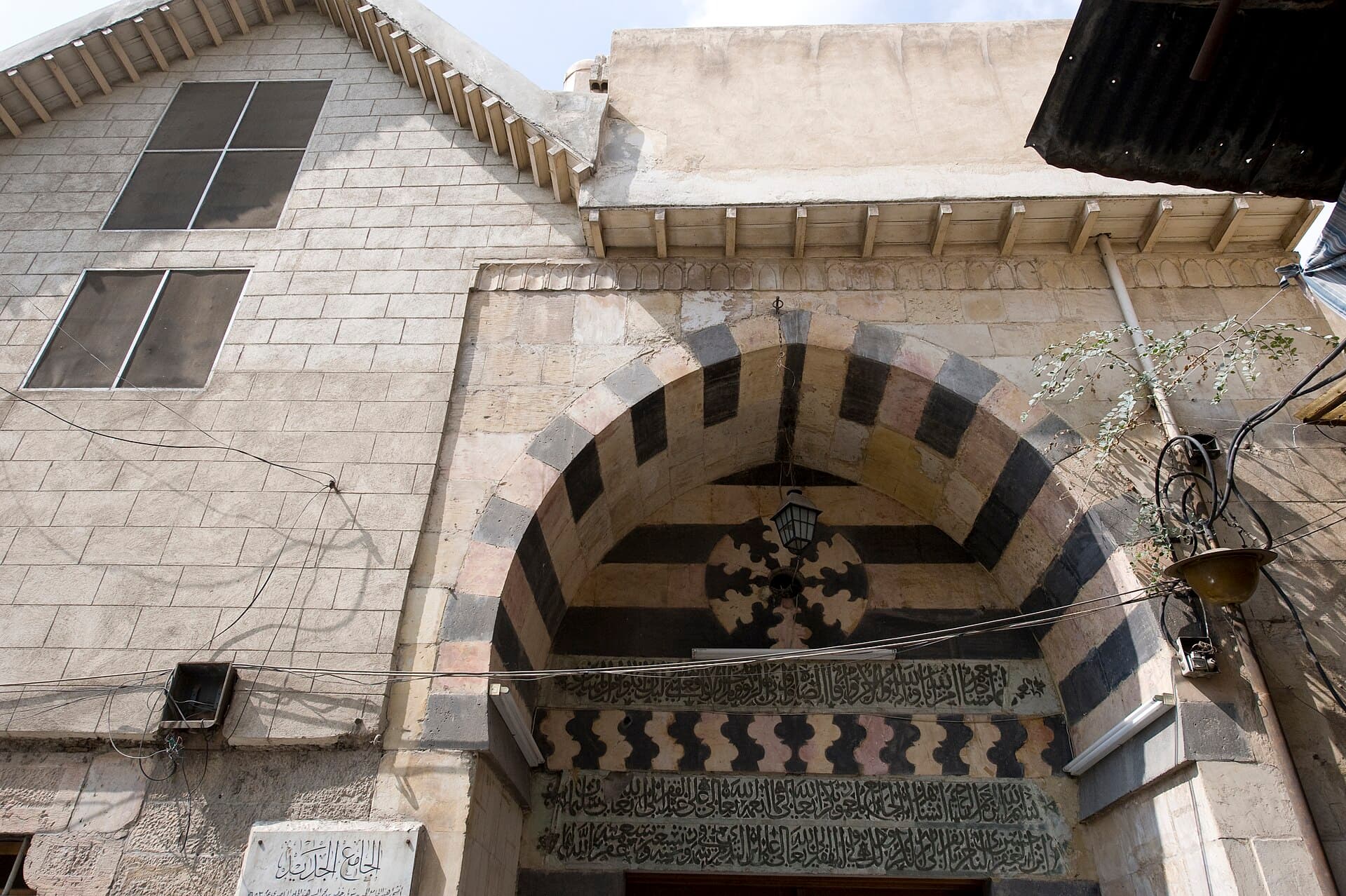
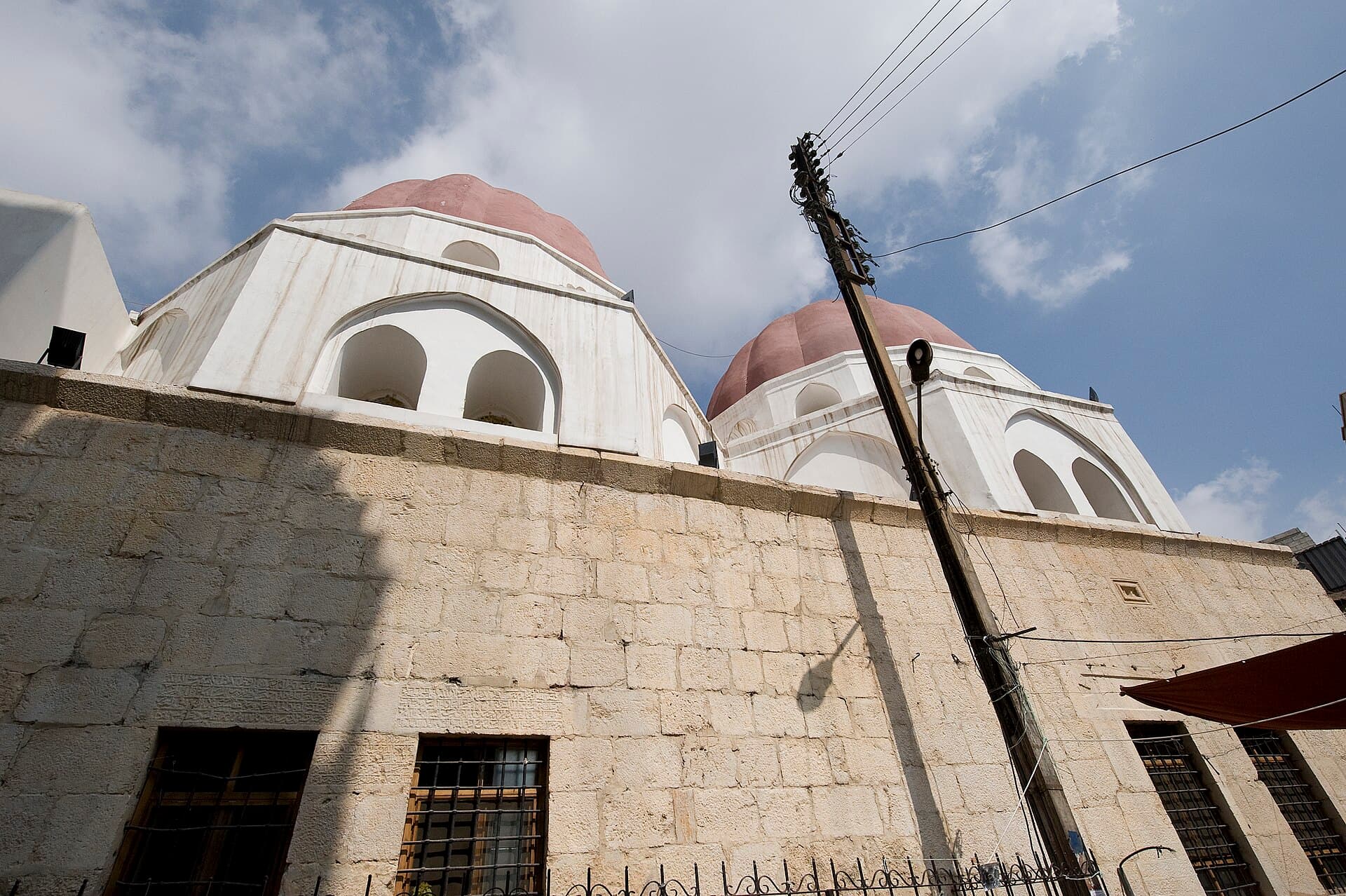
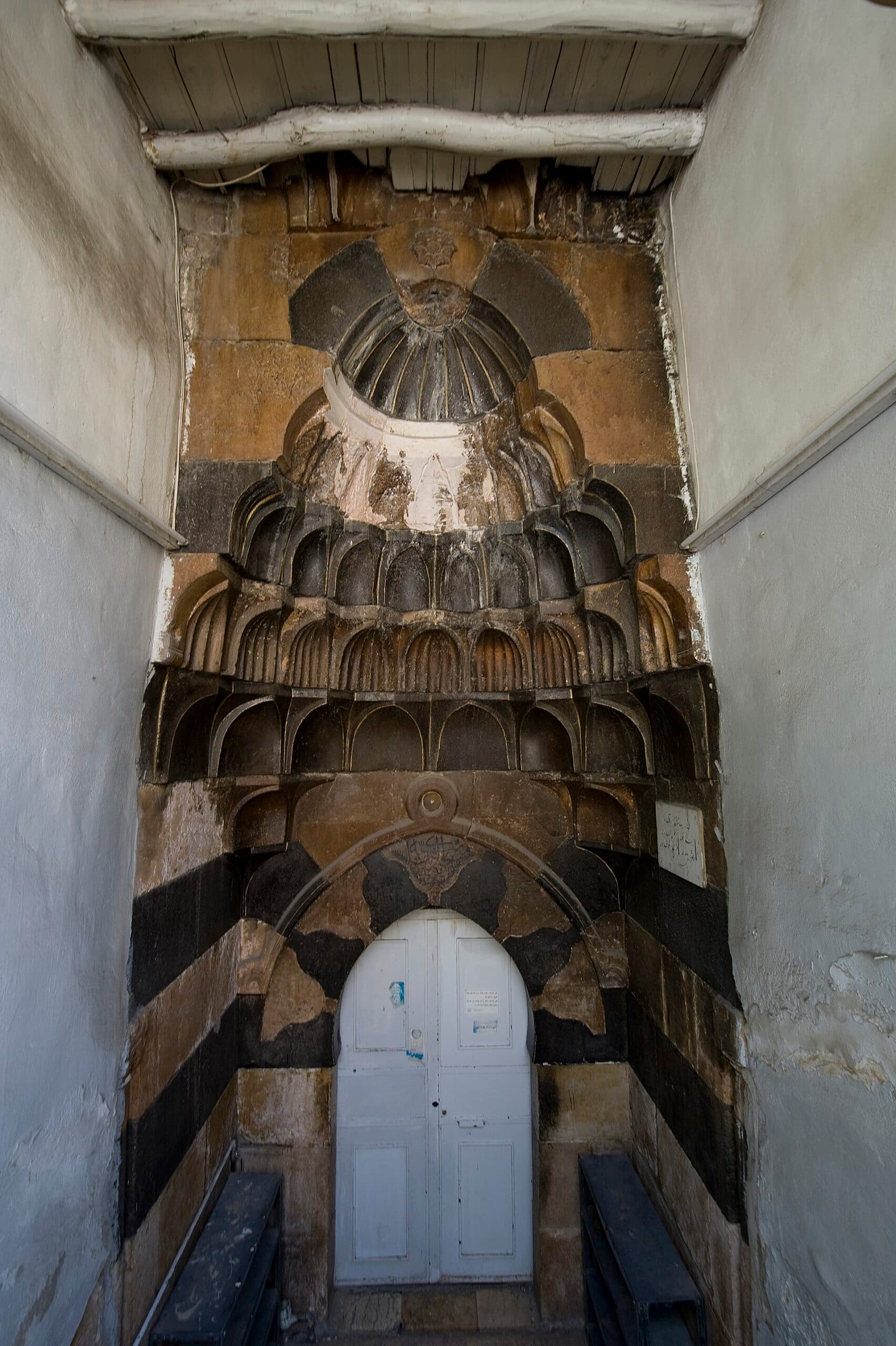
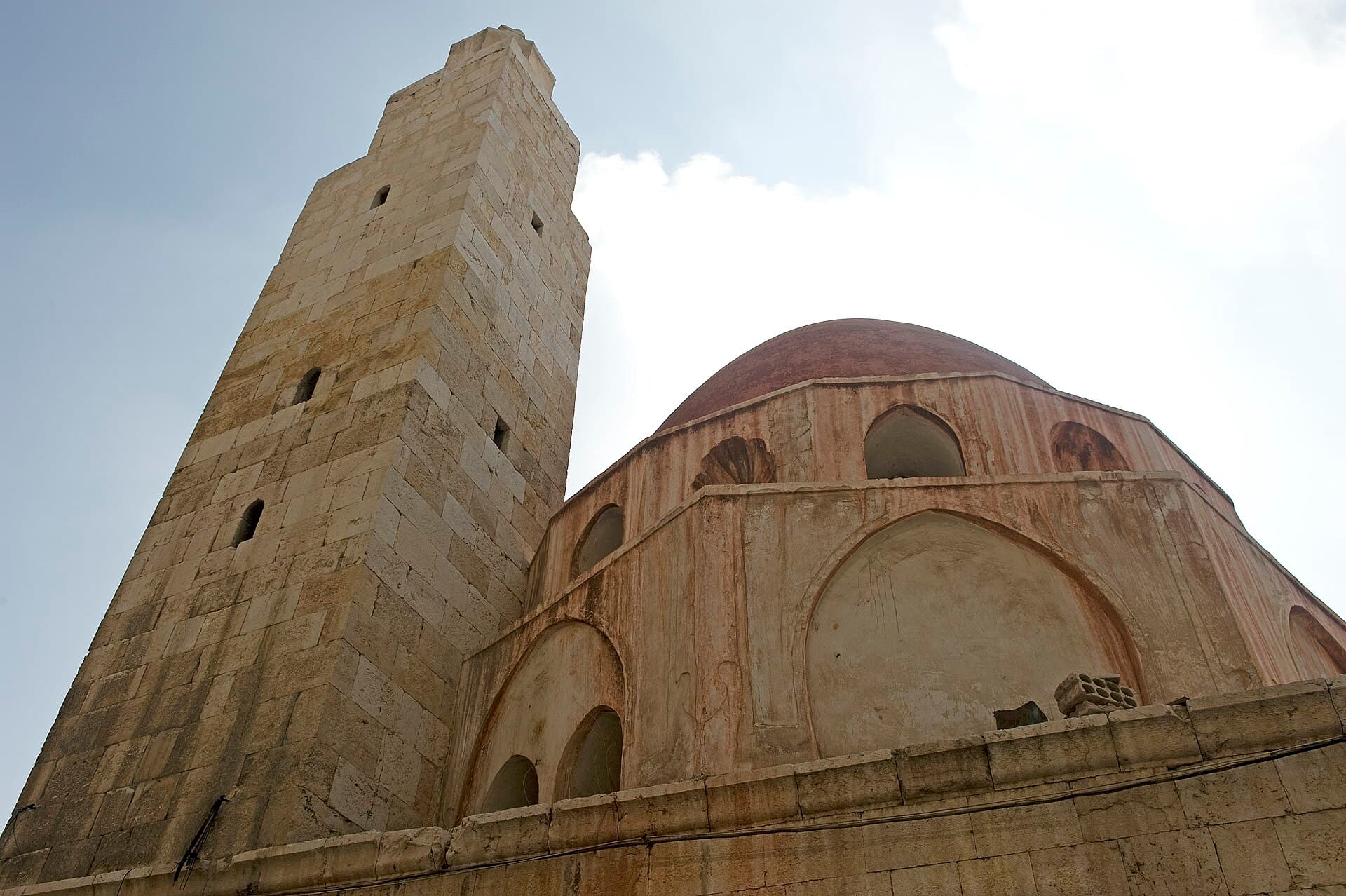
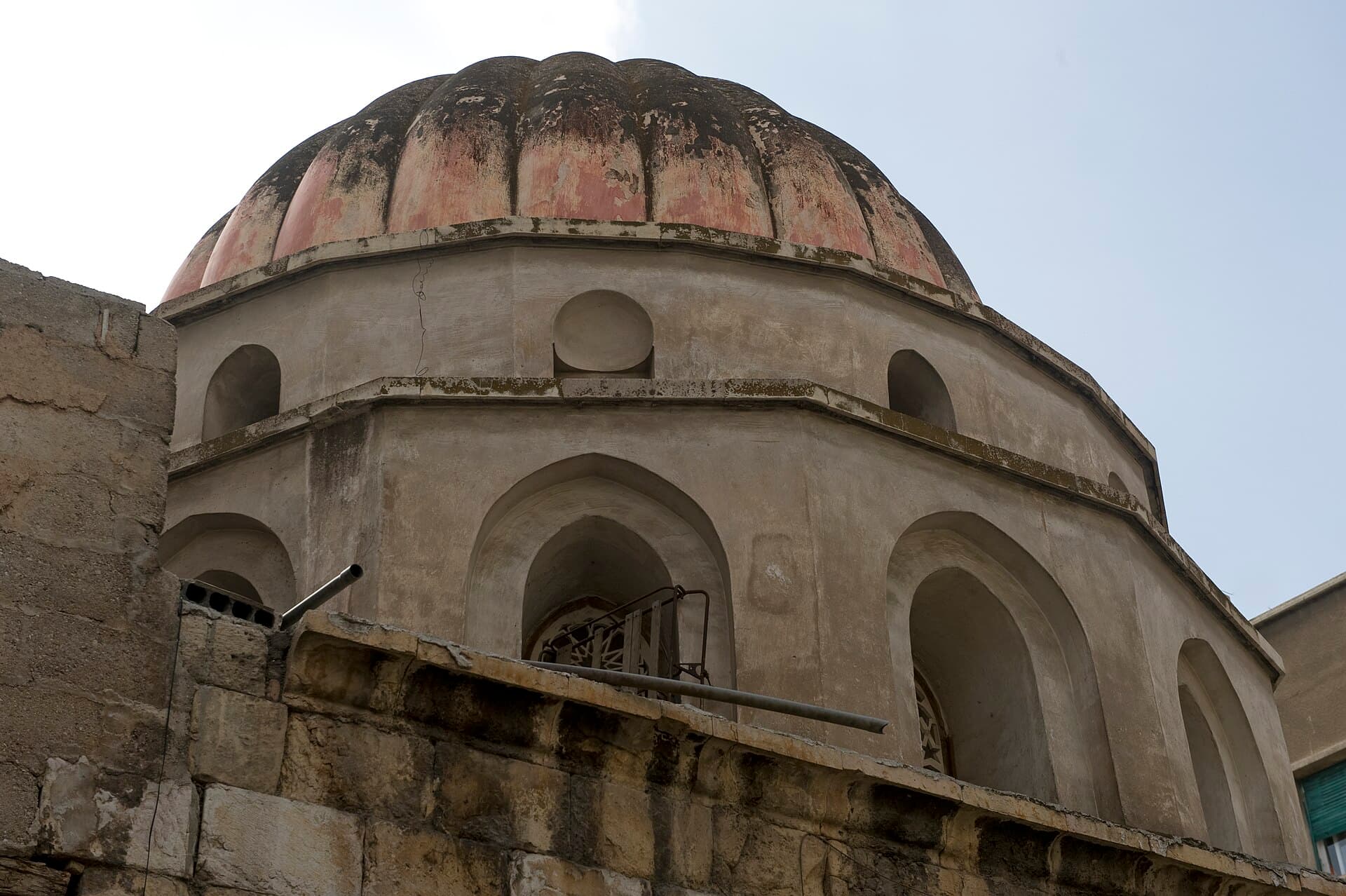
From Ibn Arabi, walk south-west into Madrasa Street. After 200 metres comes the black and white stone portal of Al-Jami al-Jadid, and twenty paces further the two domes of the Al-Jaharkasiyya. From here the buildings crowd together. 150 metres south-west is the muqarnas door niche of the Al-Atabakiyya, thirty paces on the portal of the Turba al-Takritiyya, and a few dozen paces after that the sharp-cornered square minaret of the Al-Murshidiyya. The last leg is 180 metres. The Mausoleum of Amat al-Latif is a small dome squeezed between apartment blocks.
Timing
Be at the Al-Sahiba at 08:30, while the street is still in shade. The building is a girls’ primary school today, so the doorway is what you come for, not the courtyard. Al-Nabulsi at 09:00, the Hanabila at 09:30: the courtyard is empty in the morning and there is time to look closely at the reused stones in its arches. Ibn Arabi at 10:15. The tomb chamber is open in the daytime, down a flight of stone steps. At 11:00 you are at Al-Jami al-Jadid and the Al-Jaharkasiyya. Market stalls start to fill the space in front of the portal around this time; cross to the far pavement to see the knotted medallion above the door. The Al-Atabakiyya and the Takritiyya at 11:20. Towards noon the light drops straight into the street, and only then do the muqarnas cells in the door niches stand out. The Al-Murshidiyya at 11:40, Amat al-Latif at 12:00. The dome shows best from the lower lane behind it.
Take care
On this route you see more facades than interiors. The Al-Murshidiyya is normally locked, and going inside needs permission from the Directorate-General of Antiquities. The Al-Atabakiyya and the Al-Jaharkasiyya are not open for regular visits. The Takritiyya is neglected, and the latest photographs showing its condition are from 2008. The current visiting arrangements at Al-Jami al-Jadid and the Mausoleum of Amat al-Latif have not been confirmed; ask at the door. At the Al-Sahiba, do not walk into the courtyard during lessons or photograph the pupils. The street is narrow: rather than stepping into the road between stalls and cars to look up at a facade, cross to the other side. In the mosques keep shoulders and knees covered, do not go in during prayers, and avoid Friday midday. Two dates are disputed. For the Al-Atabakiyya, one source names Sayf al-Din Ghazi in 1140 as founder, another Turkan Khatun, who died in 1242. The tomb in Al-Jami al-Jadid belongs to a woman who died in 1186, while a list of the city’s mosques dates the building to 1255. This page leaves both questions open.
The route on a map
Stops along the route
- 01
- 02
- 03
- 04
- 05
- 06
- 07
- 08
- 09
- 10
Transparency
- How this was chosen
- The stops and their order were set by hand. The line on the map is real road geometry, not a straight hop between pins; distance and duration belong to that itinerary.
- Facts checked
- September 2026
- Last updated
- September 15, 2026