Featured places
Mosques, caravanserais, souks, museums — and why they are worth the walk.
813 Places
Shir, a Neolithic Village near Hama
A Late Neolithic village on a terrace above the Sarut, 12 km northwest of Hama, lived in from 7000 to 6200 BC. Finds include a bone flute and a 16-room store.
Hama · Late Neolithic
Sibat al-Qadi, a Covered Passage in Old Homs
A vaulted passage over a lane in Bab al-Dreib, old Homs. At more than 20 metres, sources call it the longest sabat in Syria, with lantern niches in its walls.
Homs · Ottoman period (local tradition)
The Temples of Si’ (Seeia)
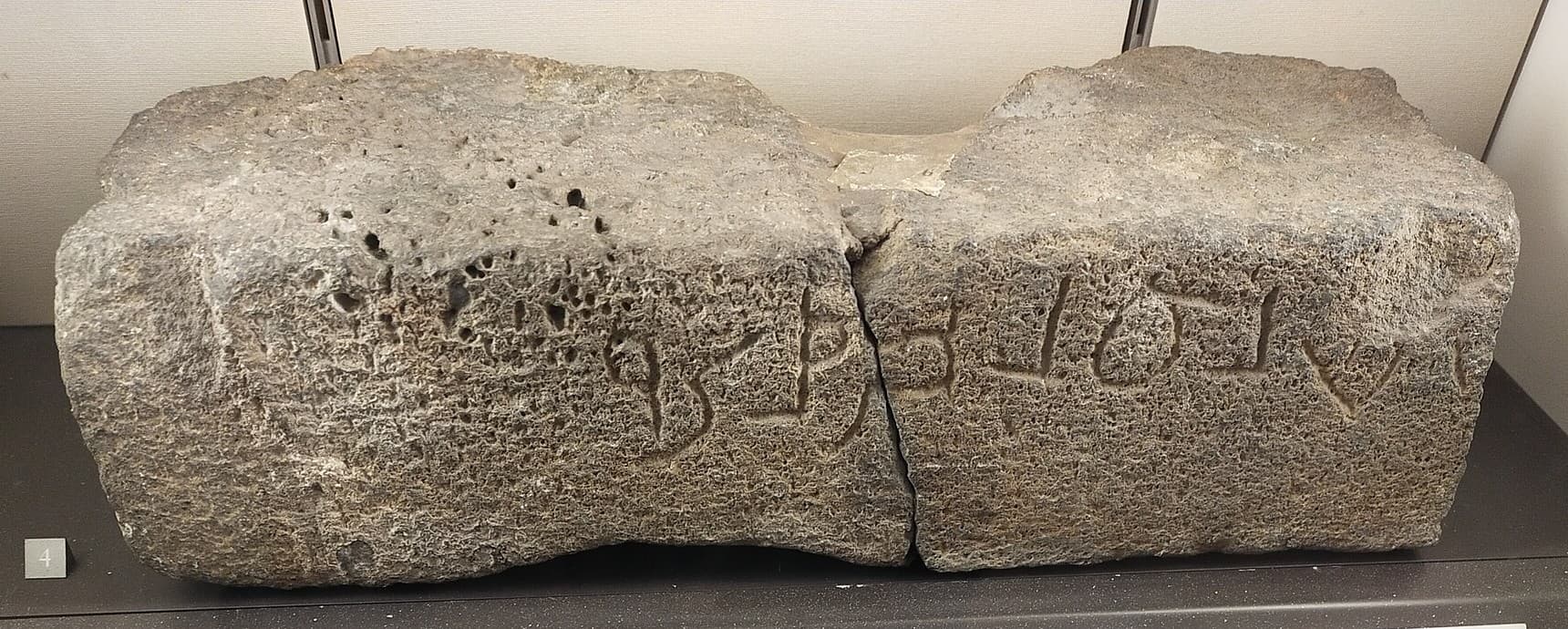
A hilltop sanctuary near Qanawat with three temples, the largest built for Baalshamin. Two of its basalt inscriptions are now in Paris, at the Louvre.
As-Suwayda · Nabataean — Roman
Al-Shaykh Saad: the Shrine of Job and the Job Stone
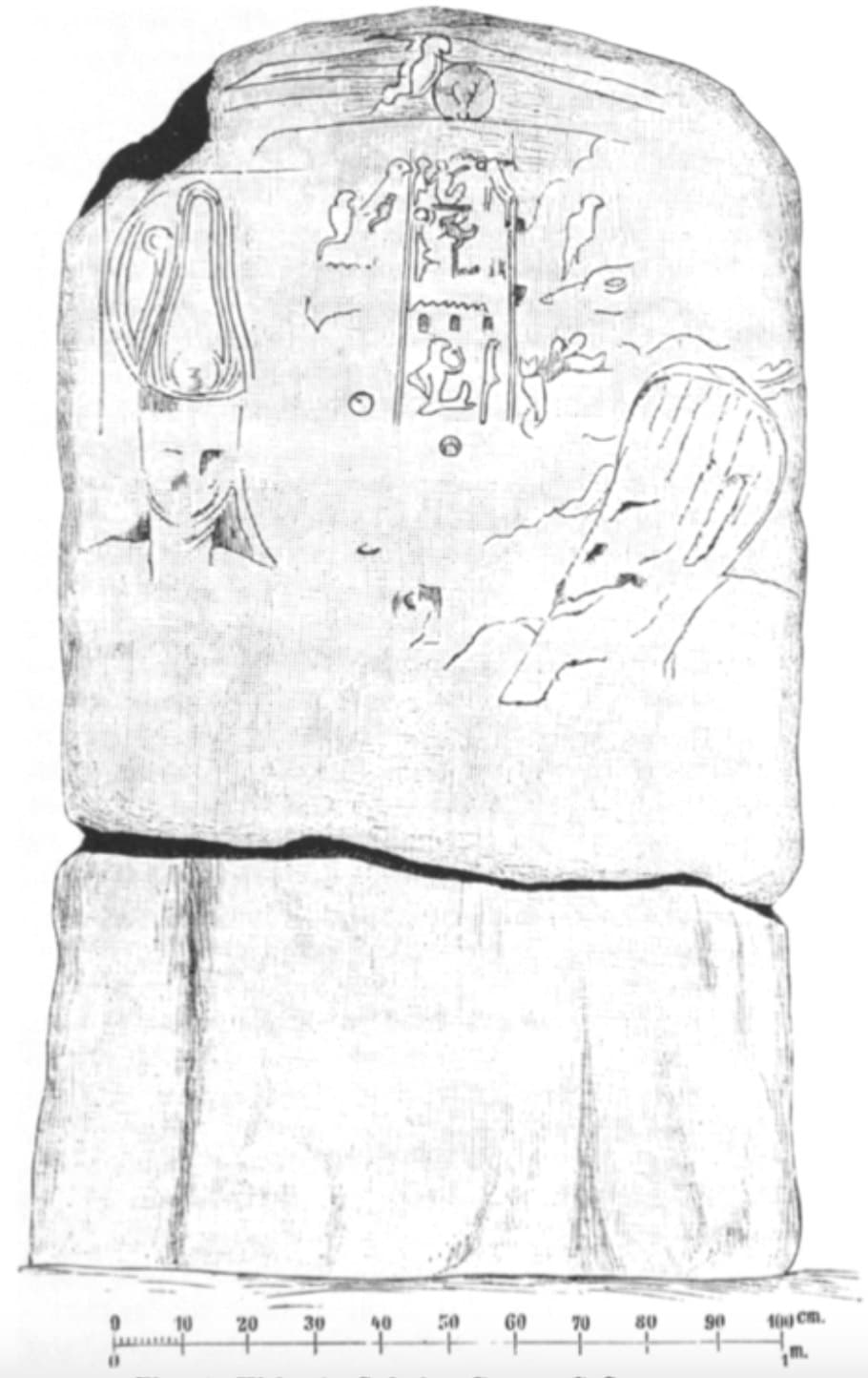
In al-Shaykh Saad, south of Nawa, a mosque dedicated to Job holds the Job Stone, in fact an Egyptian stele of Ramesses II. Its condition today is unverified.
Daraa · Bronze Age (stele) — Byzantine — Ottoman
Shaykh Hilal Beehive Houses
A steppe village northeast of Salamiyah known for mudbrick beehive houses: 133 houses and 348 domes at the 2007 count, some domes 5 m tall. Ask before entering.
Hama · 20th-century mudbrick architecture on Byzantine ruins
Al-Shahhara Church (Our Lady of the Annunciation), Mizyeneh
A barrel-vaulted village church of black basalt at the mouth of the Valley of the Christians, with a silver tray from 1814, icons from 1861 and a carved 1889 screen.
Homs · Date of building unknown — 19th century furnishings
The Shahba Mosaic Museum
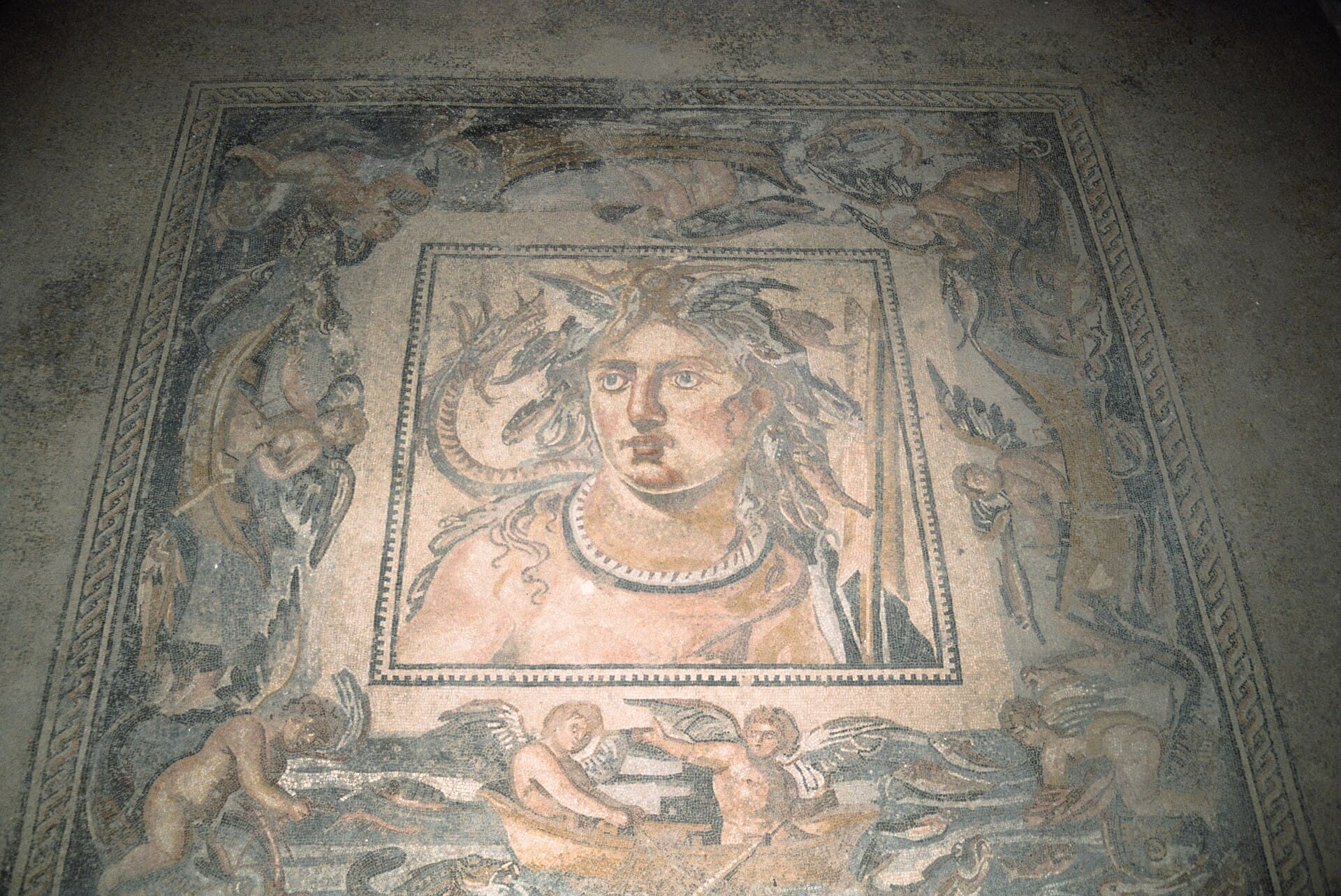
A museum set up in 1962 inside a Roman building at Shahba. Its Tethys, Orpheus, Ariadne and Dionysus, and Aphrodite and Ares mosaics stay where they were laid.
As-Suwayda · Roman
Sha’ara: An Ancient Basalt Village in al-Lajat
A well-kept basalt village in the north-west corner of al-Lajat, its modern houses built apart: four temples, an old mosque, bathhouses, a tower and rock tombs.
Daraa · Roman — Byzantine; Islamic period
Tell al-Rawda, a Planned Bronze Age City
A round Bronze Age city planned on the steppe east of Hama in the mid-3rd millennium BC: a double wall, five gates, three temples and a necropolis of 97 graves.
Hama · Early Bronze Age
Al-Rusafa Castle near Masyaf
A Nizari Ismaili castle on a hill above the village of al-Rusafa, southwest of Masyaf: an oval plan 75 metres long, three storeys and stores 20 metres deep.
Hama · Medieval — Nizari Ismaili, Mamluk
Raphanea, Base of the Roman Legion III Gallica
Site of the Roman legion town of Raphanea, between Barin and Nisaf west of Hama. The bid of Elagabalus for the throne began here in 218; it was never excavated.
Hama · Roman — Byzantine — Crusader
Najran, Suwayda: Byzantine Church Towers and a Druze Village
A village 20 km north-west of As-Suwayda named after settlers from Najran in Yemen: a church with towers inscribed 458 and 564, a Roman house, and Druze from 1685.
As-Suwayda · Byzantine; Ghassanid; Druze settlement