Featured places
Mosques, caravanserais, souks, museums — and why they are worth the walk.
813 Places
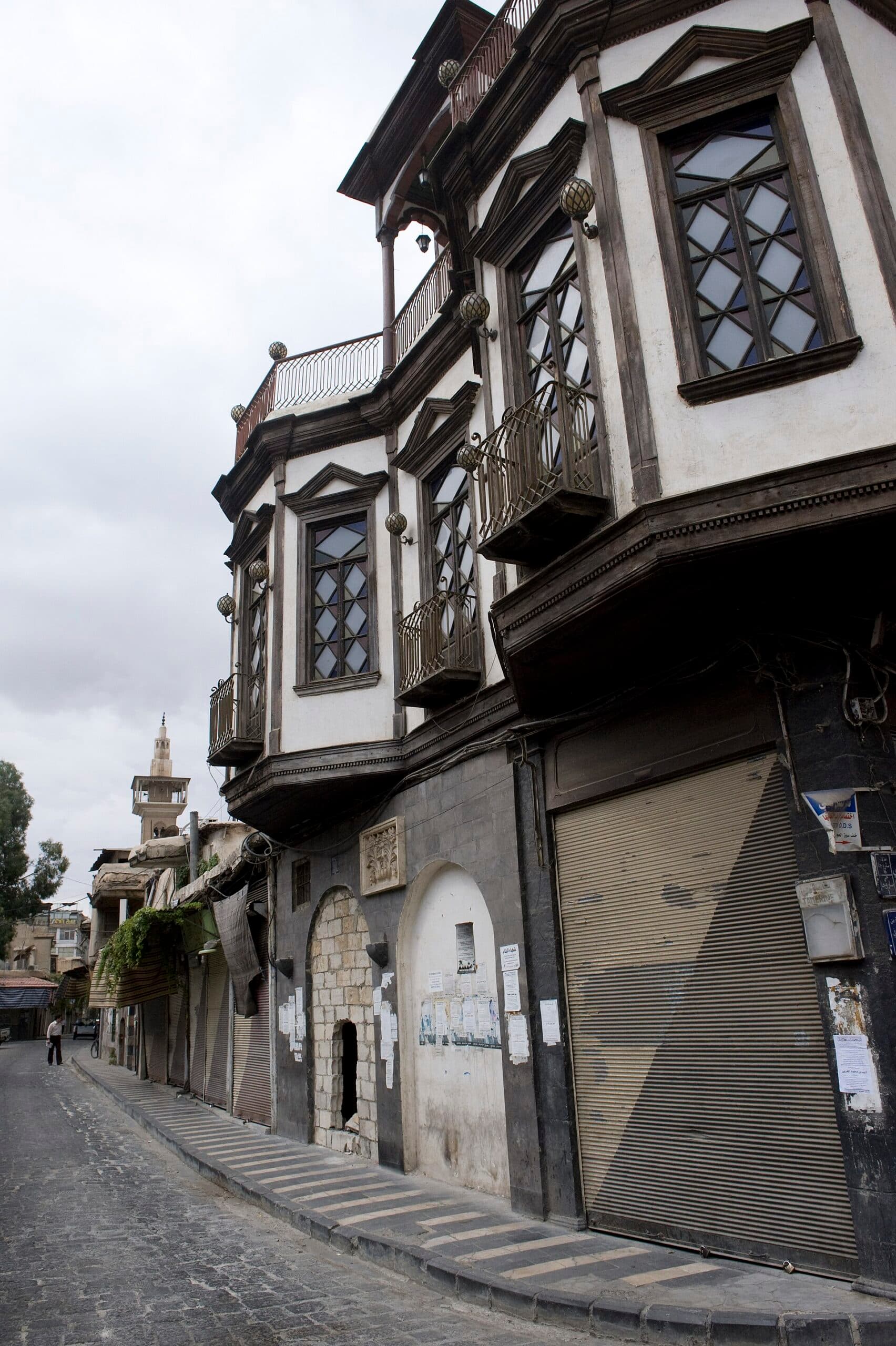
Barisha, a Dead City in Idlib
The village that named Jebel Barisha, and the Byzantine ruin north of it: porticoed houses, more standing olive presses than any dead city, a vaulted cistern.
Idlib · Roman — Byzantine
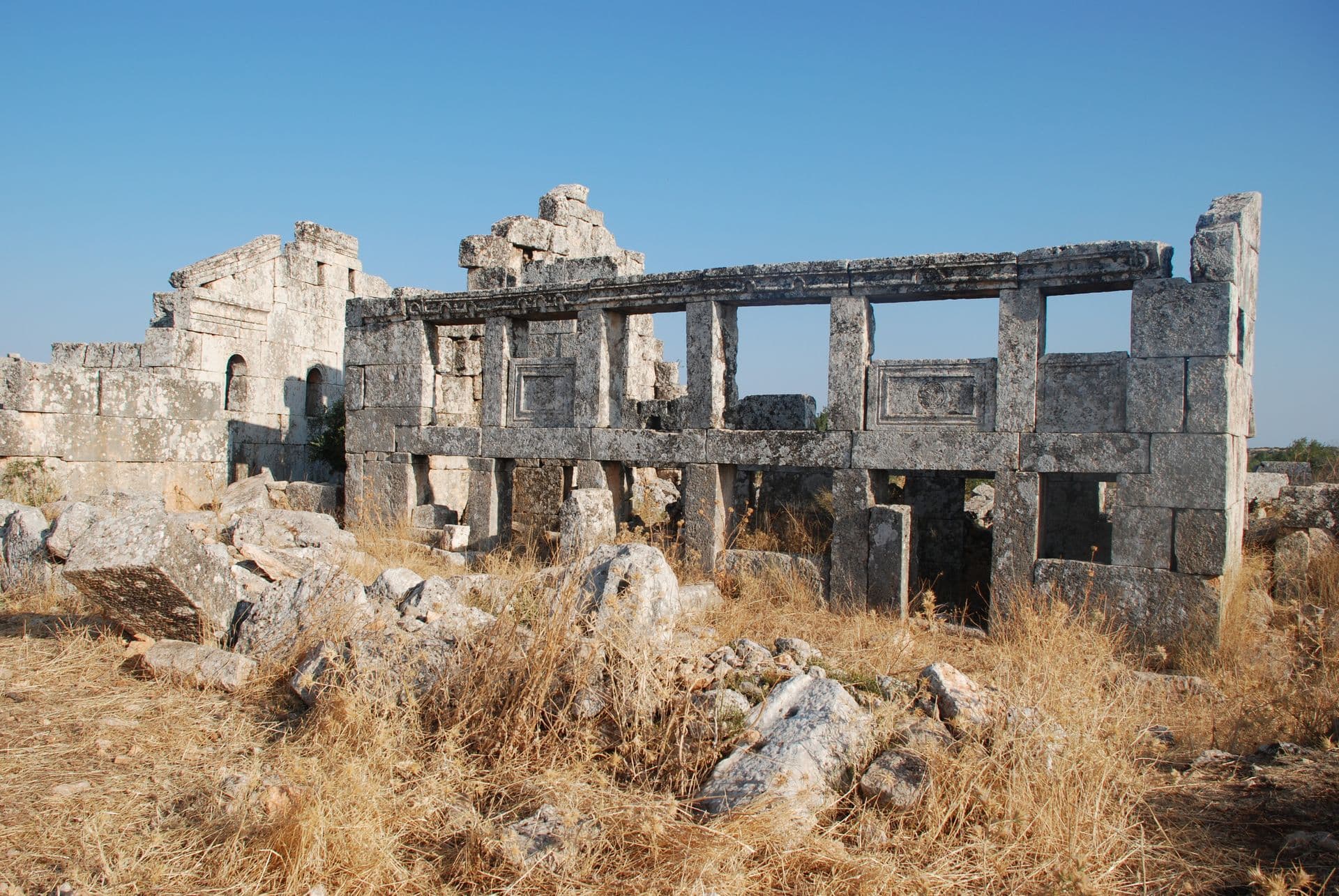
Montferrand Castle at Ba’rin
A castle hill above the Homs–Masyaf road, 40 kilometres west of Hama. The crusaders built it in 1126 and lost it in 1137; ditch and tower bases remain.
Hama · Crusader — Ayyubid
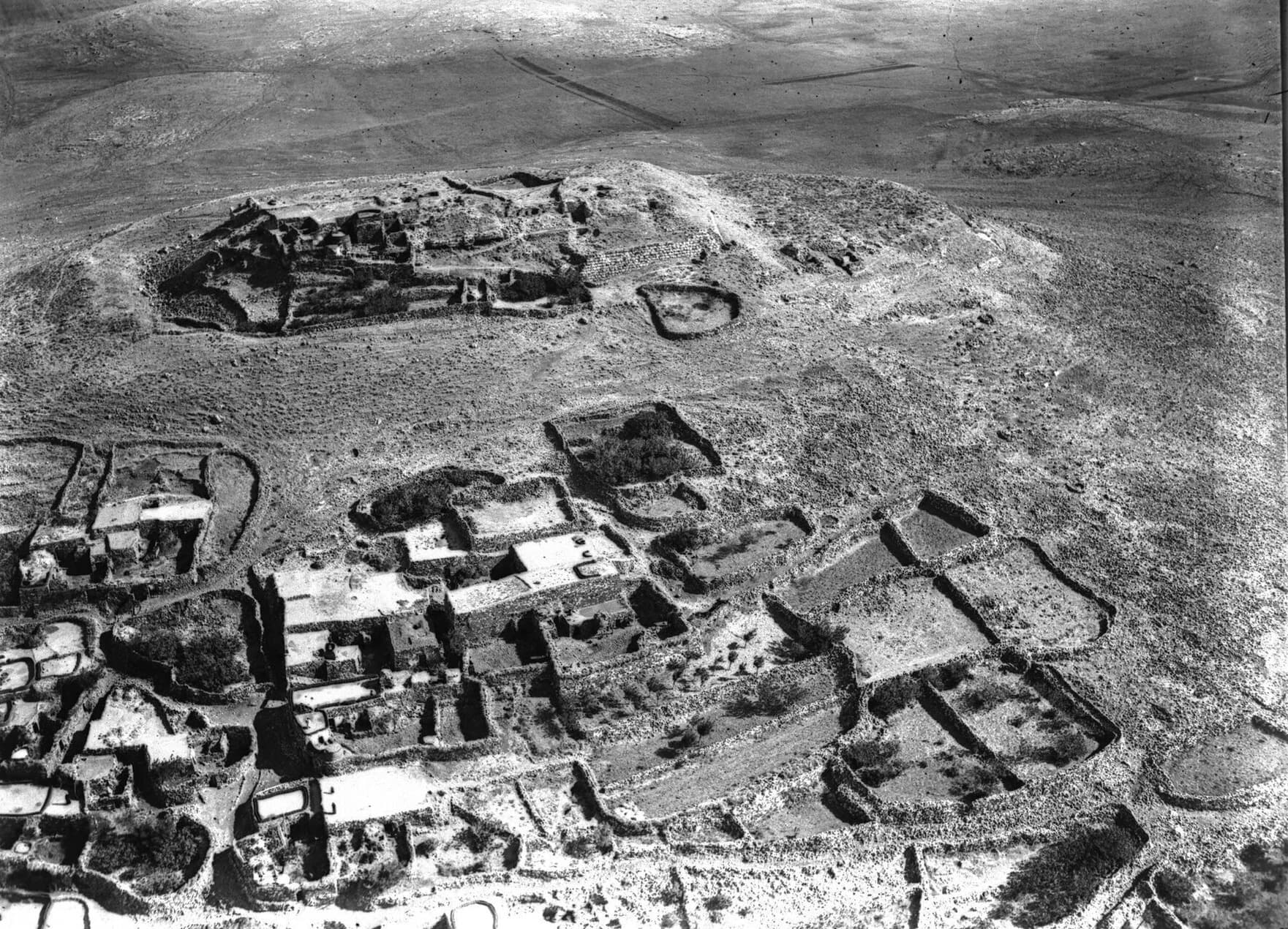
Baniyas on the Syrian Coast
A coastal town 35 kilometres north of Tartus, below Margat Castle. A Phoenician port, a Crusader bishopric and Syria’s largest refinery share one shore.
Tartus · Phoenician — Roman — Crusader — Ottoman
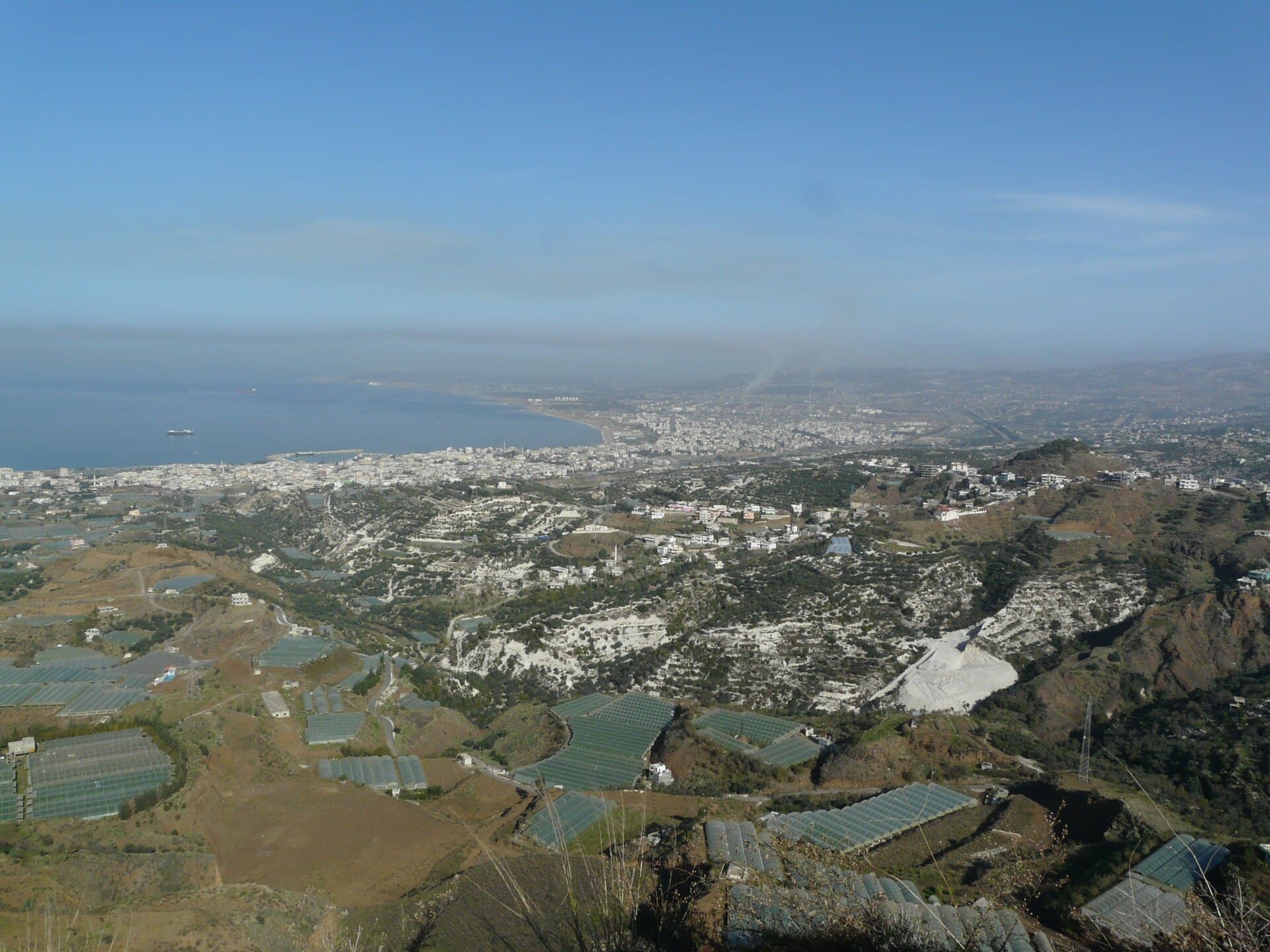
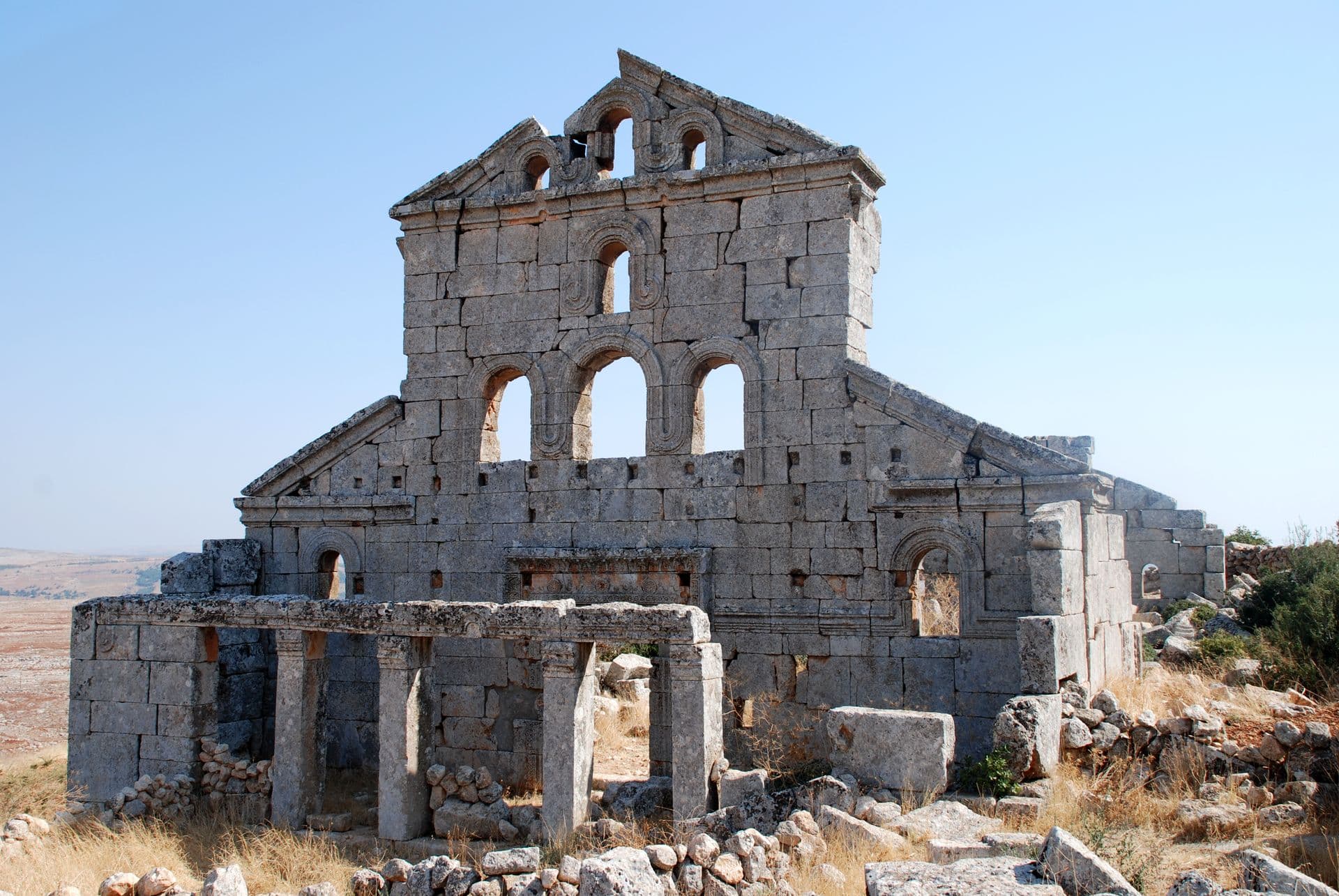
Baqirha, a Dead City on Jebel Barisha
A temple of Zeus dated 161 and two Byzantine churches on Jebel Barisha. The east church still carries its full west gable and a door lintel dated 546.
Idlib · Roman — Byzantine
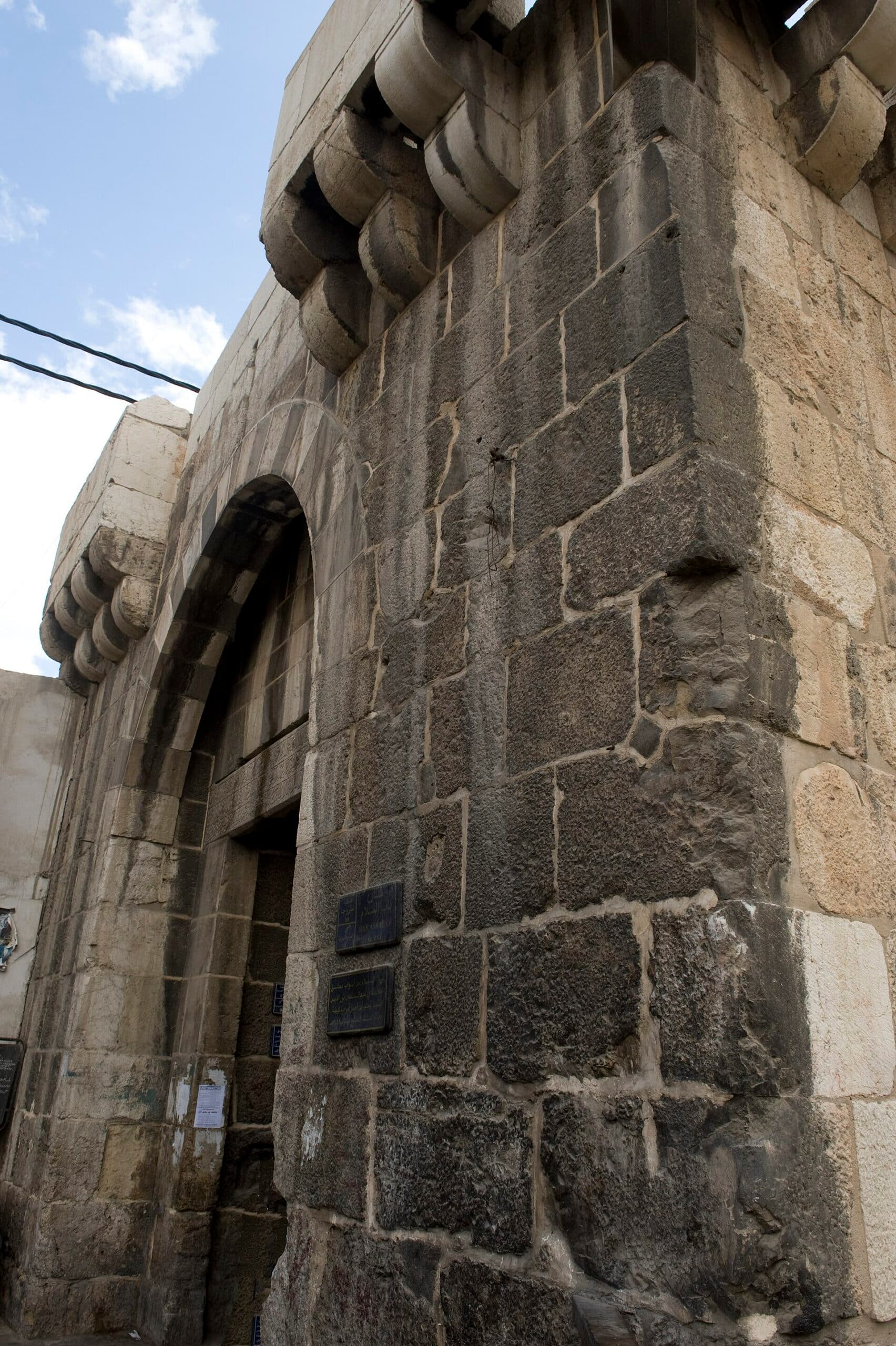
Bab al-Salam
One of the northern gates in the old wall of Damascus. What the Ayyubid rebuilding left standing, the muqarnas corbels above the arch, and reused old stone.
Damascus · Ayyubid
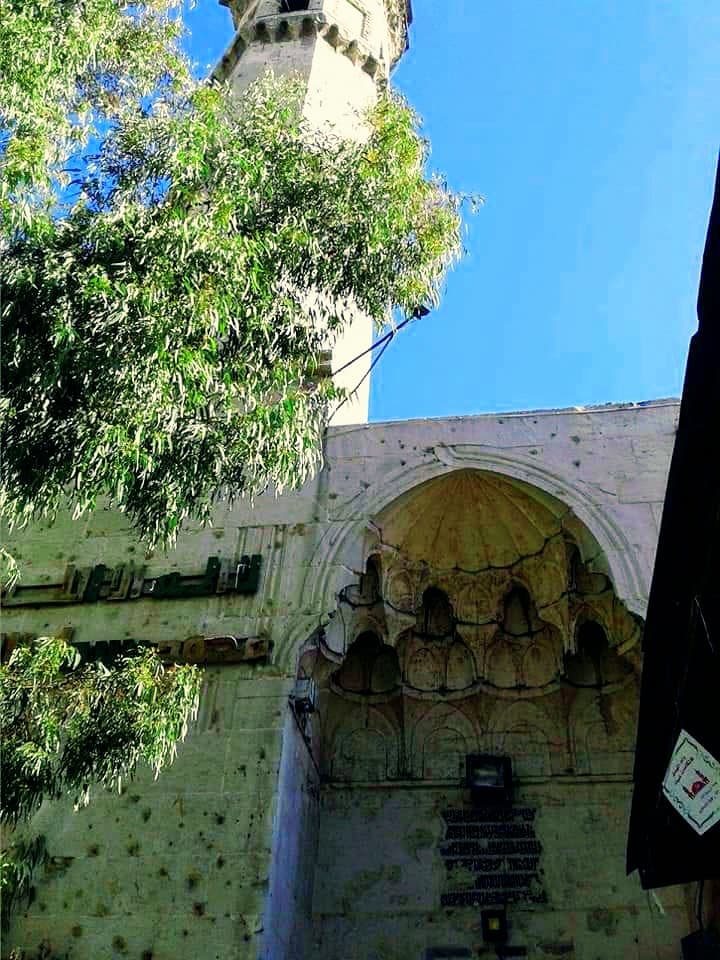
The Altun Bogha Mosque, Aleppo
A Mamluk mosque of 1318 east of the Citadel, built by the emir Altun Bogha. Also called the Salt Square Mosque; the inside of its dome is all muqarnas.
Aleppo · Mamluk (the sultanate that ruled Syria from Cairo)
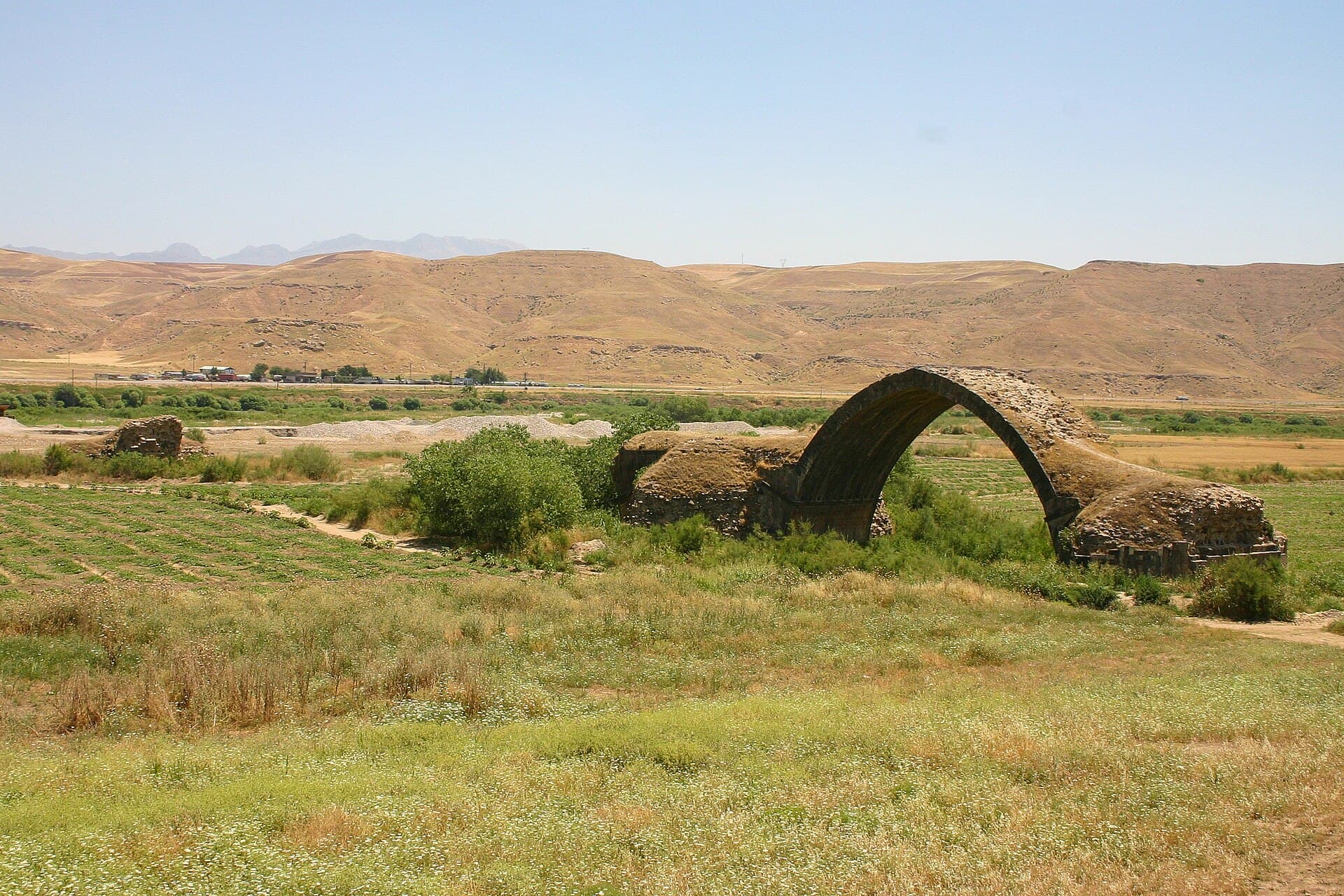
Ain Diwar Bridge
A single pointed arch standing alone in the middle of the Tigris plain in Syria’s far north-east. Long called a Roman bridge; the masonry turned out Zangid.
Qamishli · Zangid
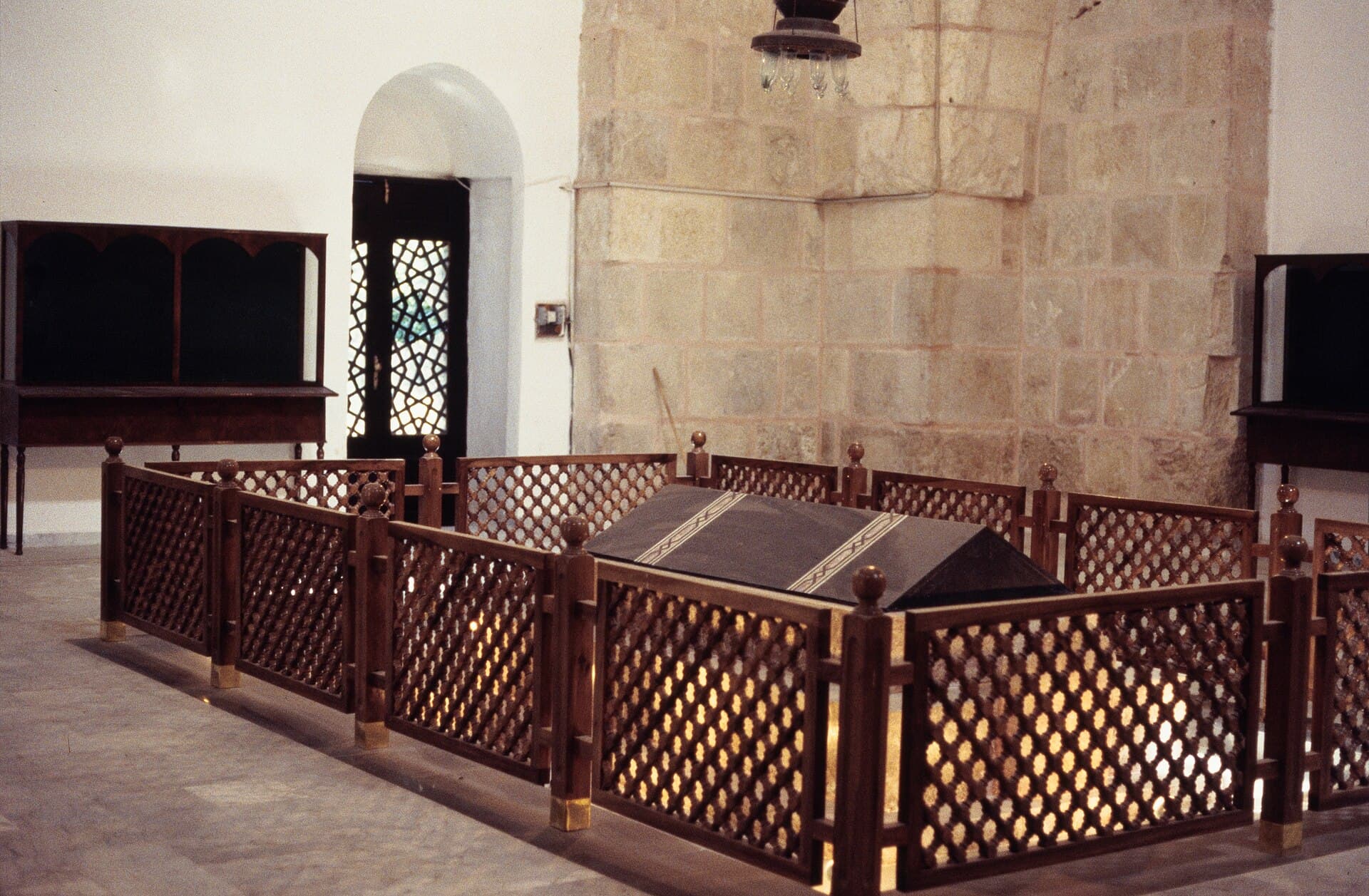
The Al-Adiliyah Madrasa
The Ayyubid madrasa facing the Zahiriyah in Damascus. Its pendant-stone portal, the chequerboard courtyard, and the tomb of al-Adil beneath the high dome.
Damascus · Ayyubid
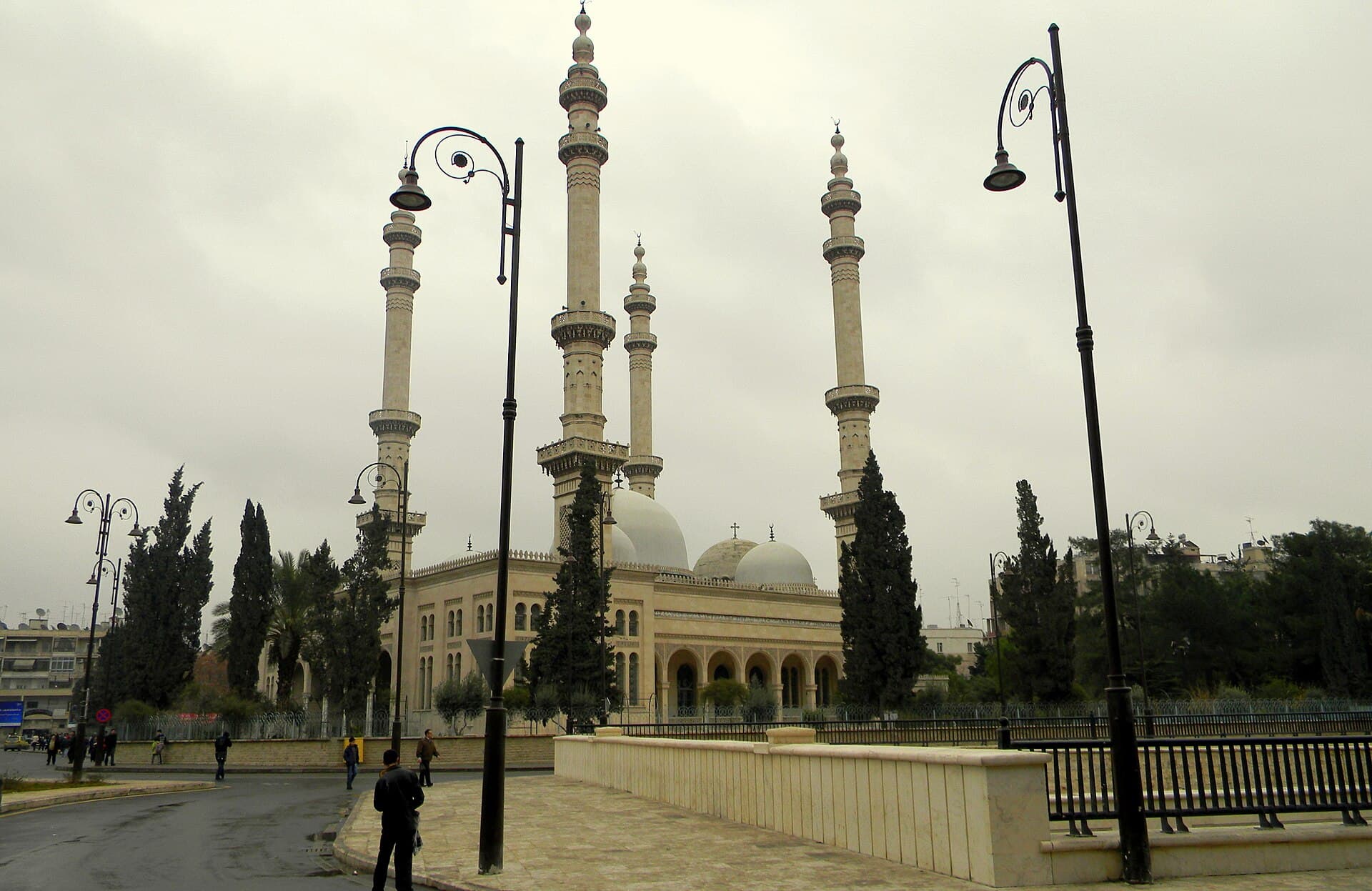
The Tawhid Mosque, Aleppo
Opened in 1981 in the Baghdad Station district of Aleppo, on the right bank of the Queiq. Four round minarets, a church on either side, a Christian quarter.
Aleppo · Contemporary
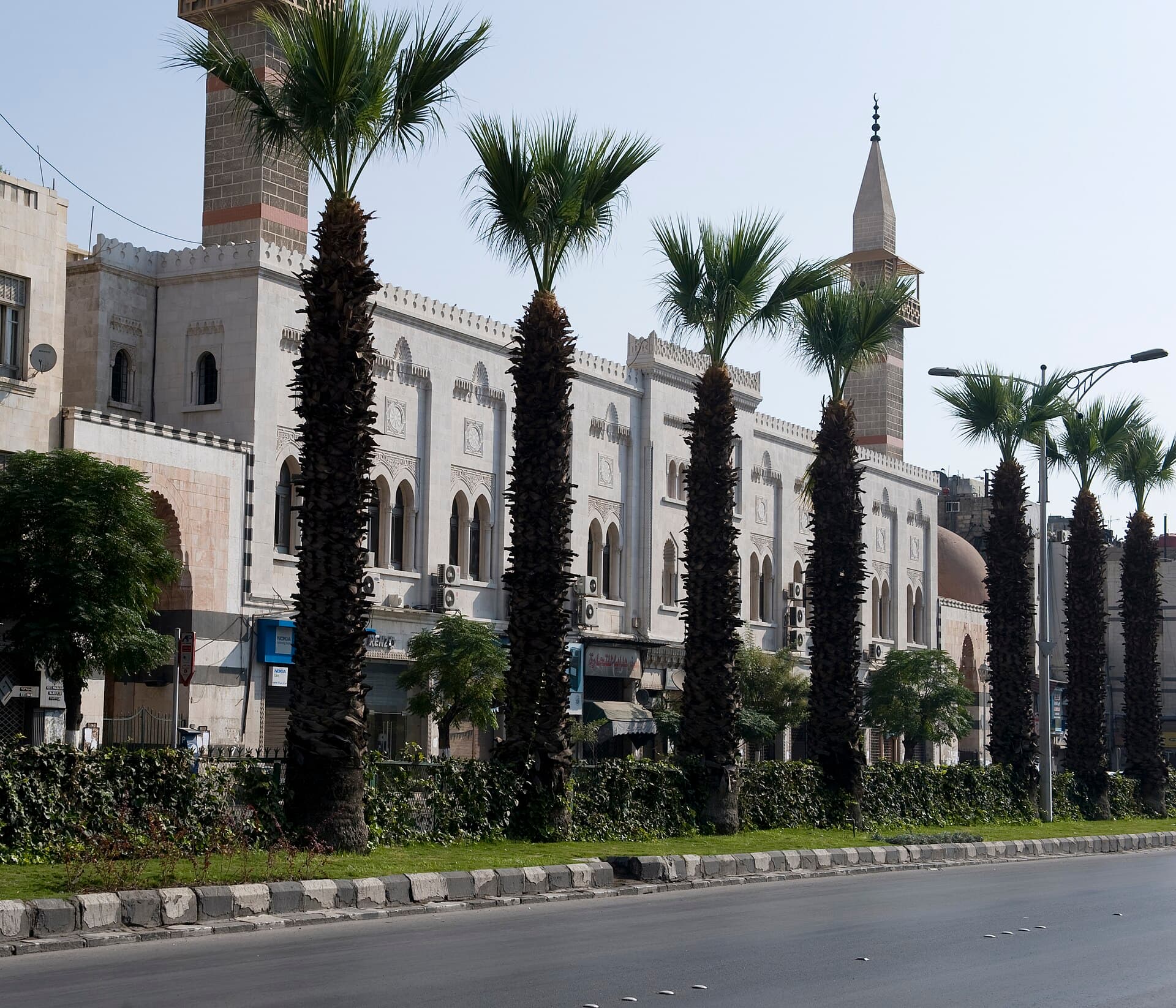
The Tankiz Mosque
On An-Nasr Street beside Marjeh Square: what the Mamluk viceroy Tankiz built in 1317 survives as one minaret, two portals and a mosaic mihrab in his tomb.
Damascus · Mamluk — rebuilt in the 20th century
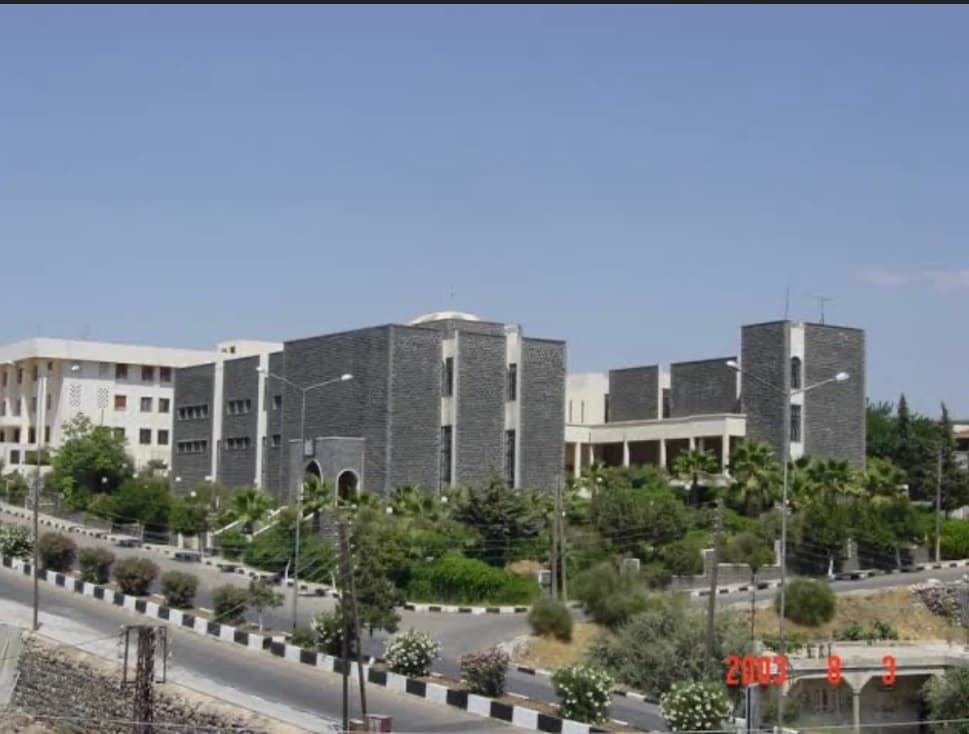
The Suwayda National Museum
Basalt sculpture from the Jabal al-Arab, mosaics from Shahba and Nabataean coins under one roof. What is inside, how long it takes, whether it is open.
As-Suwayda · Modern building, Nabataean to Islamic collection
Souq Saruja
A Mamluk-era quarter north of the walls: timber upper floors overhanging the lane, a market street lined with workshops, old Damascus outside the old city.
Damascus · Mamluk — Ottoman