Featured places
Mosques, caravanserais, souks, museums — and why they are worth the walk.
813 Places
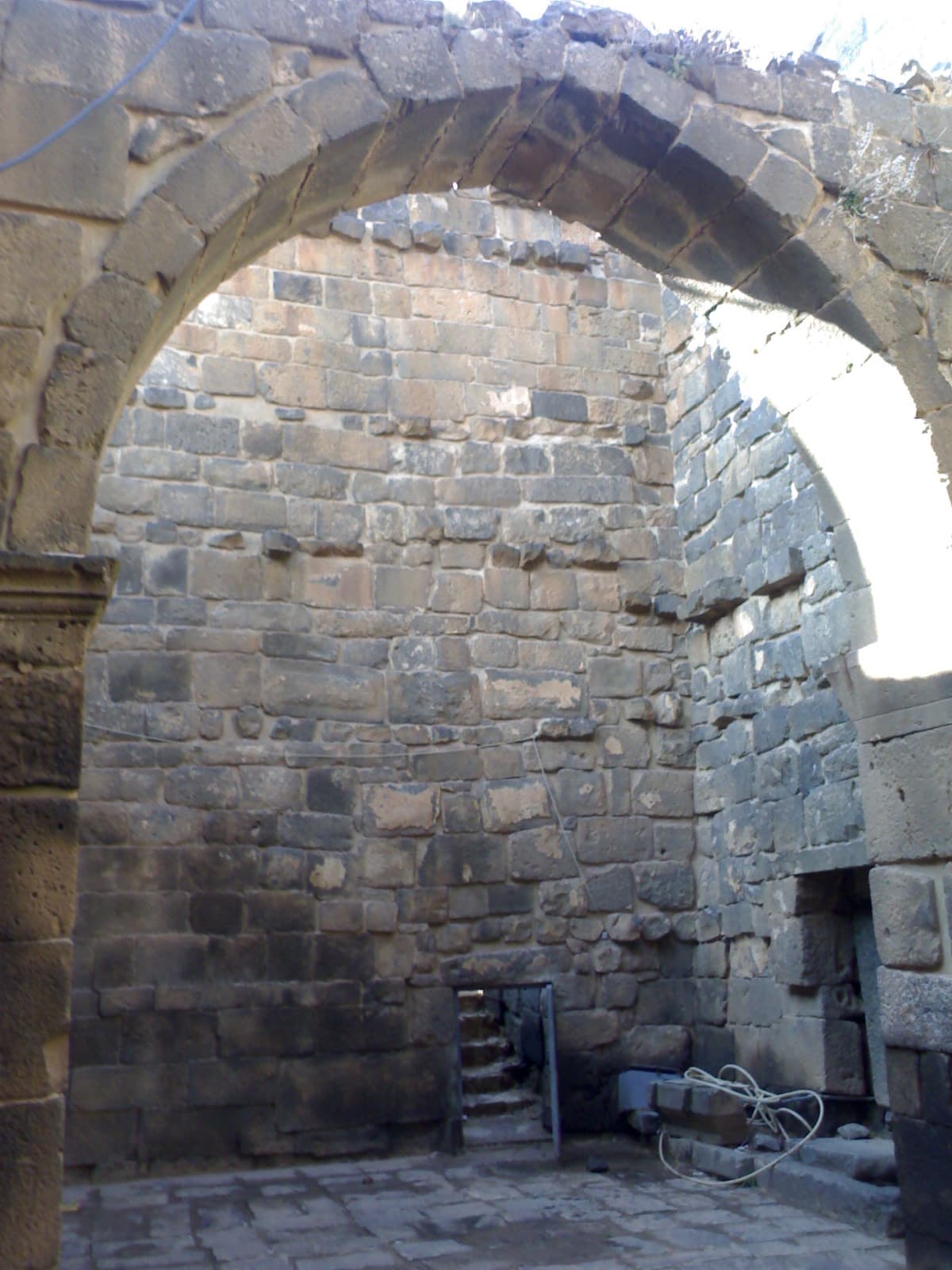
The Al-Sibaiyah Madrasa
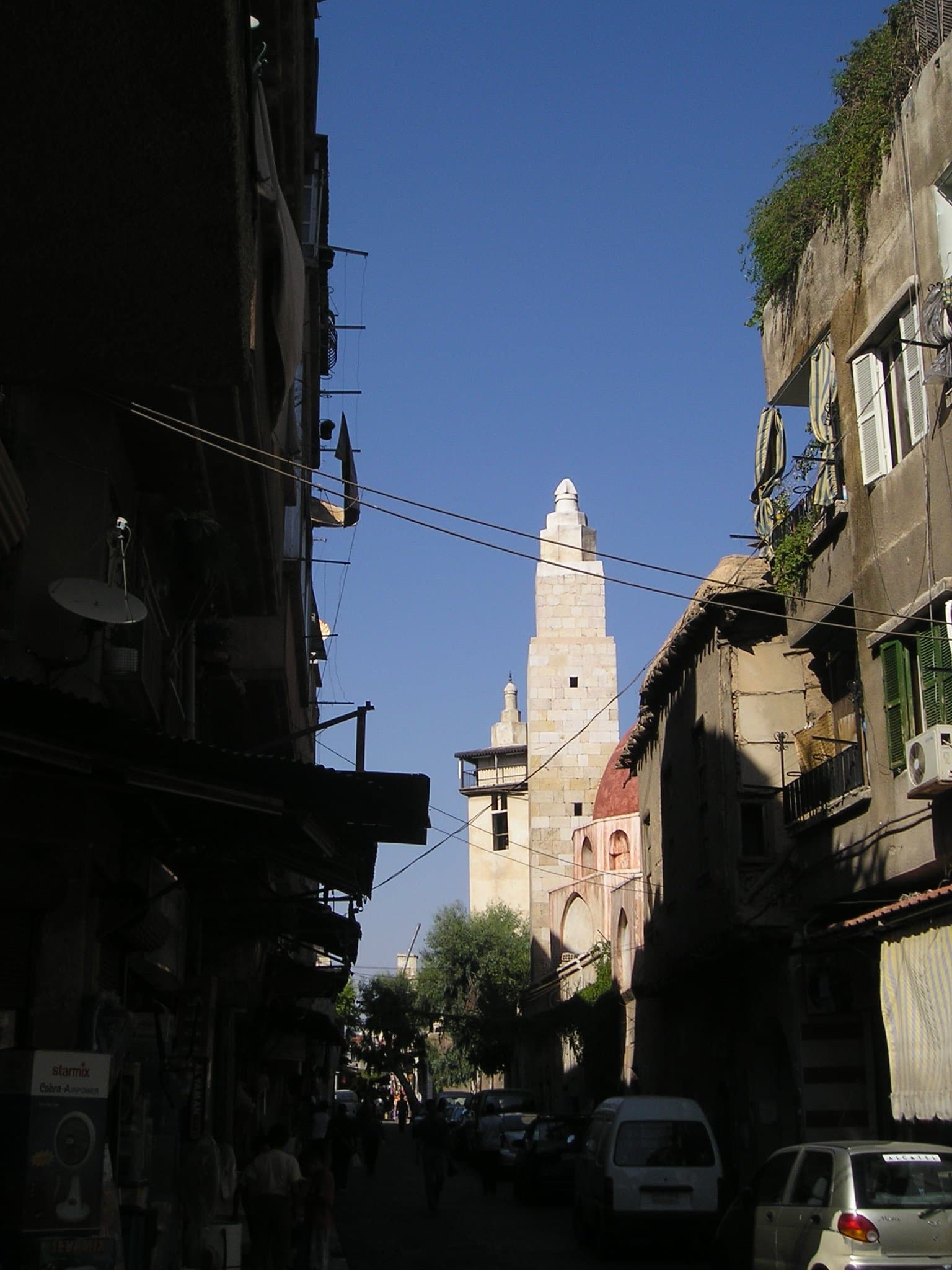
The madrasa and mosque beside Bab al-Jabiya, dated 1515. A facade banded in pale and dark stone, and a ringed minaret, from the last years of Mamluk Damascus.
Damascus · Mamluk
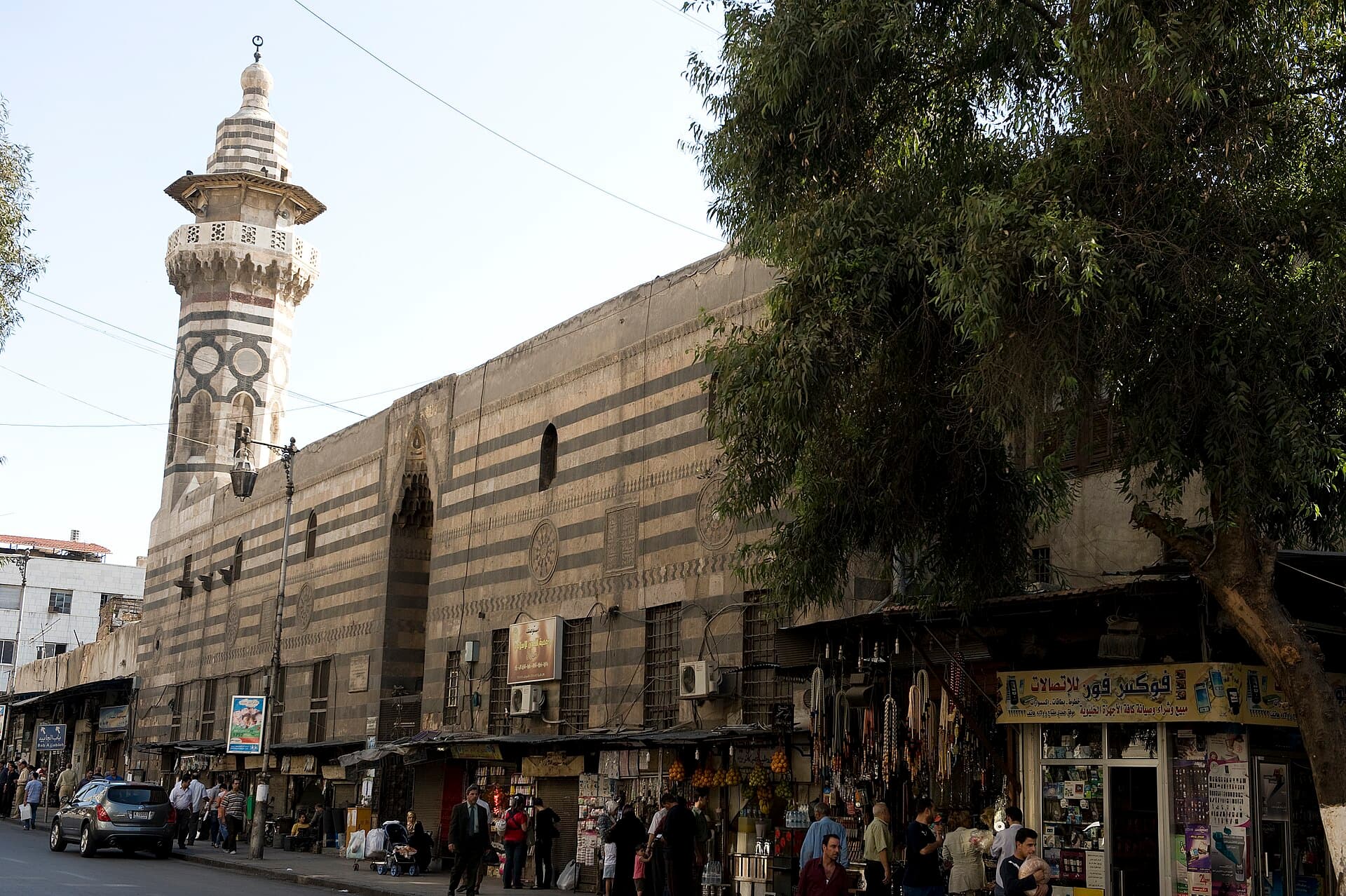
Shayzar Castle
On a narrow rock ridge above the Orontes, 28 km north-west of Hama. The castle of Usama ibn Munqidh: its north gate, its rock-cut ditch, the 1157 quake.
Hama · Byzantine foundation — Munqidhite, Zangid, Mamluk
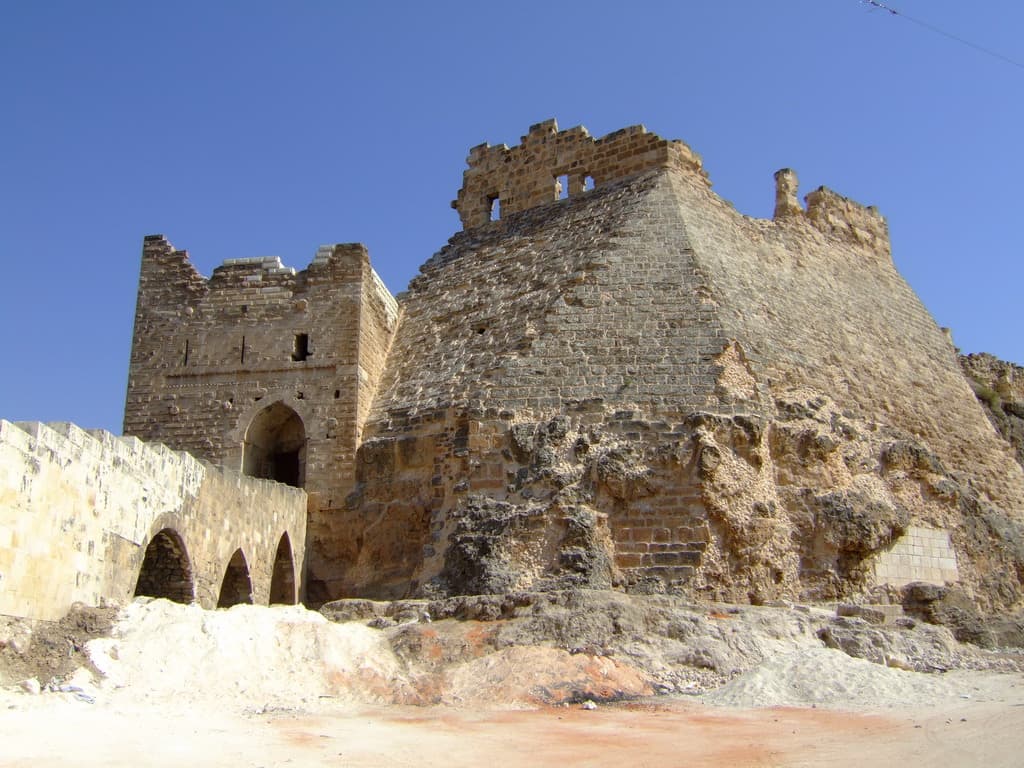
The Sayyida Zaynab Shrine
The largest pilgrimage shrine in Syria, 12 kilometres south of Damascus. The gilded dome, the Iranian tilework, what to wear, and the search at the gate.
Damascus · Present building 1990
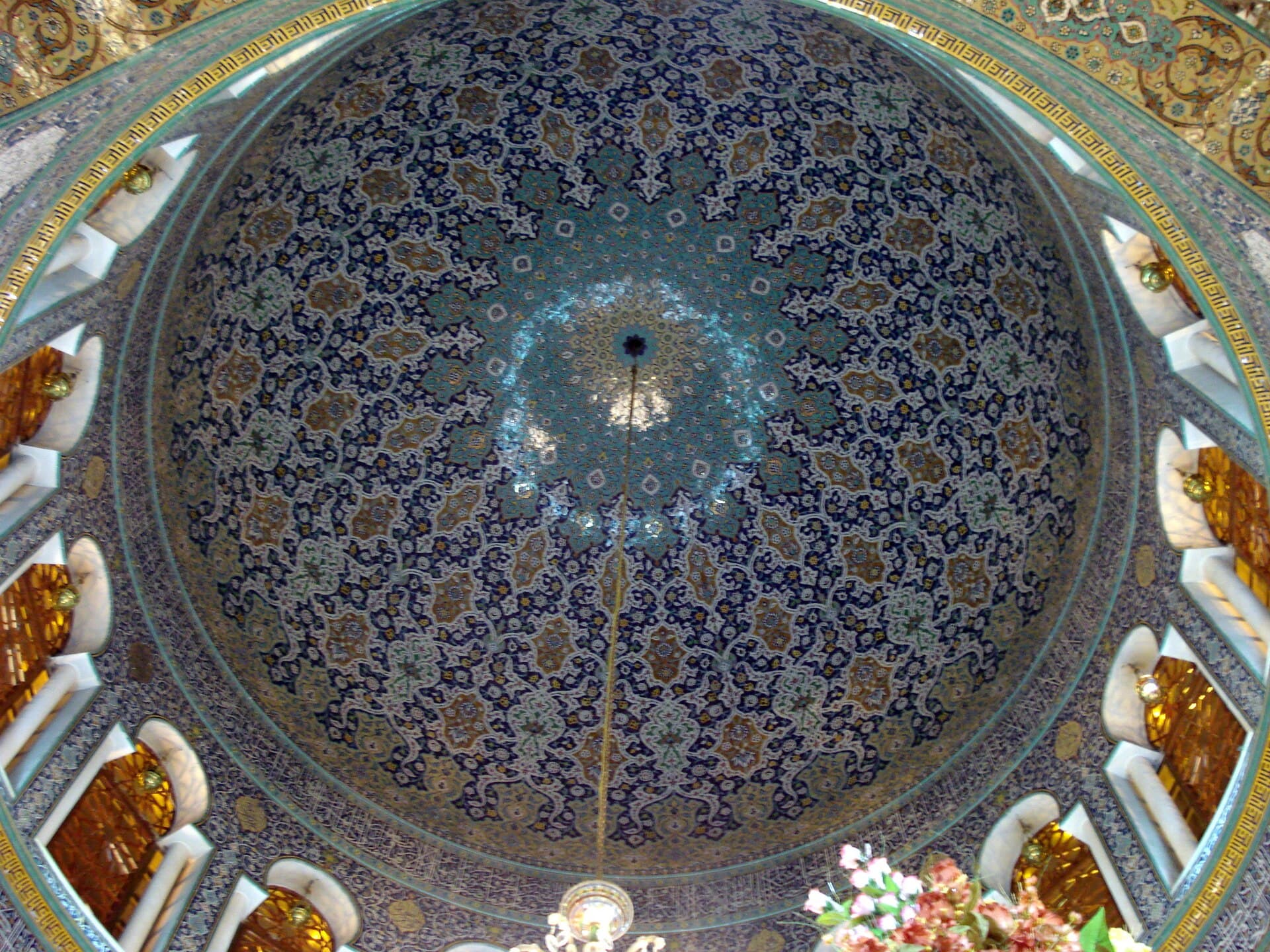
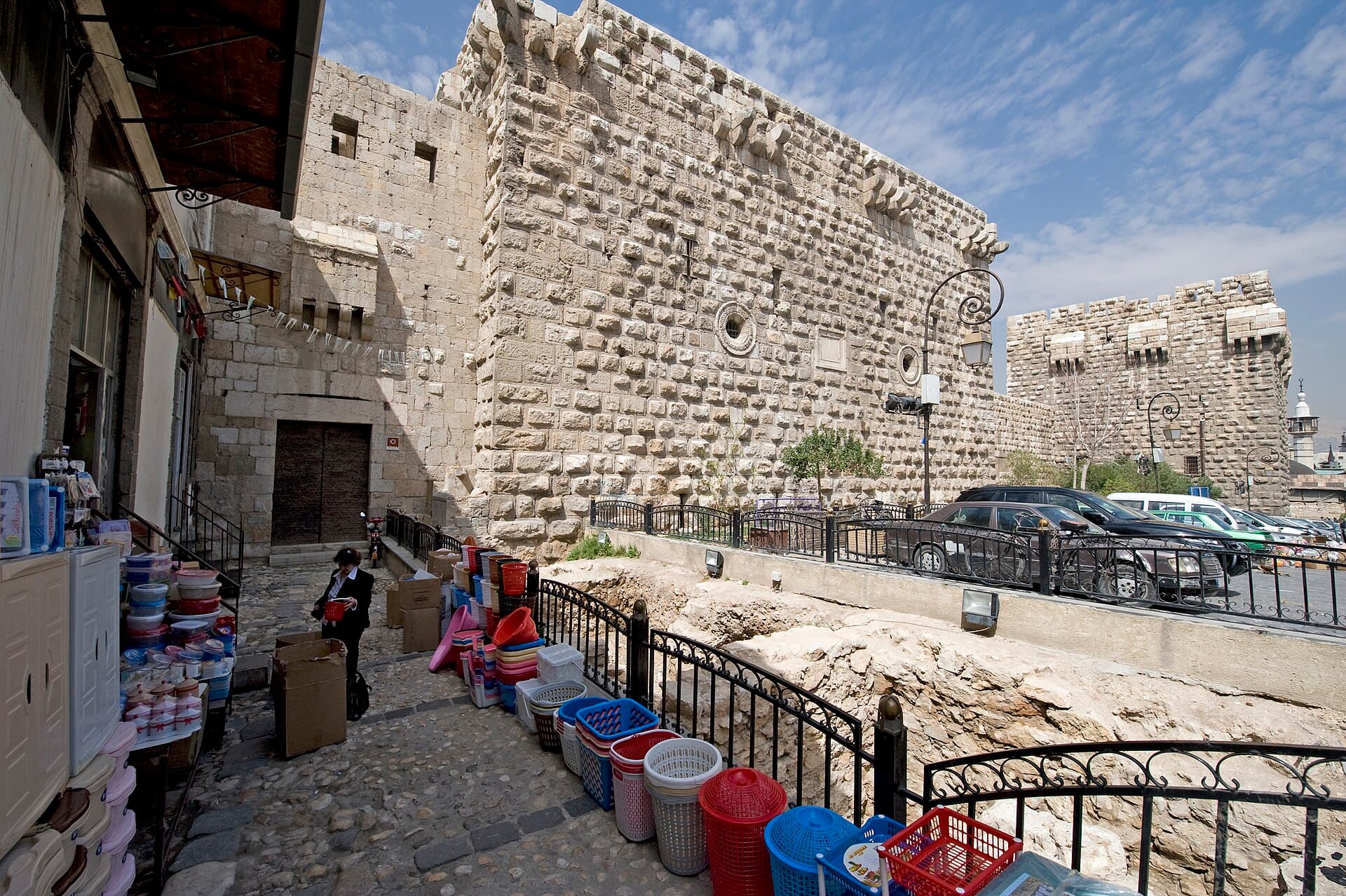
The Citadel of Damascus
The Ayyubid citadel at the northwest corner of the Old City. Built on flat ground, 230 by 150 metres, 12 of its 14 towers still standing, still under repair.
Damascus · Seljuk foundation — Ayyubid structure
The Salihiyya Quarter
The historic quarter on the slope of Mount Qasioun. Madrasas, domed tombs and narrow lanes, in the district where Damascus first spilled outside its walls.
Damascus · Ayyubid — Mamluk — Ottoman
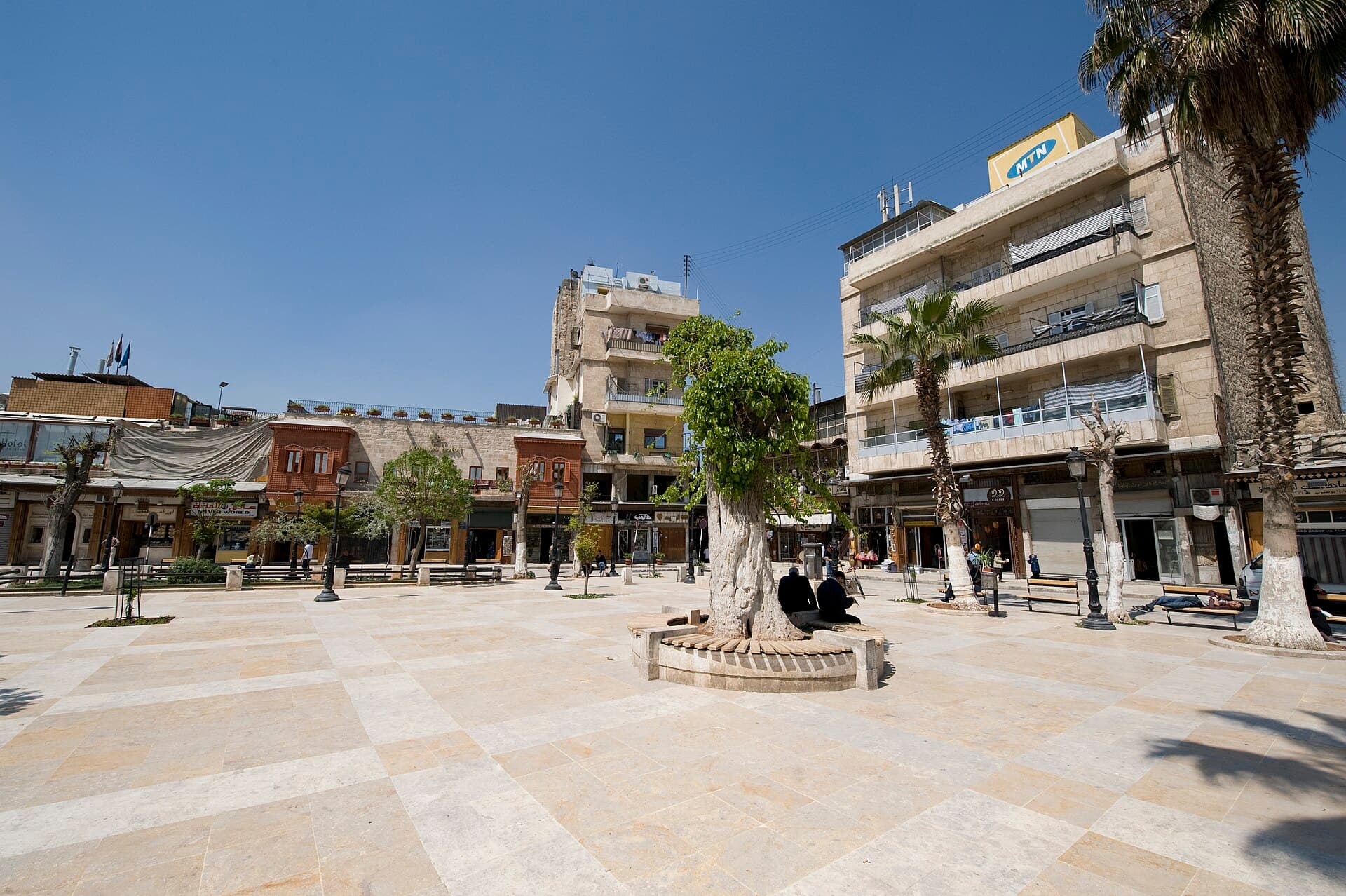
Al-Hatab Square
The paved square at the centre of Aleppo’s Jdeideh quarter, 2500 square metres: where its name comes from, the houses around it, and the repairs since 2015.
Aleppo · Mamluk — Ottoman
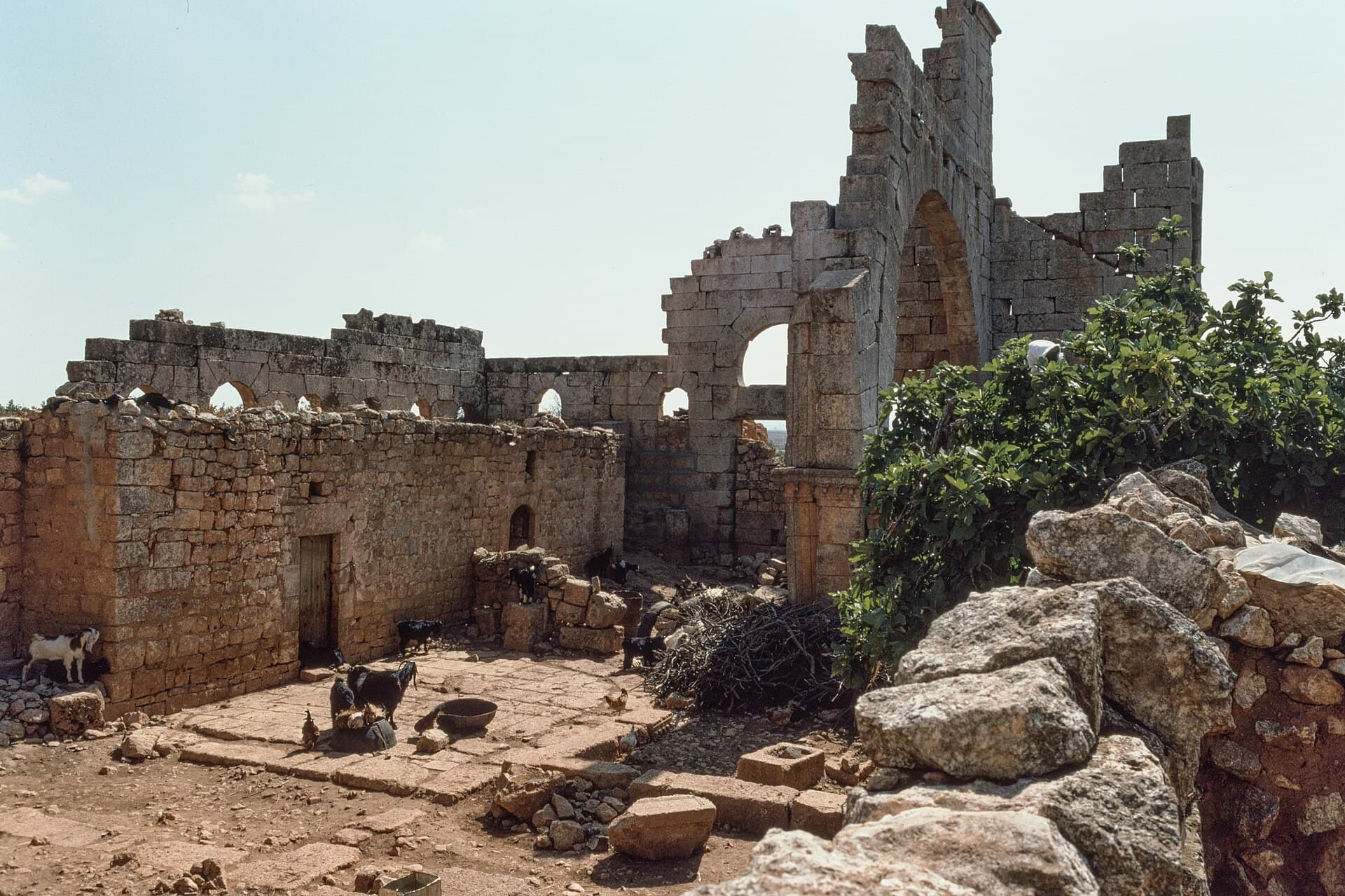
Ruweiha, a Dead City in Idlib
One of the largest Dead Cities on Jabal al-Zawiya: the standing arch of the Bissos church, a second basilica, mansions and a two-storey market building.
Idlib · Roman — Byzantine
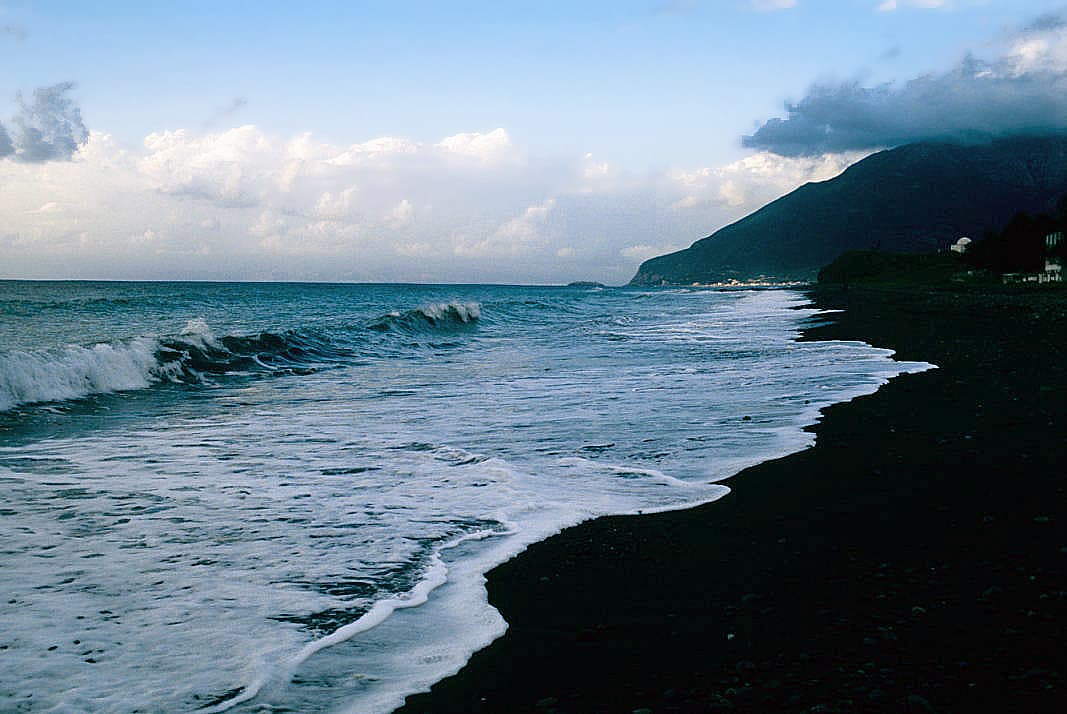
Ras al-Bassit
The dark-sand beach 53 kilometres north of Latakia. No other stretch of the Syrian coast has this colour, and here the forest runs right down to the water.
Latakia · —
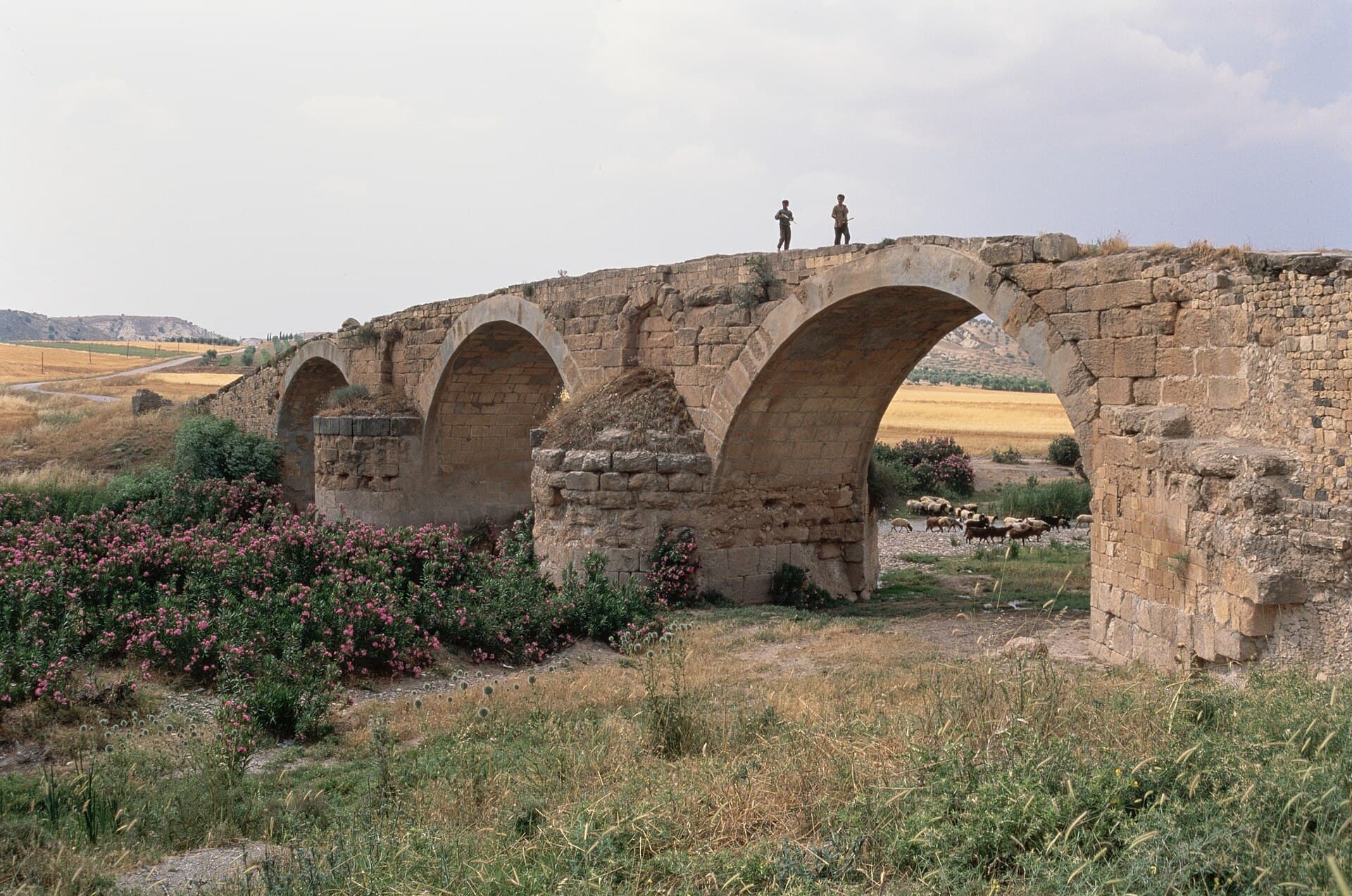
Cyrrhus (Nebi Huri)
A Roman city north of Aleppo: two bridges that still carry traffic, a theatre outside the walls, and a hexagonal tomb tower that survived as a shrine.
Aleppo · Hellenistic — Roman — Byzantine
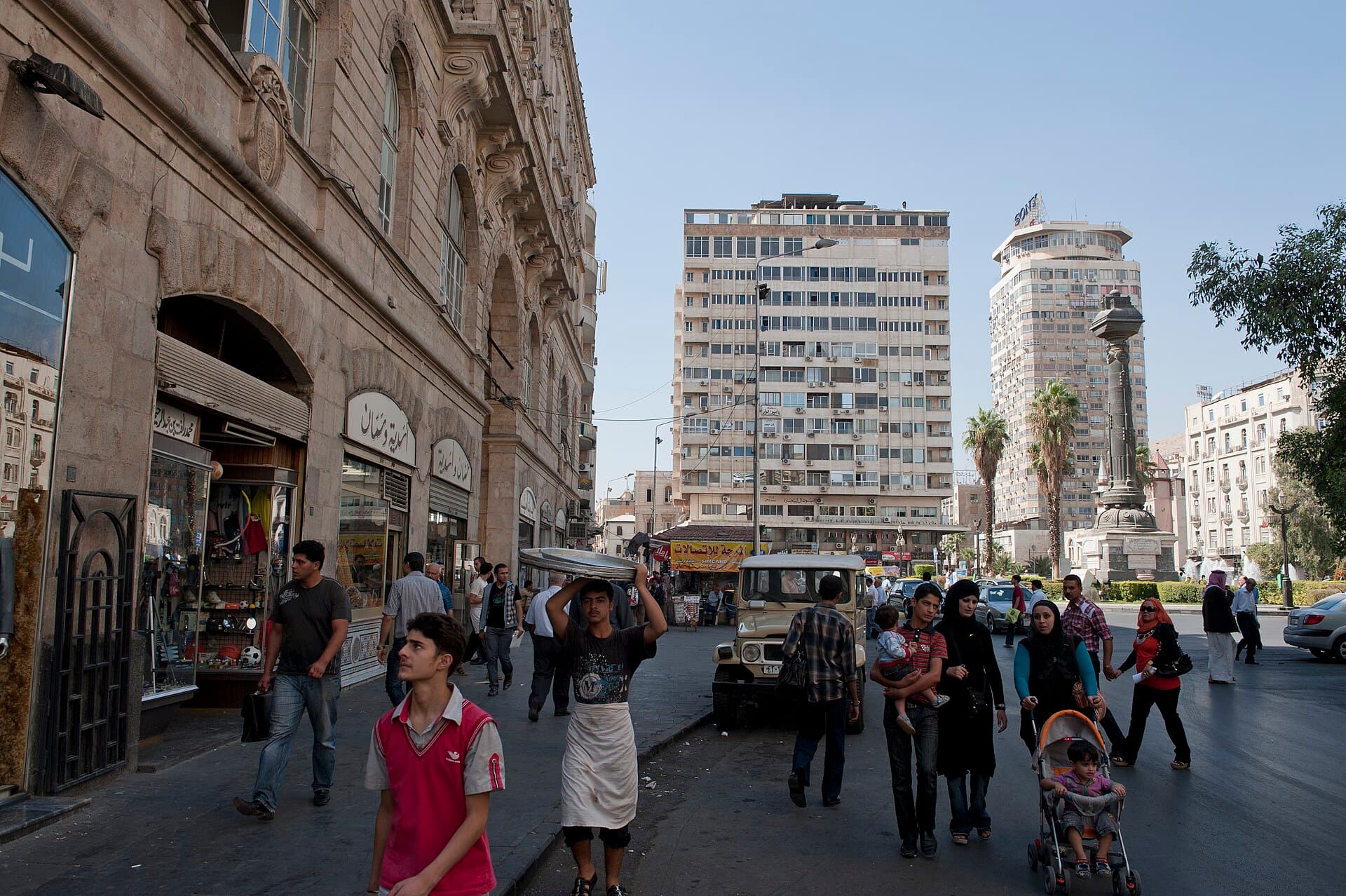
Marjeh Square
The modern centre of Damascus, just west of the walls. At its heart the cast-iron Telegraph Column of 1907, carrying a model mosque instead of a statue.
Damascus · Ottoman
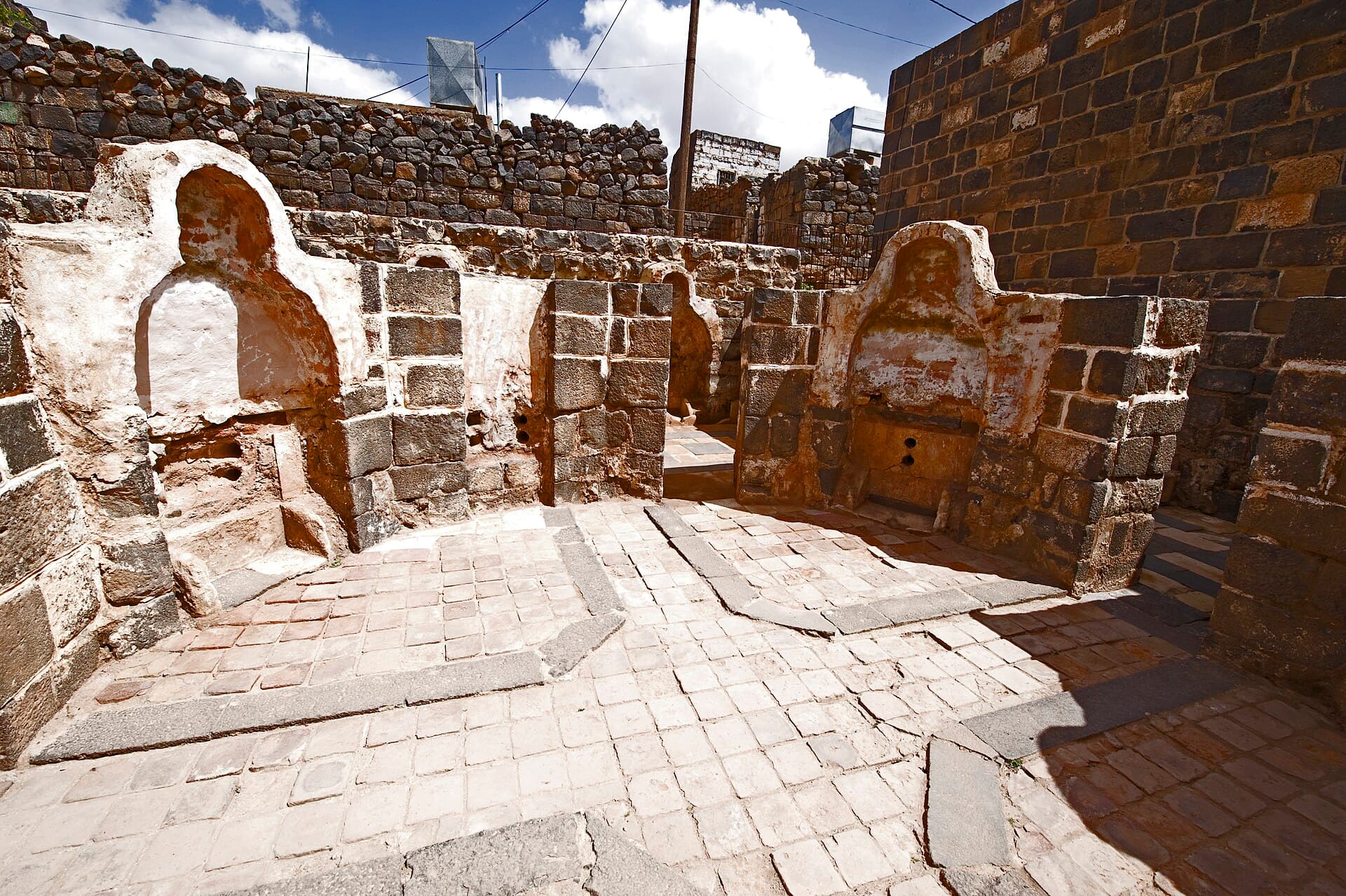
Hammam Manjak
A Mamluk bathhouse in Bosra, across the street from the Umari Mosque. Built in 1372 by the governor of Damascus; roofless now, so the plan reads clearly.
Bosra · Mamluk
The Mabrak al-Naqa Mosque
A small mosque in old Bosra whose name means “where the camel knelt”. The story behind the name, why the dating splits sources, and what stands inside.
Bosra · Early Islamic — Burid