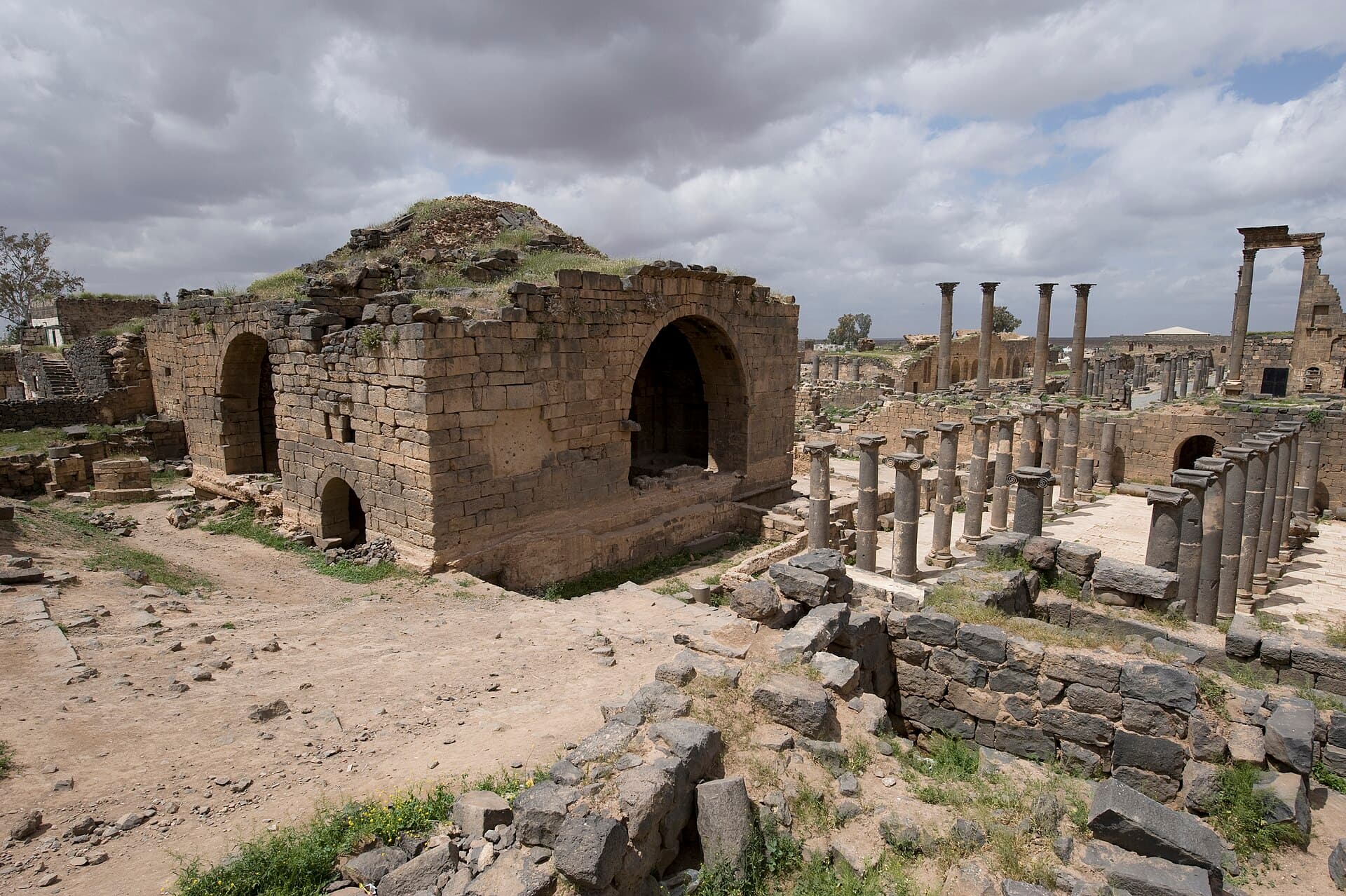
Featured places
Mosques, caravanserais, souks, museums — and why they are worth the walk.
813 Places
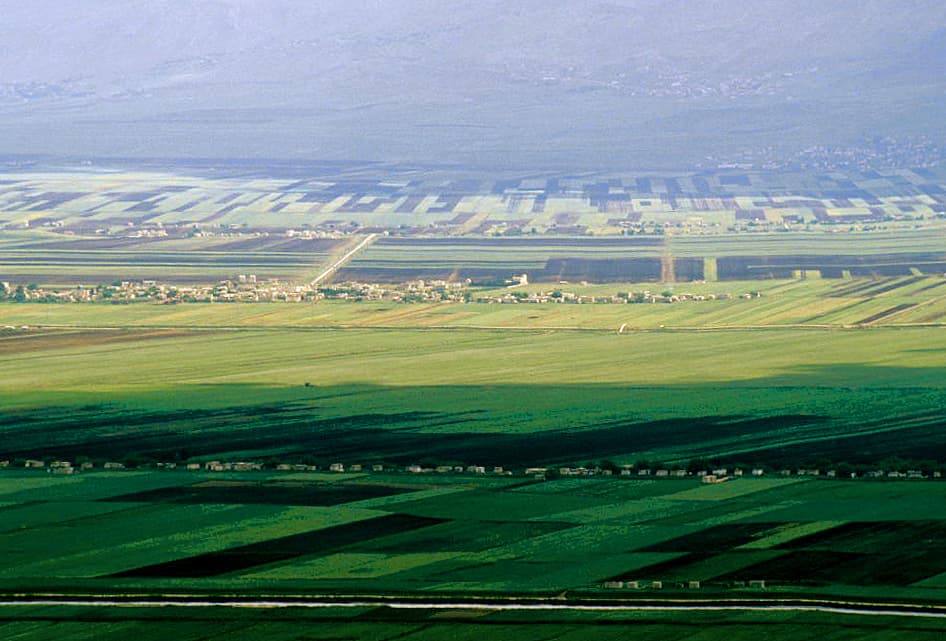
The Ghab Plain on the Orontes
A 63-kilometre rift valley north-west of Hama, drained from marsh to farmland after 1953. Apamea and Abu Qubays castle look down on it from either side.
Hama · Natural rift valley; drained after 1953
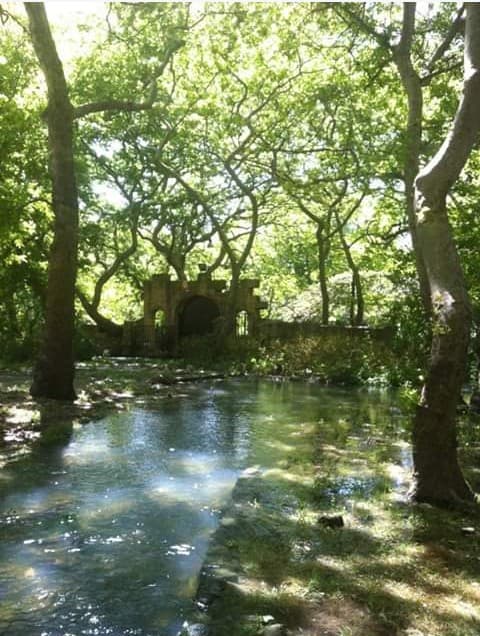
Al-Fawwar Spring, Valley of the Christians
An intermittent spring in Zweitina, facing Saint George’s Monastery: some days it gushes three times, some months not at all. Winter brings the strongest surges.
Homs · A spring known since Roman times
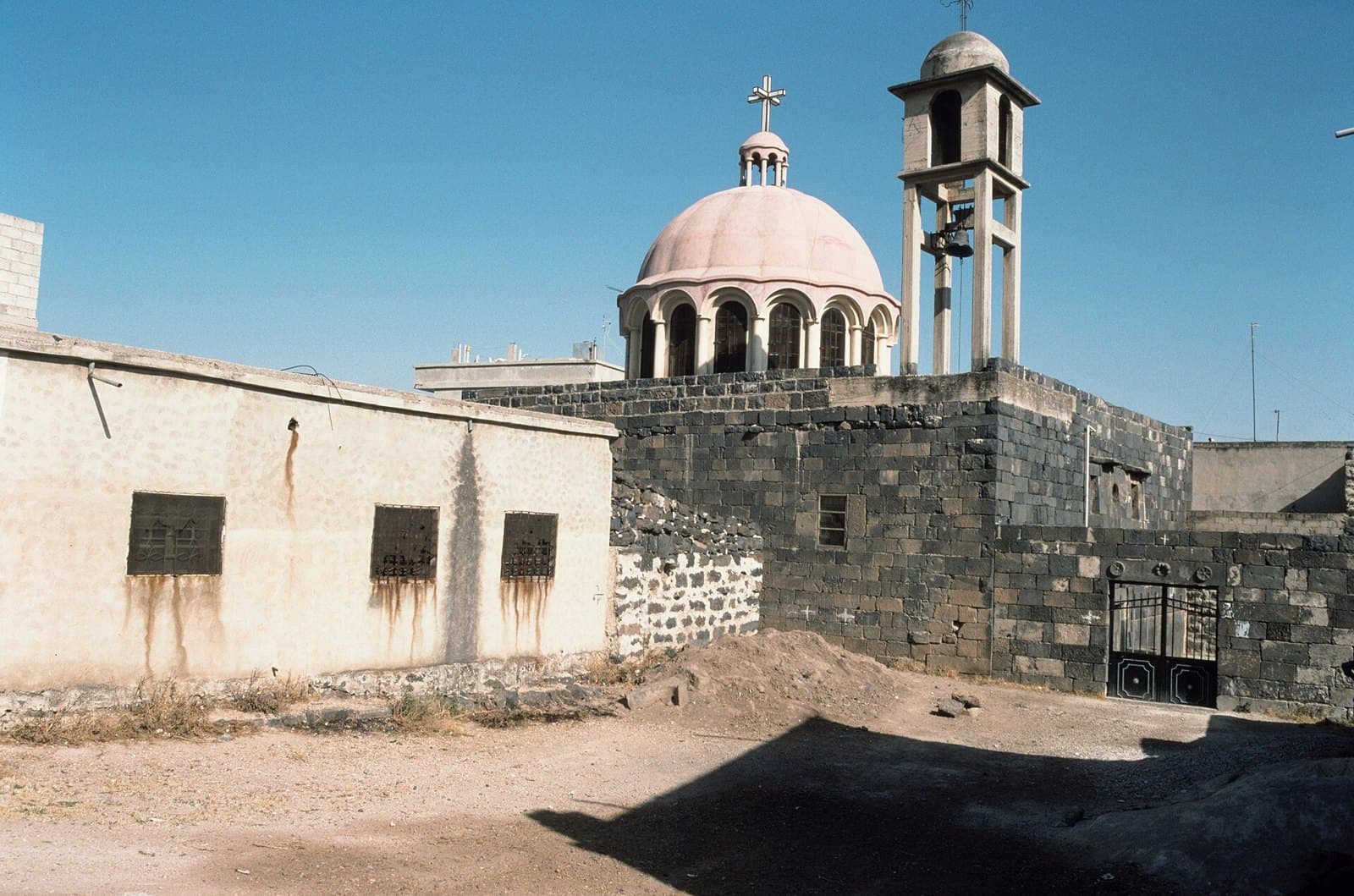
The Church of St Elias at Izra
In Izra’s Christian quarter, 200 metres from St George: St Elias, dated 542, one of two Byzantine churches in town still holding services. Plan, dome, visiting.
Daraa · Byzantine
Al-Andarin (Androna): A Byzantine Town on the Steppe
Ancient Androna, a Byzantine frontier town northeast of Hama: at least ten churches, a fortified barracks and two rings of walls, 25 km beyond Qasr Ibn Wardan.
Hama · Late Roman — Byzantine
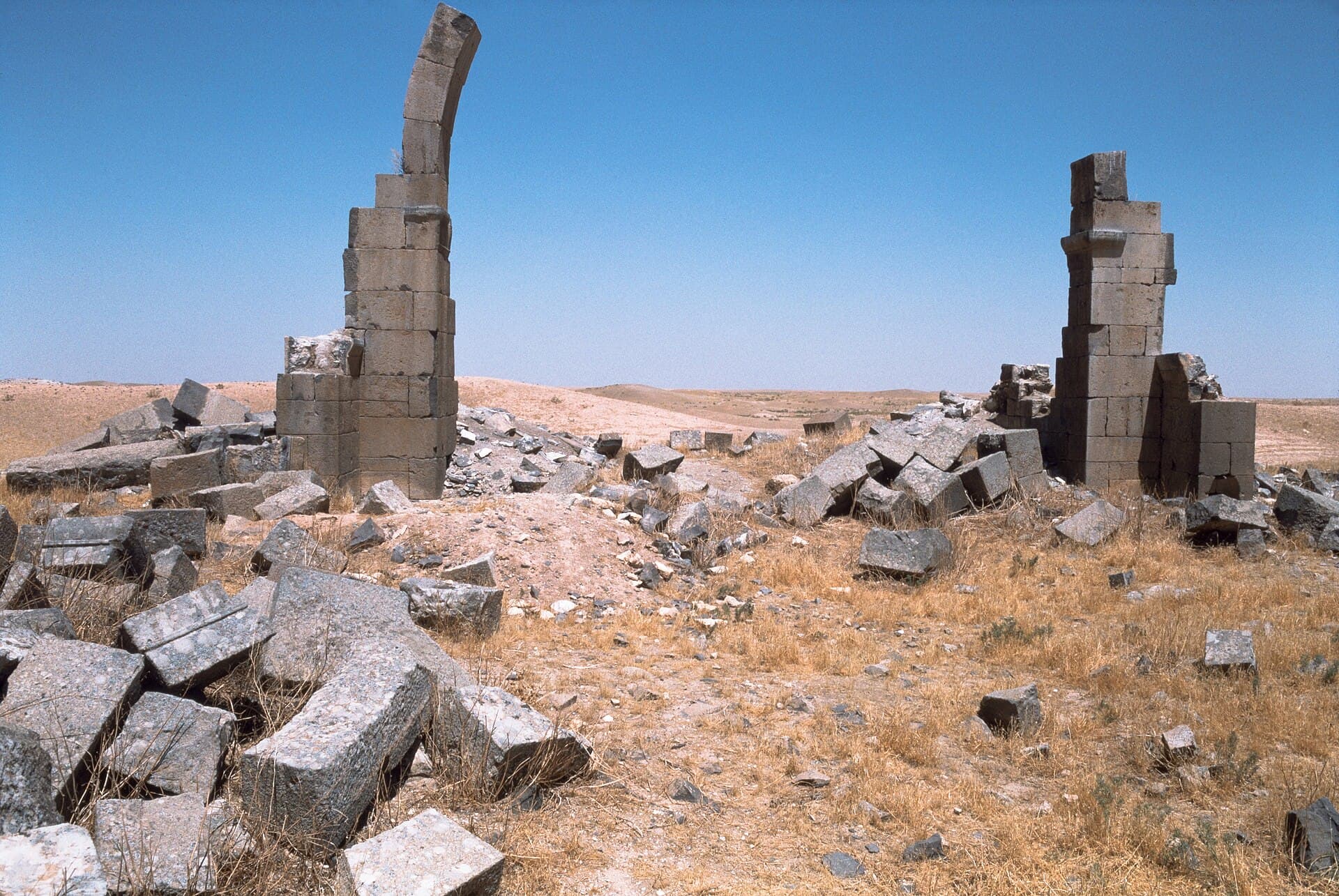
Diyatheh Roman Fort
A four-towered Roman fort built around 300 on the eastern slopes of Jabal al-Druze, with a deserted village of 102 buildings, wells, mills and cemeteries beside it.
As-Suwayda · Roman — Byzantine
The Roman Theatre of Daraa
A 2nd-century Roman theatre in Daraa al-Balad, 150 metres west of the Omari Mosque. Only part of it has been dug, and its condition today is unverified.
Daraa · Roman
Dayr al-Asmar Tell
A Bronze and Iron Age tell on the edge of the Leja east of Najran in Suwayda: a stone rampart, a well-preserved four-room house and a ruined Byzantine monastery.
As-Suwayda · Bronze and Iron Age; Byzantine
The Daraa National Museum
The basalt-clad museum at Daraa’s eastern entrance holds finds from the Hauran, Bronze Age to Islamic times. Completed in 2005; whether it is open is unclear.
Daraa · Building 1992-2005; collection from the Bronze Age to modern times
The Dabbagha Madrasa in Bosra
An Ayyubid madrasa of 1225 rising from the north wall of Birket al-Hajj: a pilgrim-road building whose inscription names its architect and its patron.
Bosra · Ayyubid
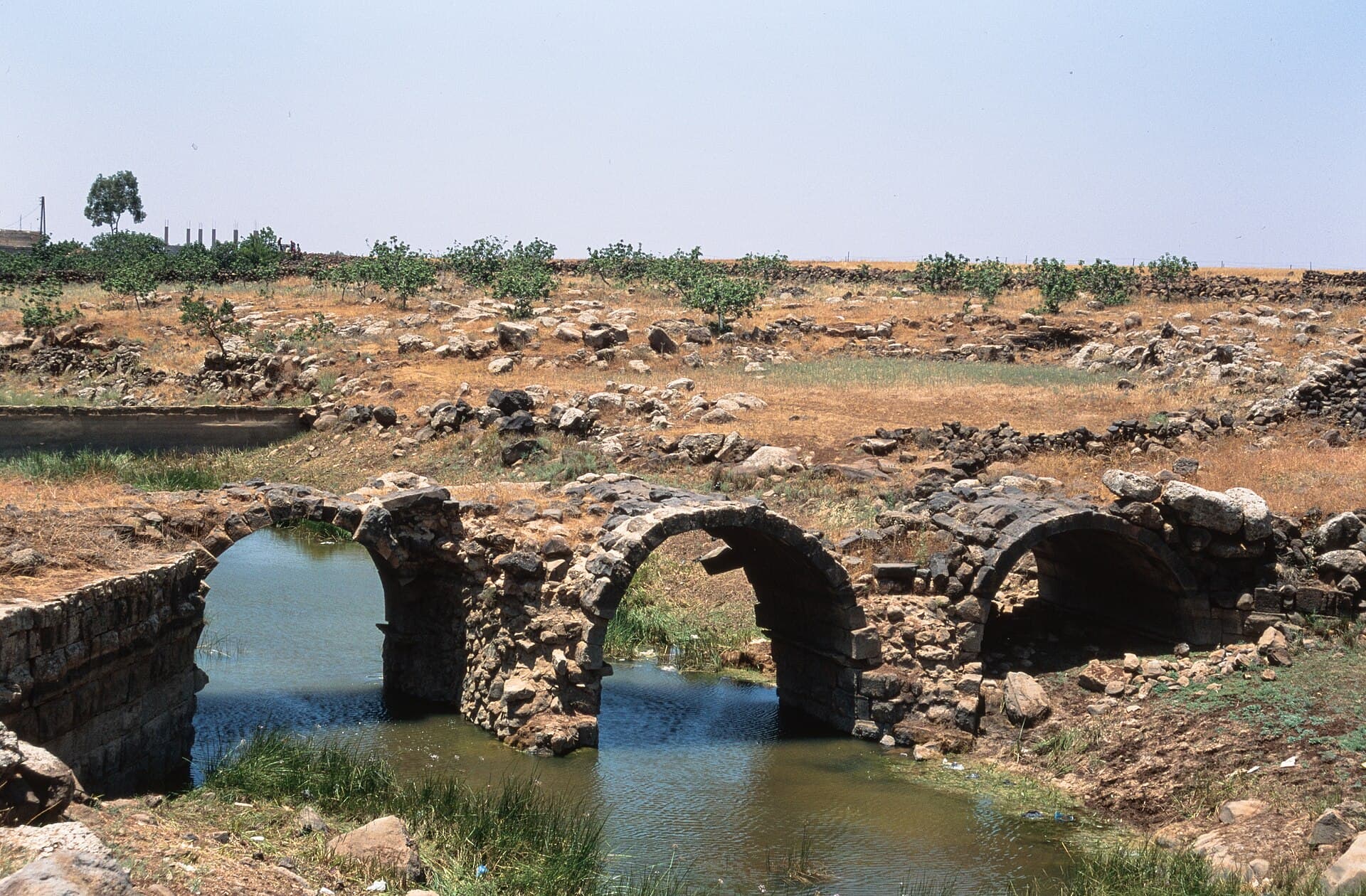
Gemarrin Roman Bridge
The Roman bridge where the road from Bostra to Suwayda crossed the Wadi Zeidi north of Bosra: three basalt arches, flood walls and a 2nd-century villa nearby.
Bosra · Roman
The Central Baths of Bosra (Khan al-Dibs)
The Roman baths at the monumental centre of Bosra: a symmetrical plan of 105 by 65 metres, walls over 10 metres high, and a local name meaning molasses khan.
Bosra · Roman — Byzantine
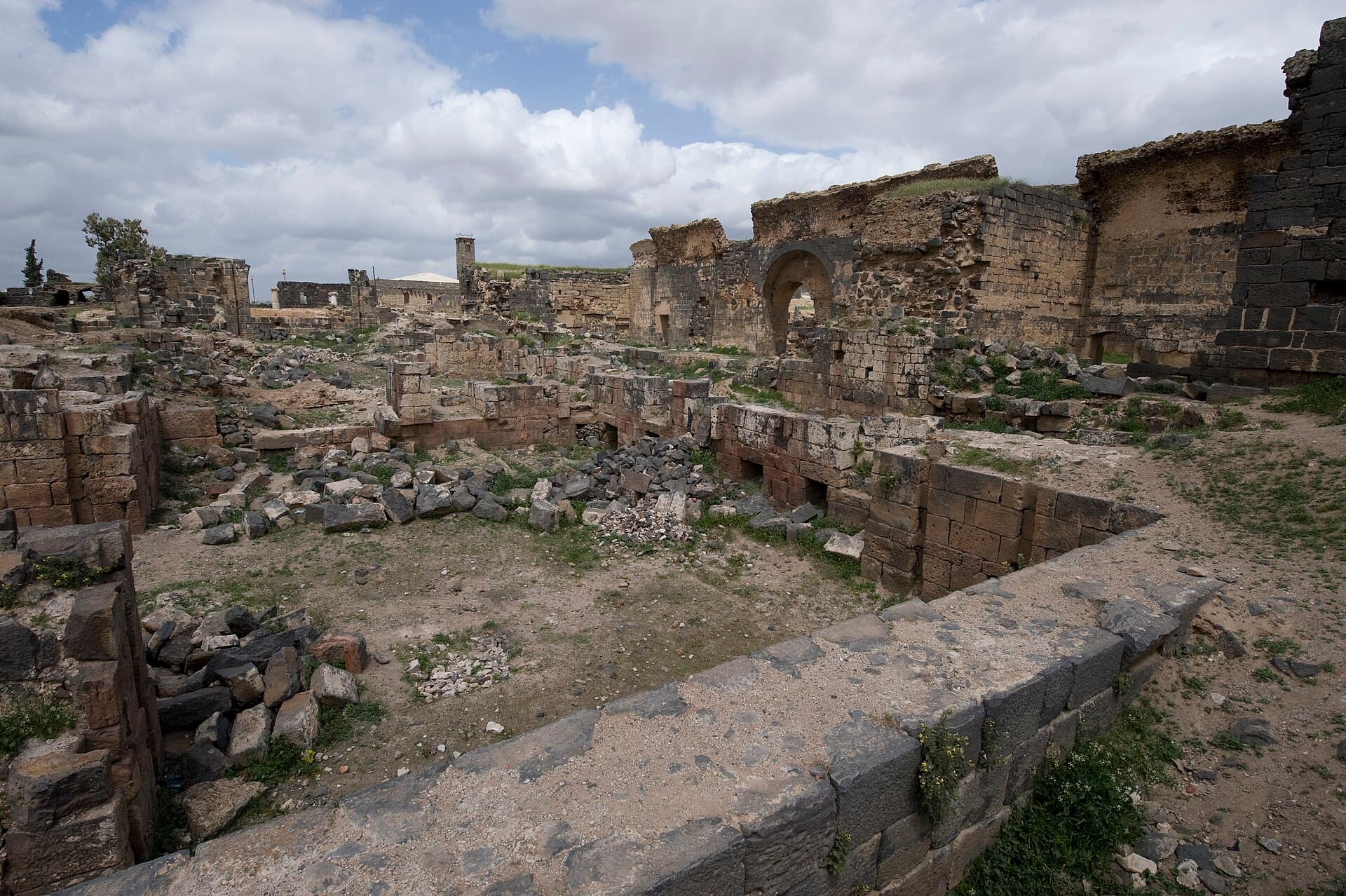
The South Baths of Bosra
Bosra’s best-preserved Roman baths: an 8000-square-metre complex with Nabataean roots, water piped from Birket al-Hajj, and use that ran into Umayyad times.
Bosra · Nabataean — Roman — Umayyad