Featured places
Mosques, caravanserais, souks, museums — and why they are worth the walk.
813 Places
Khan Khayr Bek
A Mamluk khan of 1514 in the Suwayqat Ali quarter of Aleppo. Its founder was the last Mamluk governor of the city, and two years later he changed sides.
Aleppo · Mamluk
Khan Qurt Bek
A merchants’ khan in Aleppo’s Suwayqat Ali quarter, built in the early 16th century by Qurt Bek, son of the Khusraw Pasha who endowed the Khusrawiyya mosque.
Aleppo · Ottoman
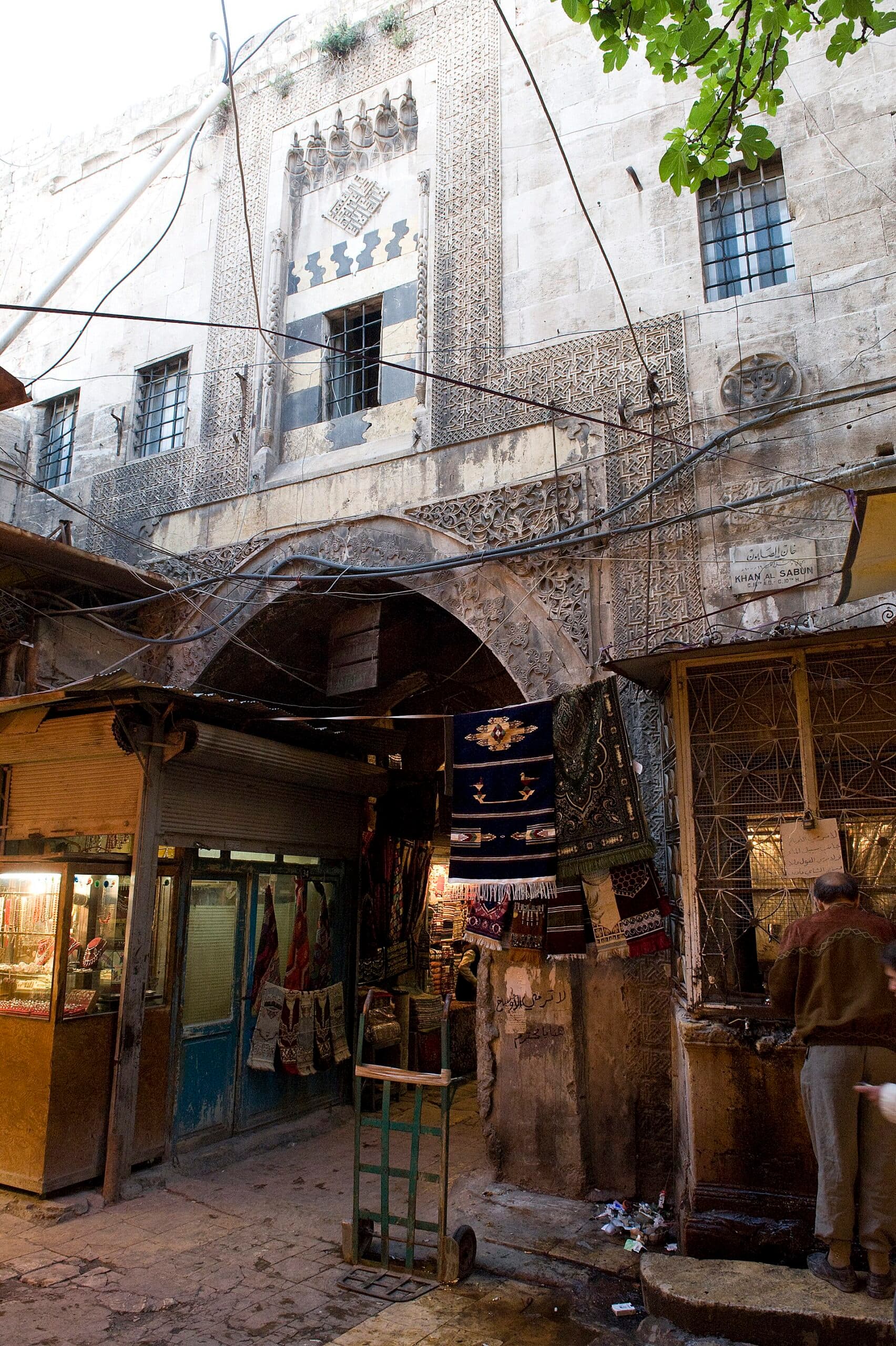
Khan al-Saboun
The Mamluk soap khan inside the Al-Madina souq in Aleppo. Its carved portal still stands, and the building reopened in October 2020 after a long repair.
Aleppo · Mamluk
Khan al-Kattan
The linen khan south of Khan al-Wazir in Aleppo. Its older name was Khan al-Sayyida, after a woman, and it takes the building back to the 11th century.
Aleppo · Mirdasid origin — Ottoman
Khan al-Nahhasin
The coppersmiths’ khan south of the Great Mosque of Aleppo, built in 1539. Venice kept its consulate here for generations; today the shops sell shoes.
Aleppo · Ottoman
Khan al-Qadi
Built in 1450, Khan al-Qadi is among the oldest surviving khans in Aleppo. It stands opposite the Bimaristan Arghun in the Bab Qinnasrin quarter, free to enter.
Aleppo · Mamluk
Khan al-Banadiqa, the Venetians’ Khan
The Aleppo khan where Venetian merchants and their consul stayed. The first Aleppo-Venice trade agreement was signed here in 1207, and it has two courtyards.
Aleppo · Ayyubid to Ottoman
Khan al-Burghul
A khan in the Al-Madina souq named after the bulgur trade. Its south half became housing in 1472, and its north half held the British consulate in Aleppo.
Aleppo · Mamluk — Ottoman
Souq al-Attarin
The herb sellers’ lane of the Aleppo souq. The name comes from the spice trade, yet most of its 82 shops now sell cloth, and the mosque is one turn away.
Aleppo · Mamluk to Ottoman
Tell Aswad
A 5-hectare Neolithic mound 48 kilometres east of Damascus, where mud brick was invented. There is no sign on it, and the finds are in the National Museum.
Damascus · Pre-Pottery Neolithic
The Roman Temples at Rakhlah
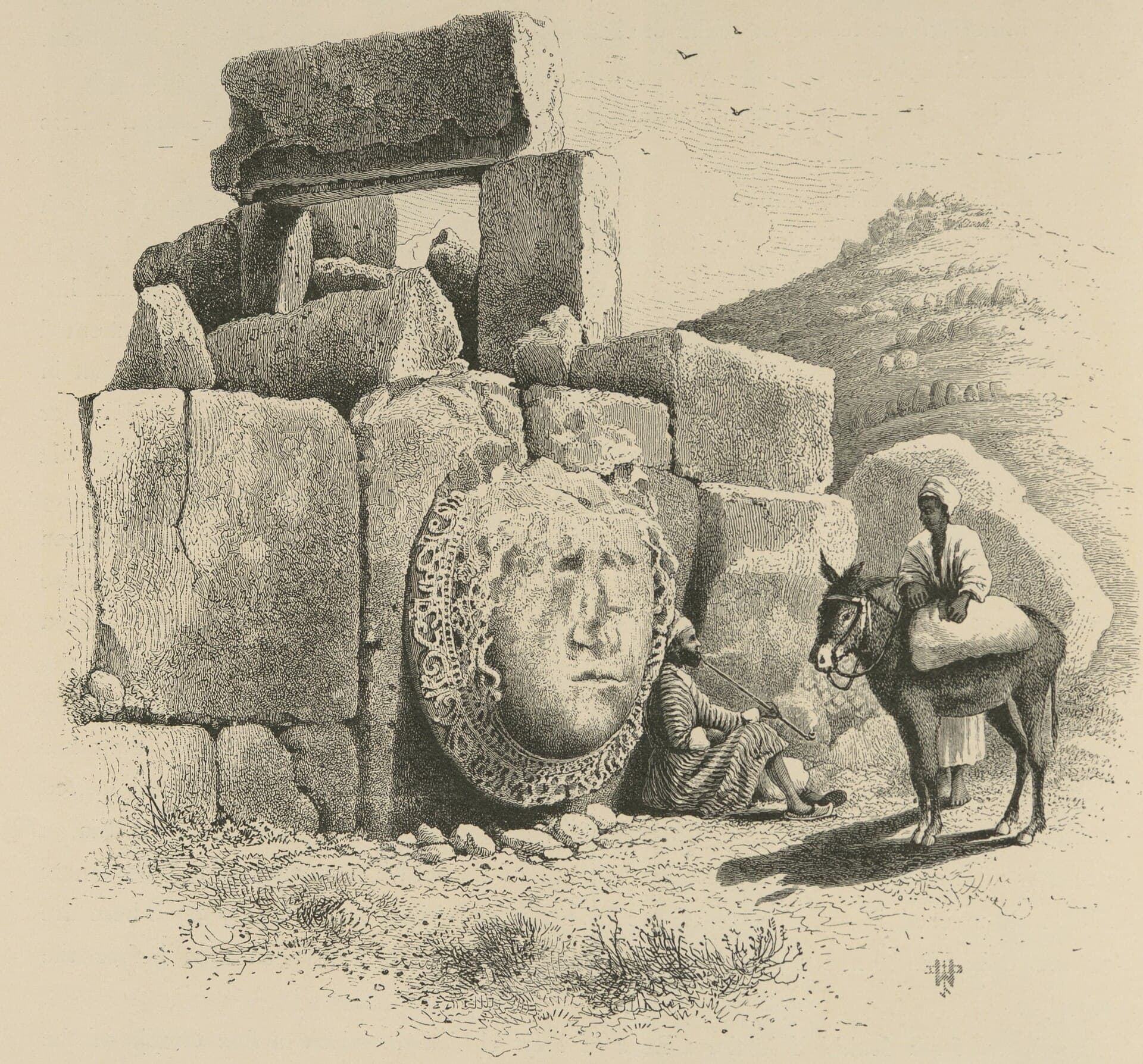
An hour from Damascus: two Roman-Phoenician temples on the flank of Hermon. The larger is 25 by 17 metres, with a sun god’s face 100 centimetres across.
Damascus · Roman — Late Antiquity
Harran al-Awamid
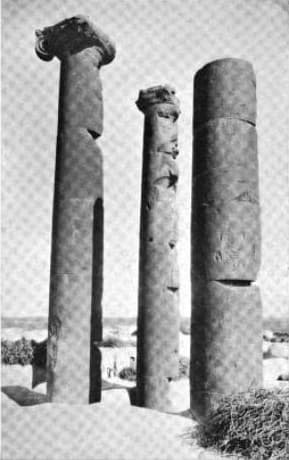
The only Roman structure still standing in the Ghouta: three basalt columns 10 metres high in the middle of a village, Corinthian capitals intact. Free, an hour.
Damascus · Roman