Featured places
Mosques, caravanserais, souks, museums — and why they are worth the walk.
100 Places
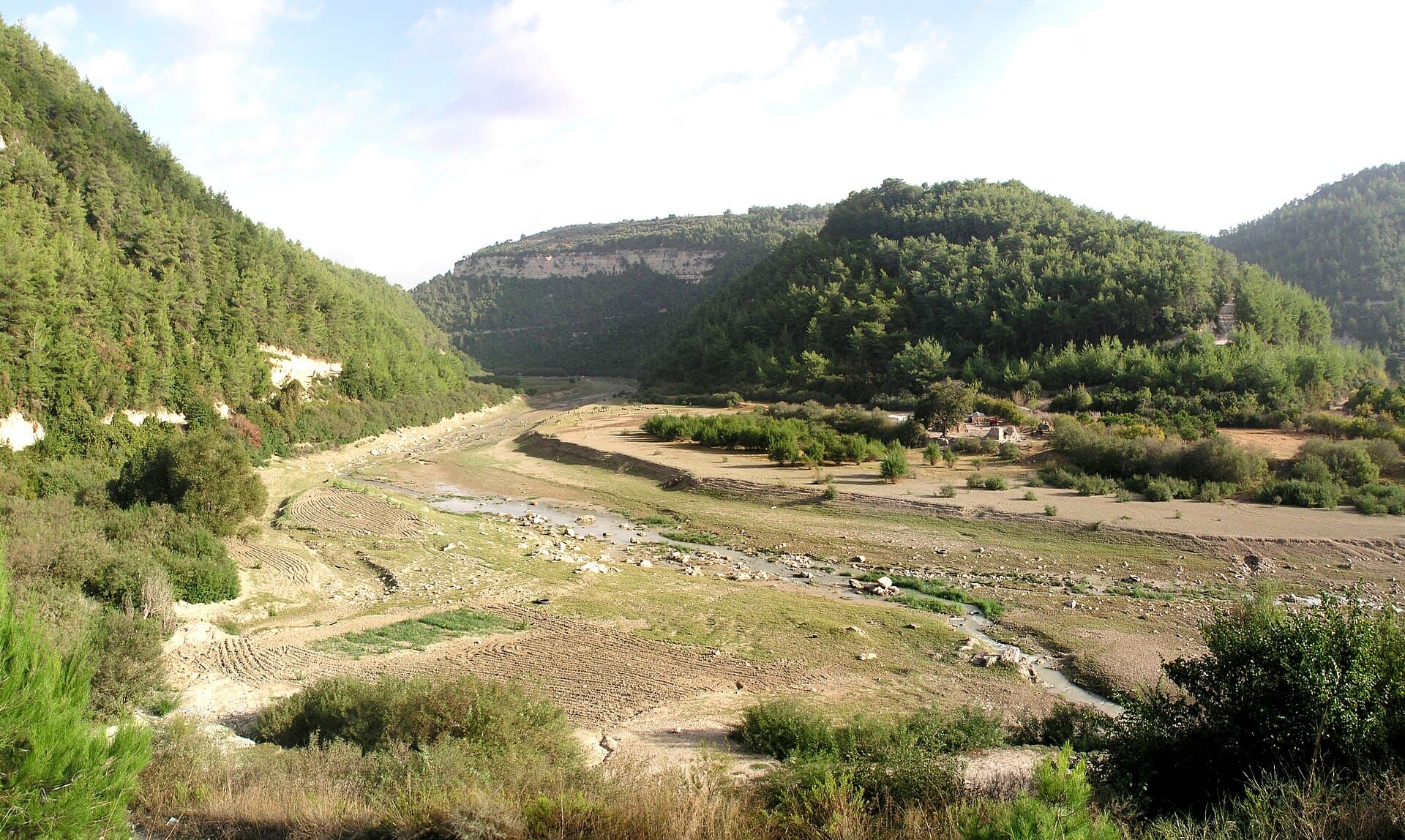
Nahr al-Kabir al-Shamali River, Latakia
One of the longest rivers on the Syrian coast, reaching the sea south of Latakia. Ugarit knew it as Rahbanu; steep in its upper valley, a plain river below.
Latakia · Rahbanu at Ugarit (Bronze Age); modern dams
Labwe: an Early Bronze Age Walled Town in the Lajat
The only town in the southern Levant from the early third millennium BC known from a full plan: basalt ramparts, three different gates and a grid of house blocks.
As-Suwayda · Early Bronze Age
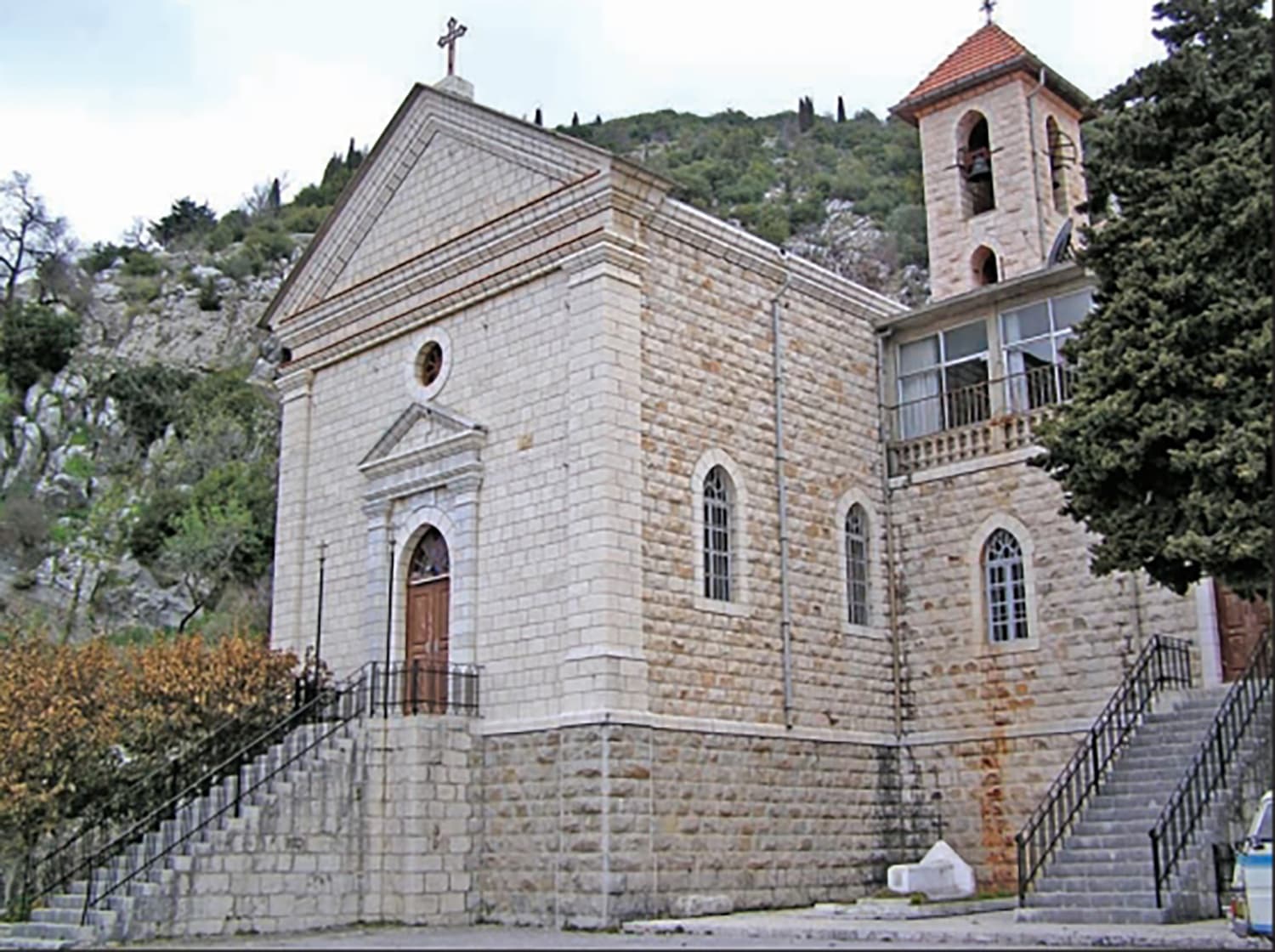
St Michael Armenian Catholic Church, Kessab
An Armenian Catholic church in eastern Kessab, built in 1925 and opened in 1926. Five inscriptions in Armenian, Latin and Italian; it was burnt in 2014.
Latakia · French Mandate era, 1925; Armenian Catholic since 1946
The Ataman Mausoleum and Roman Bridge near Daraa
In Ataman, 4 km north of Daraa, a Roman mausoleum crowned by a Corinthian structure, an ancient bridge and villa ruins: what the sources say and what is unclear.
Daraa · Roman
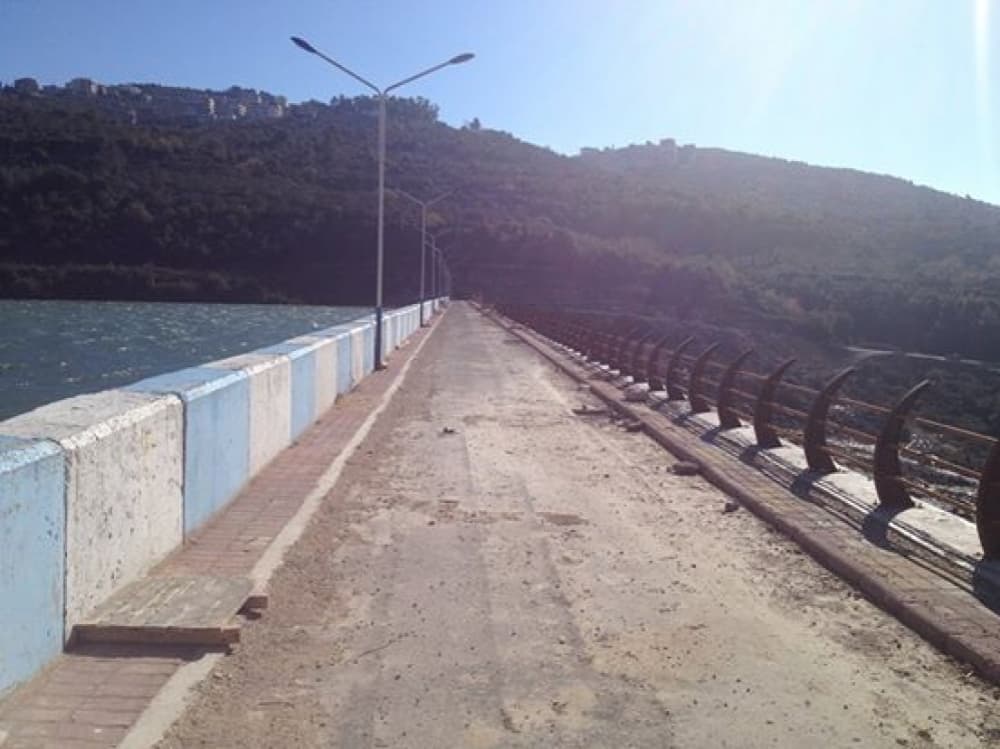
Dreikish Dam and Lake
A 41-metre rockfill dam on the Qais river north of Dreikish, with a lake a kilometre long behind it. Built for drinking water, in a valley ringed by villages.
Tartus · Modern — 1999–2015
Jabal al-Akrad, Latakia Mountains
A forested upland of about 400 km² at the northern end of Syria’s coastal mountains, north-east of Latakia. Life began returning to Salma in 2025; mines remain.
Latakia · Name linked to Ayyubid or Mamluk-era settlement
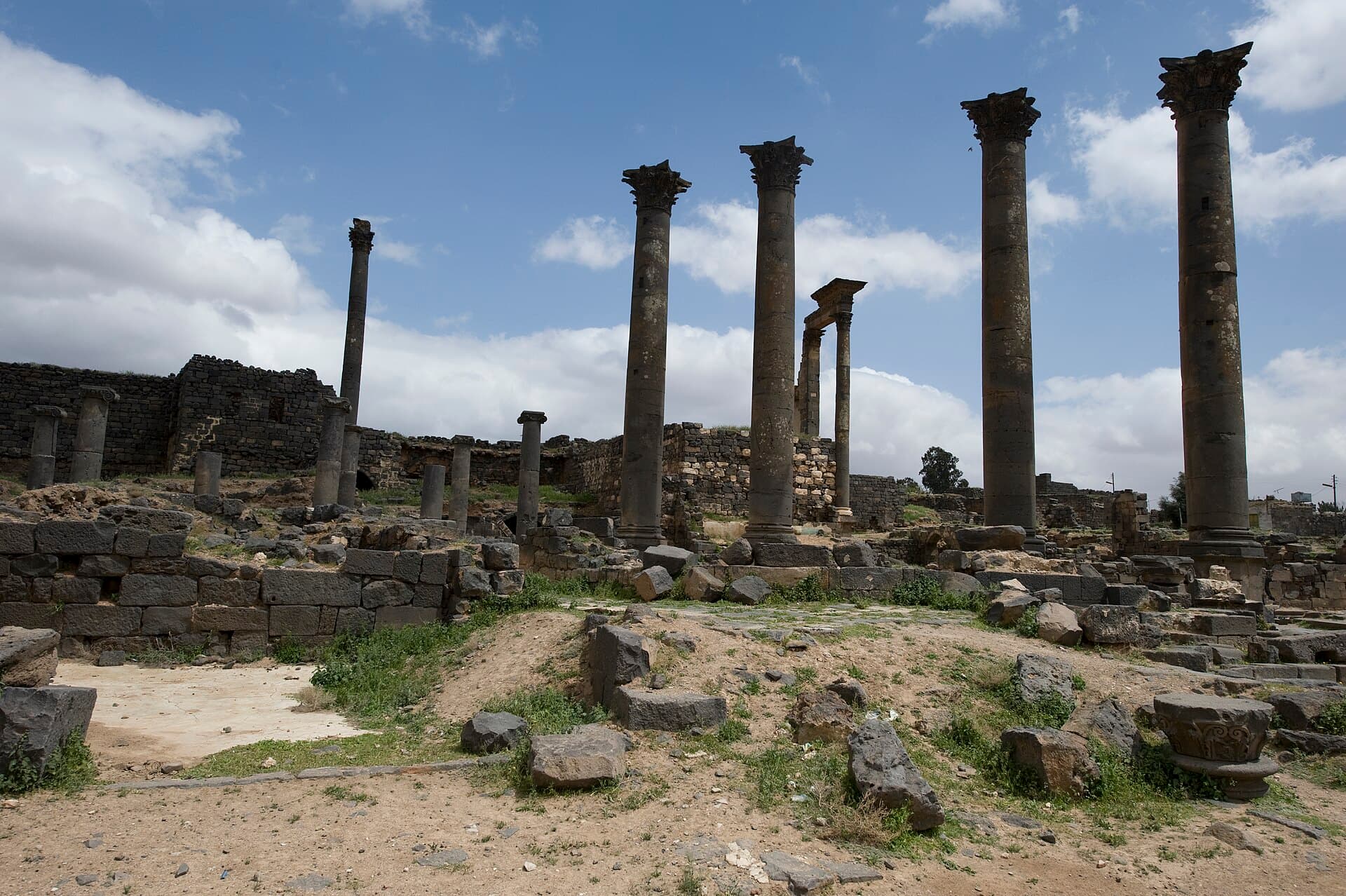
The Nymphaeum and the Four-Column Exedra of Bosra
Two Roman monuments face each other on Bosra’s main street: a fountain with a façade of nearly 24 metres, and the four-column exedra often mistaken for it.
Bosra · Roman — Severan
The Cryptoporticus, Market and Tetrapylon of Bosra
A vaulted gallery 108 metres long under Bosra’s main street, a four-column Roman market entrance and a 4th-century tetrapylon square: what the sources describe.
Bosra · Roman — Late Roman
The Roman Circus of Bosra, the Hippodrome South of the Theatre
South of Bosra’s theatre lies a U-shaped Roman circus over 440 metres long: a chariot track, 20 rows of seating and the short walk to it from the citadel.
Bosra · Roman
The Al-Khidr Mosque and the Tomb of Mar Jirjis in Bosra
A small mosque in western Bosra with an inscription dated 1134, a square minaret 17 metres tall and the tomb of Mar Jirjis beside it: what the sources describe.
Bosra · Burid; minaret 13th century
Braykah: a Roman Temple and the Mound of Tell ad-Dubba
A small four-column Roman temple recorded by Butler in 1904, and a walled mound one kilometre south, in a basalt village between Shahba and Suwayda in Syria.
As-Suwayda · Roman; Tell ad-Dubba Aramaean — Roman
Birkat al-Nabatiyya, the Eastern Reservoir of Bosra
A square reservoir east of Bosra’s walls marked with Nabataean masons’ signs: sides nearly 150 metres long, a channel from 5 km away and what is known of it today.
Bosra · Nabataean