Featured places
Mosques, caravanserais, souks, museums — and why they are worth the walk.
813 Places
Tell Zeidan
Three low mounds east of Raqqa, where the Balikh meets the Euphrates. One of the best records in northern Syria of village life before cities existed.
Raqqa · Ubaid (the culture that preceded the first cities of Mesopotamia)
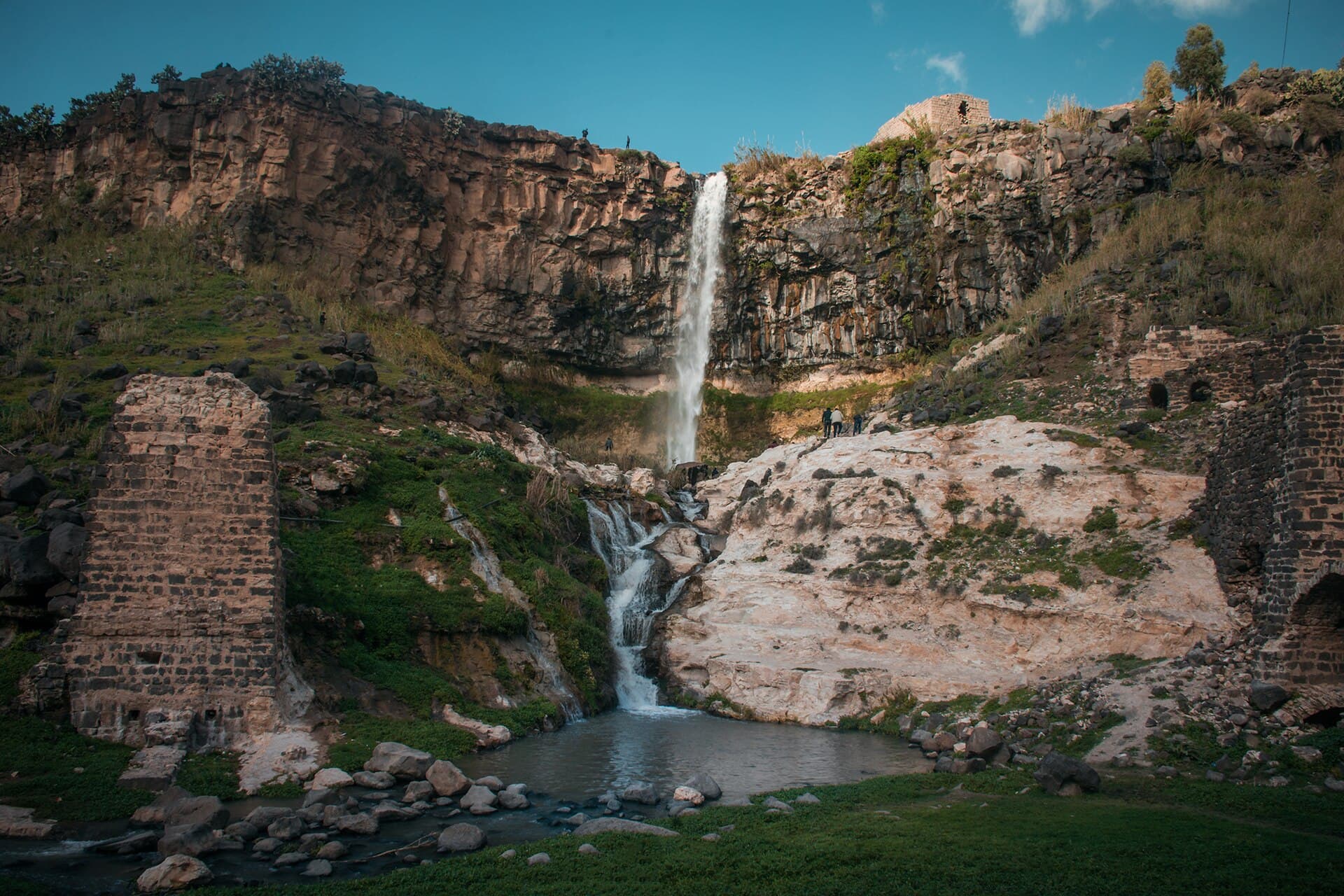
Tell Shihab and Its Falls
A town north-west of Daraa on the spur where two wadis meet. A waterfall drops over a basalt lip here, and a stele of Seti I was found in a house wall.
Daraa · Bronze Age — Ottoman
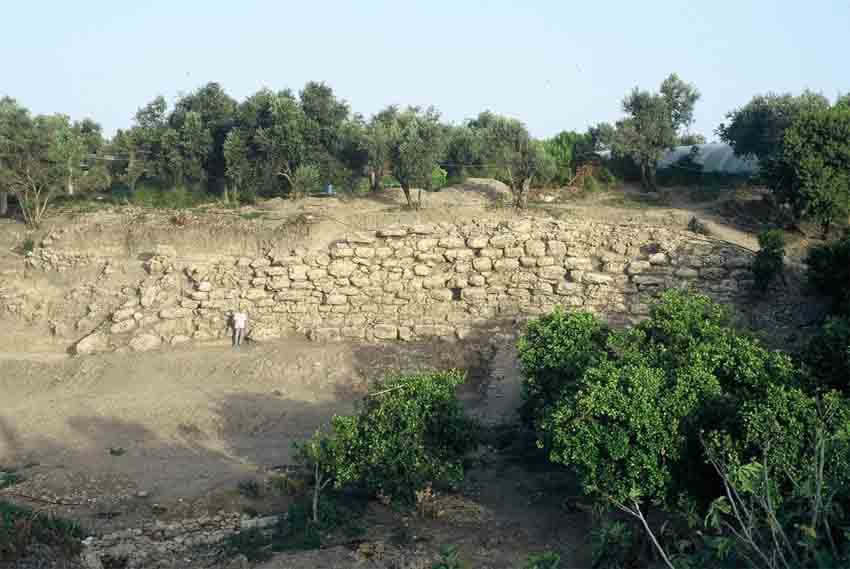
Tell Tweini (Gibala)
A mound standing in the olive groves just east of Jableh. This was the southernmost harbour town of the kingdom of Ugarit, and it burned down around 1200 BC.
Latakia · Early Bronze — Late Bronze — Iron Age
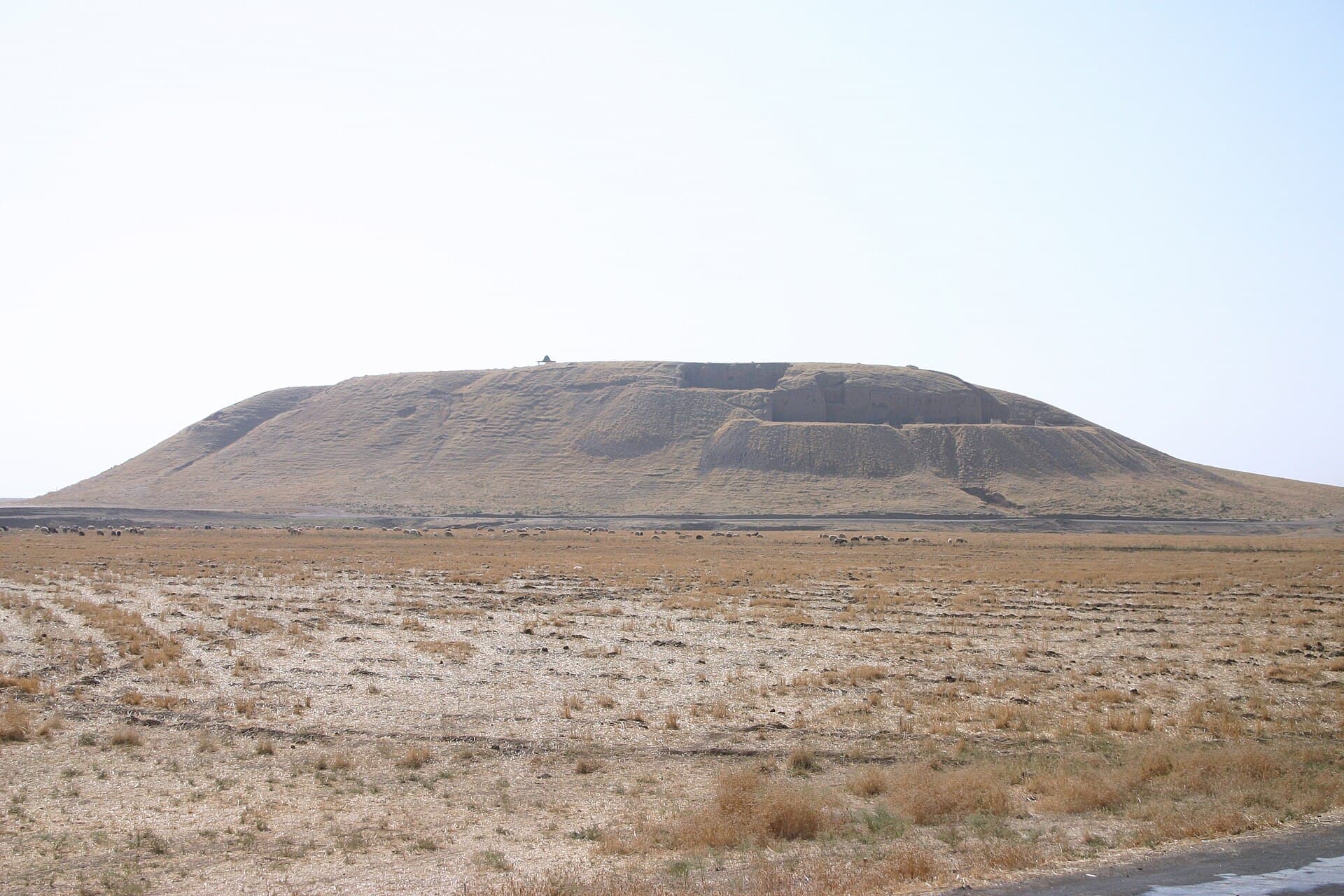
Tell Barri (Kahat)
A mound rising 32 metres above the Jaghjagh: ancient Kahat. A holy city of Mitanni, an Assyrian royal palace and a Parthian circuit wall, stacked in one place.
Hasakah · Halaf — Mitanni — Assyrian — Parthian (Mitanni: a Hurrian empire of the second millennium BC)
Al-Sharafiyah Madrasa
A madrasa complex east of the Great Mosque of Aleppo, in the Suwayqat Hatim quarter. It took forty years to build, and its founder never saw it finished.
Aleppo · Ayyubid
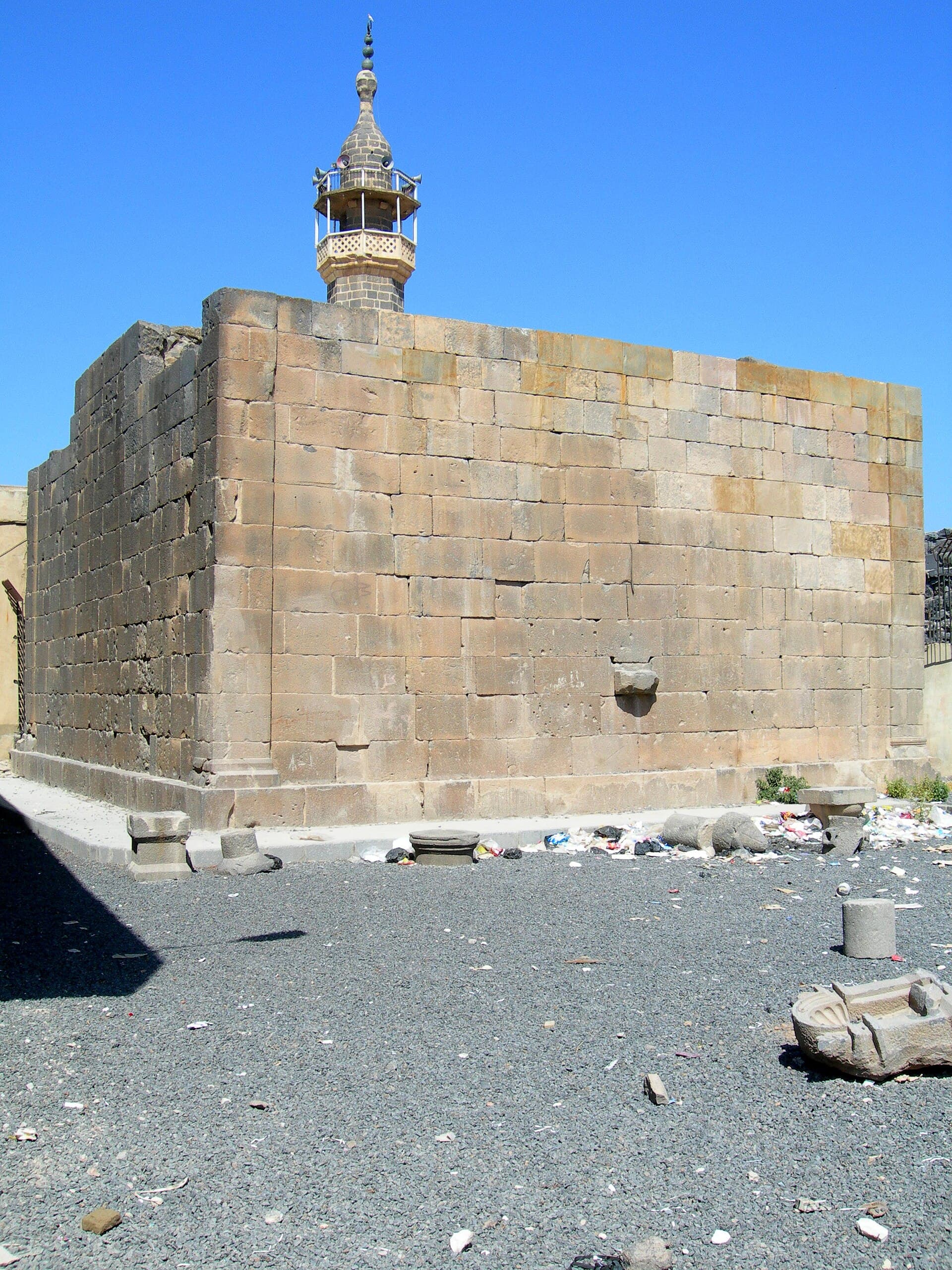
The Roman Temple at As-Sanamayn
Halfway down the Damascus–Daraa road stands a temple built for Tyche in 191. It is among the most complete Roman buildings left in Syria, and it is a mosque.
Daraa · Roman, with Ottoman additions
Ras Ibn Hani
On a cape north of Latakia, the summer palaces of the kings of Ugarit. Stone footings above the sea, and the tomb chambers beneath the palace, are still in place.
Latakia · Late Bronze (Ugarit) — Hellenistic — Byzantine
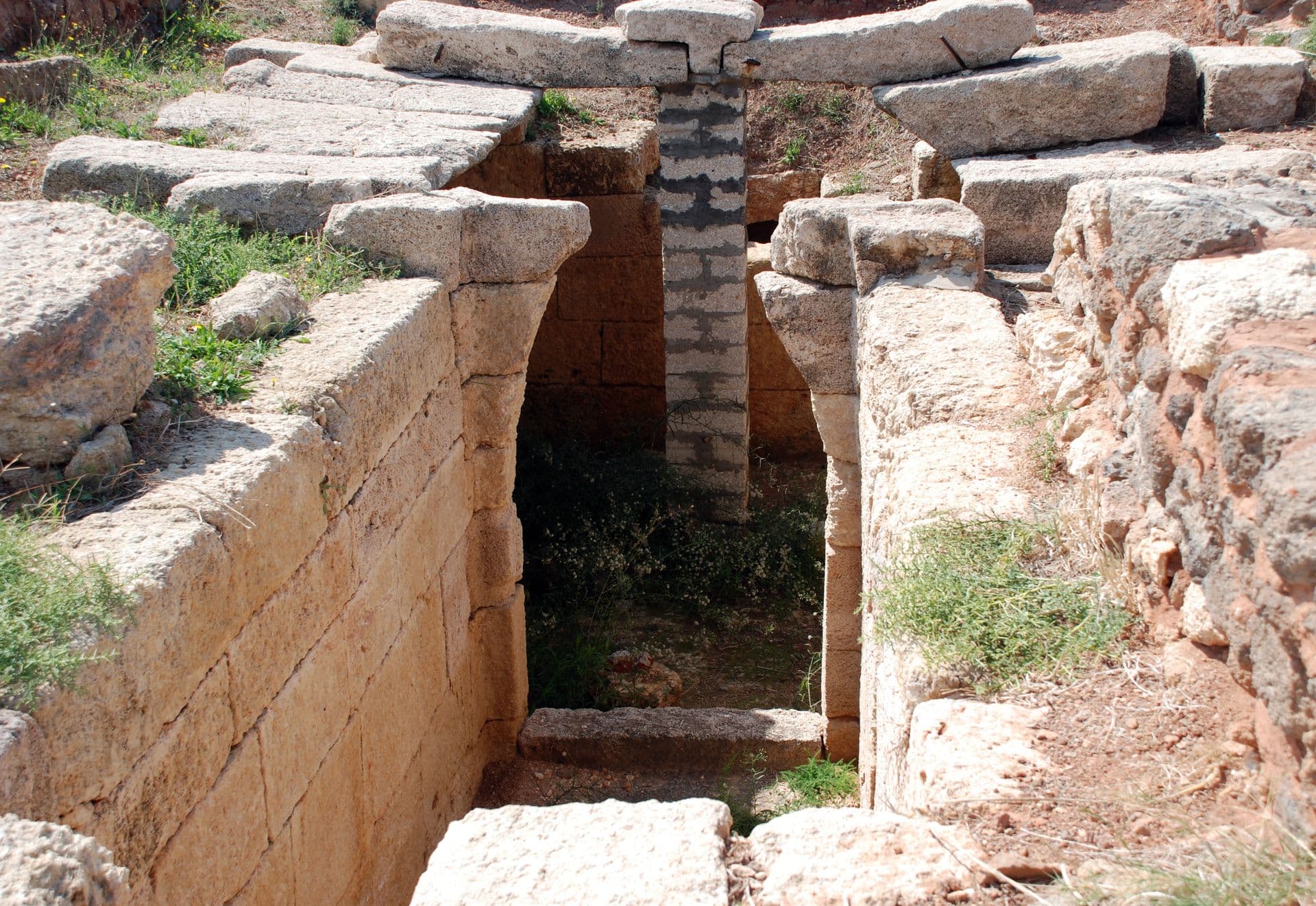
Namara Roman Fort
A Roman frontier post at the edge of the basalt desert south-east of Damascus. The Namara inscription of 328 was found here and now sits in the Louvre.
As-Suwayda · Roman
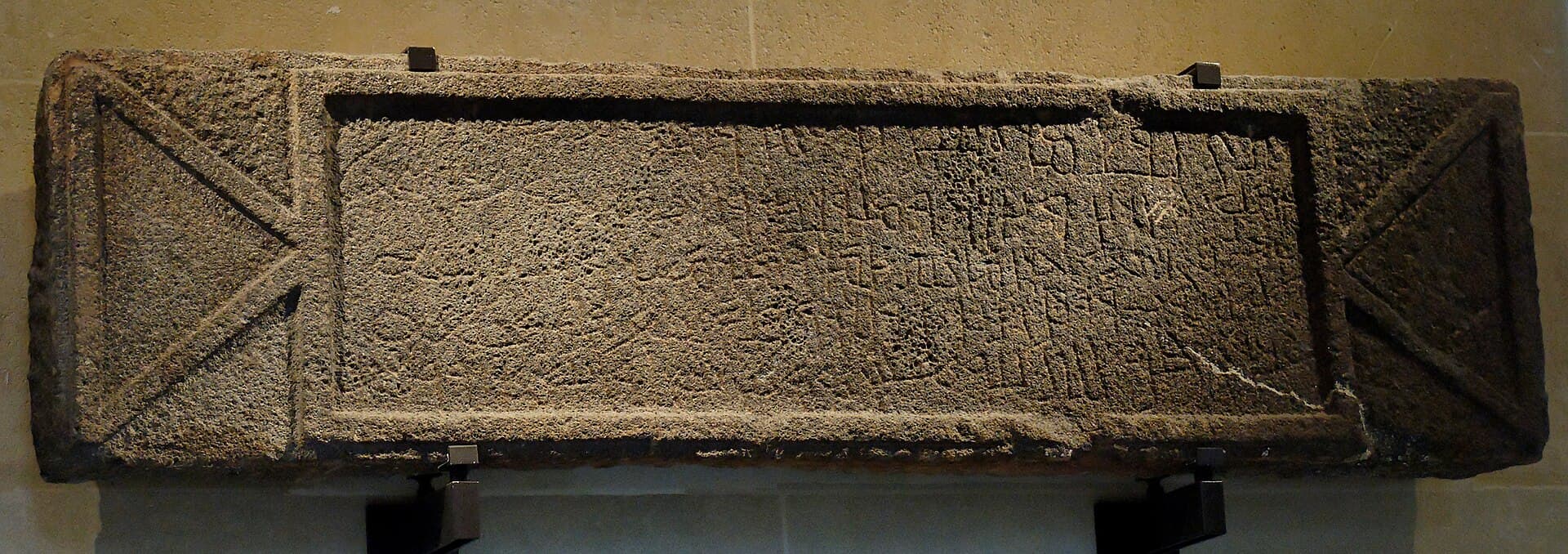
The Temple of Mushannaf (Nela)
A basalt Roman temple to Zeus and Athena, standing among the houses of a village north-east of Suwayda. One of the best preserved in the whole Hauran.
As-Suwayda · Roman
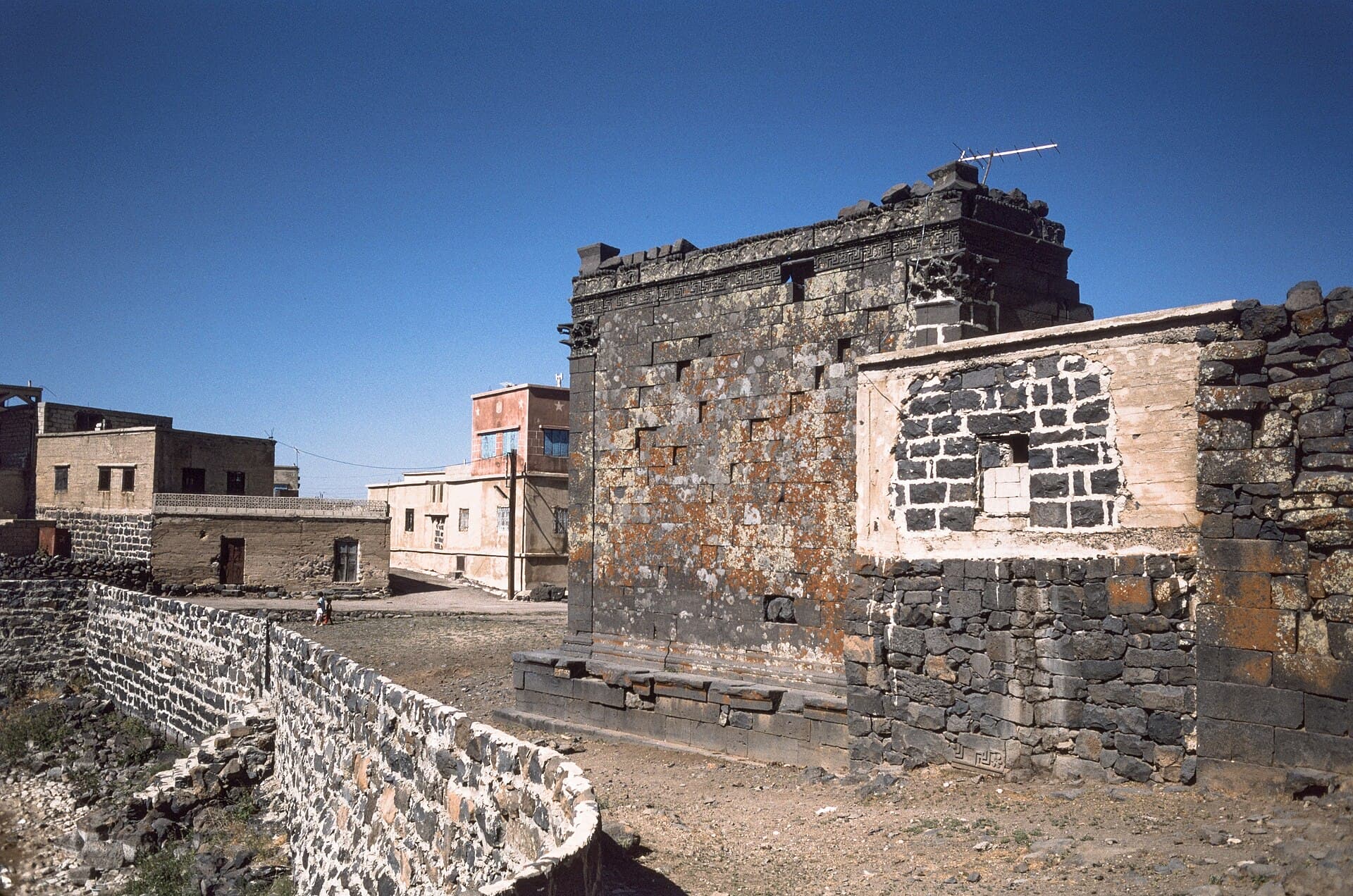
Circesium (al-Busayra)
The Roman frontier fortress where the Khabur joins the Euphrates. Procopius called it the farthest fortress of the Romans; the town of al-Busayra sits on it.
Deir ez-Zor · Roman — Byzantine — Early Islamic
Qal’at al-Rahba
A mudbrick fortress on a mound at the desert edge of the Euphrates valley, by Mayadin. It held the road from Iraq into Syria and was fought over for four centuries.
Deir ez-Zor · Abbasid — Ayyubid — Mamluk (Ayyubid: the dynasty of Saladin; Mamluk: the sultanate that followed it)
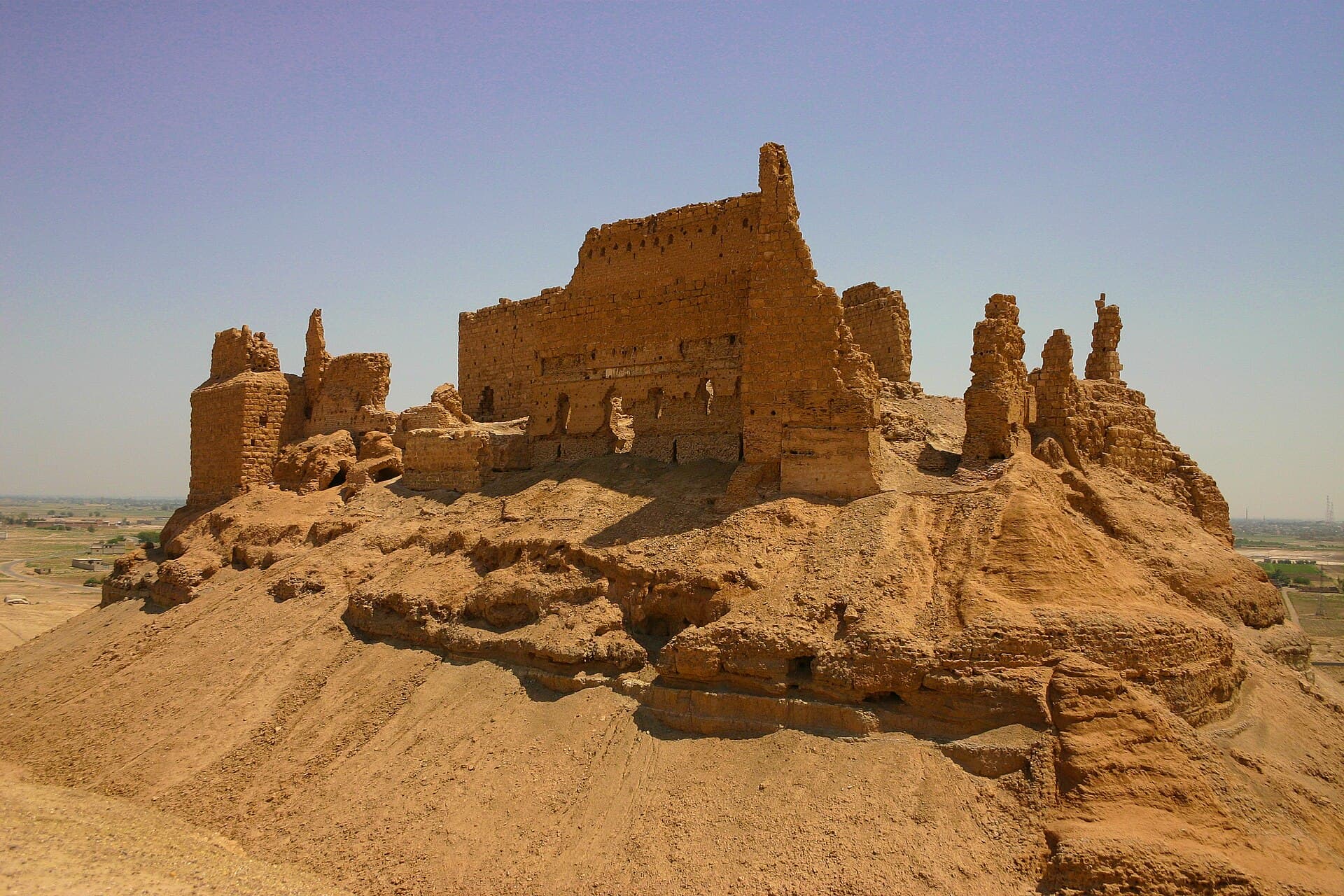
Tell Hamoukar
A large mound in north-eastern Syria near the Iraqi border. Traces of the earliest known urban warfare, and workshops full of obsidian, were found here.
Hasakah · Late Chalcolithic — Early Bronze Age